Active Recovery vs Rest in musculoskeletal injuries

Activity of any kind will be challenging for certain patients with "still in the healing process" wounds. But it is most likely a critical . Aside from all the other positives of movement, wound healing can likely be accelerated.
Wound healing might be accelerated from exercise. Which makes sense as movement increases circulation and therefore the delivery and breakdown of healthy / unhealthy substrates.
- Does movement have to be local? probabaly not (as with hydrotherapy) effects of increased circulation are global and so if i have damaged knees, doing upper body movements will help me recover faster.
- Choose exercises that have a low or no risk of agitating the wound
The stress of exercise may enhance the regulation of cortisol, Emery said. This increase in cortisol levels may represent a biological pathway by which exercise helps wounds heal.
Not surprisingly, exercise endurance increased in the group that worked out, but remained the same in the non-exercise group.
At the end of the study, the researchers found that skin wounds healed an average of 10 days faster in the people who exercised (29 days in the exercise group vs. 39 days in the non-exercise group.)
- effect of exercise on the inflammatory phase of wound healing.
vhttps://www.ncbi.nlm.nih.gov/pmc/articles/PMC3052954/
Psychological stress can reduce wound healing, therefore including exercise, which has positive effects on metal well behing, will give you two for a buck .
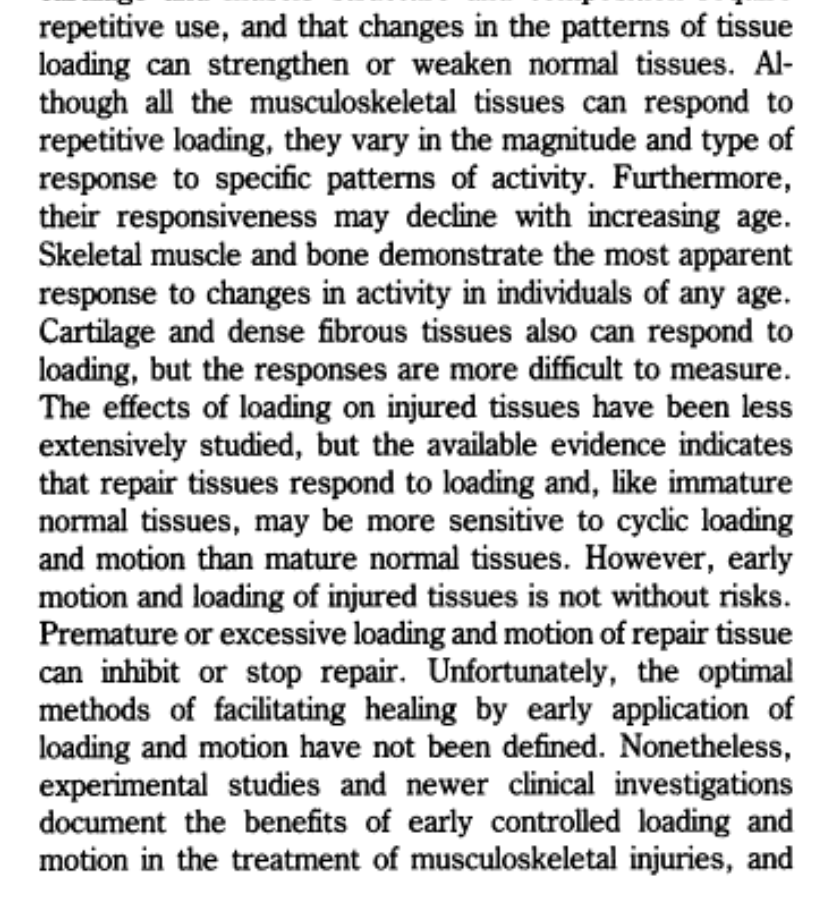
Repetitive healthy loading, as in exercise, can promote remodeling in the tendon, leading to long-term structural and functional improvements.The process of tendon remodeling involves both synthesis and degradation of collagen with a net degradation that begins immediately after exercise and then shifts to a net synthesis.
Research is unclear to what healthy tendon loads are, but : Several contributing factors have been proposed to influence a shift in the response of tendon from healthy remodeling to degeneration. For instance, the absence of a recovery period during an exercise regimen,8 smoking,9 obesity,10 and high cholesterol11 promote degeneration instead of adaptation.
- mechanotransduction https://www.ncbi.nlm.nih.gov/pmc/articles/PMC2662433/
Mechanotransduction refers to the process by which the body converts mechanical loading into cellular responses. These cellular responses, in turn, promote structural change. A classic example of mechanotransduction in action is bone adapting to load. A small, relatively weak bone can become larger and stronger in response to the appropriate load through the process of mechanotransduction.5
Step 1: Tendon cells undergo shear and compression during a tendon-loading cycle. (=mechanocoupling)
Step 2: The signalling proteins for this step include calcium and inositol triphosphate (are these tendon supplelements??). The critical point is that stimulus in one location leads to a distant cell registering a new signal even though the distant cell does not receive a mechanical stimulus. (means that loading the tendon anywhow in a non-painful position will increase healing in the whole tendon!)
Step 3:
Mechanical loading stimulates protein synthesis at the cellular level. In sum, the mechanical stimulus on the outside of the cell promotes intracellular processes leading to matrix remodelling.
Bone: In the absence of activity, the mechanotransduction signal is weak, so connective tissue is lost (eg, osteoporosis). When there are loads above the tissue’s set point, there is a stimulus through mechanotransduction so that the body adapts by increasing protein synthesis and adding tissue where possible (larger, stronger bone).
tendon can respond favourably to controlled loading after injury.
muscle: is highly responsive to changes in functional demands through the modulation of load-induced pathways.
cartilage: Like other musculoskeletal tissues, articular cartilage is populated by mechanosensitive cells (chondrocytes), which signal via highly analogous pathways. Alfredson and Lorentzon treated 57 consecutive patients with isolated full-thickness cartilage defect of the patella and disabling knee pain of long duration by periosteal transplantation either with or without continuous passive motion (CPM). In this study, 76% of patients using CPM achieved an “excellent” outcome, whereas only 53% achieved this in the absence of CPM.44 Tissue repair was not directly assessed in this case series, but the results encourage further research into the underlying tissue response and the optimisation of loading parameters.
bone: In this study, 21 patients with a distal radius fracture were randomised to receive (1) standard care including immobilisation and gripping exercises or (2) standard care plus intermittent compression delivered via an inflatable pneumatic cuff worn under the cast. The experimental group displayed significantly increased strength (12–26%) and range of motion (8–14%) at the end of the immobilisation period and these differences were maintained at 10 weeks.
https://karger.com/drm/article-pdf/236/6/593/2664332/000505291.pdf
Influence of pH on Wound Healing Finally, the broader characteristics of topical preparations used to manage minor wounds, such as pH, must also be considered. Maintaining an acidic pH in the stratum corneum is of paramount importance for preserving epidermal barrier homeostasis, the regulation of cytokine signalling, and effective wound healing [60, 61]. In chronic wounds, a more alkaline pH is observed, so topical acidic preparations are of value
vhttps://www.ncbi.nlm.nih.gov/pmc/articles/PMC10214107/
mechanical loading applies compressive forces to specific bone areas, allowing interstitial bone fluid to migrate from a high fluid-pressure area to a low fluid-pressure area, which promotes osteogenesis and inhibits the development of osteoclasts
Mechanical stimulation is essential for bone regeneration as it affects the biological functions of bone cells and endothelial cells.
 J. A. Buckwalter