Rehab after ACL reconstruction

With ACL-injuries being one of the most feared and possibly career ending injury, we will provide the readers with evidence-based rehabilitation guidelines and an exemplary training protocol for the different phases of rehab. This article will focus on rehabilitation after ACL-reconstruction as well as conservative treatment.
Introduction:
Suffering a tear of the anterior cruciate ligament (ACL) sadly is a quite common scenario, especially when pursuing an athletic career. Rehabilitation can be tedious and reconstructions are often necessary. Nevertheless, we believe that the greater the injury, the greater the potential for the athlete to use the times he is given to rehabilitate properly and return to the field in better condition than he left with. Which is why having an evidence-based and biomechanically sound approach to the rehab process of torn ACLs is absolutely crucial.
While lots of different strategies exist, and no single approach will be optimal for every patient, there are certain principles to which one must adhere in order to be successful and minimise chances of re-injury. And that's exactly what we are trying to provide you with.
ACL Rehabilitation
Overview
3 Phases of ACL-rehab
- Prehabilitation
- Rehabilitation
- Return to Sports
An often overlooked aspect of treating injuries that need surgery is the process that leads up to surgery (prehabilitation). But due to recent scientific findings, better guidelines exist for clinicians to know how to prepare patients for surgery in order to improve post-surgery outcomes. The significance of prehab cannot be underestimated.
- Prehabiliation
-> like the other disciplines, prehab duration should be criteria based, until the below named criteria have been achieved. This is likely to take 4-6 weeks and should include (ROM exercises, muscle strengthening (with quadriceps focus) and hop training). Strength and neuromuscular training is strongly recommended in this stage.
Patients should present with (Van Melick et al., 2016):
- full knee extension / no knee extension lag on a straight leg raise (= risk factor for extension deficit after ACLR)
- minimal to no swelling
- and 80% of knee strength compared to the other side (= risk factor for negative consequences on the self-reported outcomes 2 years later)
before entering surgery, in order to maximise post-surgical outcomes. As there might be a slight benefit from a preoperative training intervention in outcomes such as time to return to pre-injury level of sports and improved knee flexion and extension capacity in the early phase after surgery. These 3 orientation points have been supported by the leading author of the most recent clinical practice guidelines on a podcast episode of E3-rehab, which we suggest you check out.
- Rehabilitation
Rehabilitation or rehab concerns itself with everything that happens after surgery, until an individual returns to individual sporting activities. Which can take anywhere from several months to years, until the patient is back to his usual activities, not worrying about his knee health concerning the ACL.
For athletes, the finishing line of rehabilitation is the return to sports (RTS). In order to reach that goal, different criteria (mini-goals) have been set which should be achieved during the rehab process in order to minimise risk of re-injury.
Exercise therapy is building the foundation of ACL rehab.
- Return to Sports (RTS)
Return to Sports is the process of guiding the patient from the initiation of sport-specific movement patterns or drills until his full return to competition. For this to go smoothly, an athlete needs to be highly motivated and undergo intensive rehabilitation using evidence-based methods. Psychological readiness with no fear of reinjury are also important milestones that should be assessed by using the ACL-Return to Sport after Injury scale (Sell et al., 2024).
The utilisation of calculating the acute:chronic workload ratio as well as implementing the biopsychosocial model and the Starrt Framework into the RTS decision making process has been recommended (Ardern et al., 2016).
Rehabilitation Guidelines
Return to ...
- Return to Criteria
Specific criteria for different "return to ..." are lacking in the research literature. In the following, we will present criteria that have been developed especially by the most recent CPG. Meaning that the following criteria are simply recommendations of the authors of the most recent CPG and have yet to be validated. But the time being, thats our best guess.
Passing the proposed return to training or sports criteria will help reduce risk of graft rupture. They also act as milestones to help train the athlete back to their previous (or higher) performance level.
These criteria act as minimum criteria for an athlete to start training with their club again. From there, training intensity needs to be adjusted to train them back to their previous level. These criteria mark the end of rehabilitation and the begin of sports-specific training to return them to full participation. We have added a psychological assessment as our personal recommendation, as return to sports is often determined by the individuals mental state and is therefore crucial to assess.
With his very popular paper on ACL injury risk: "Simple decision rules can reduce reinjury risk by 84% after ACL reconstruction", Grindem and colleagues have suggested the importance of implementing a combination of time-based and criteria based RTS criteria, in order to further reduce injury risk. They recommended the importance of delaying RTS at least 9 months after ACL-surgery while meeting certain criteria to significantly reduce second ACL injury risk (Grindem et al., 2016). Others groups too have advises continue rehabilitation after ACLR for 9–12 months (Van Melick et al., 2016). While a time-based approach has not been refuted by the literature, it is known that a large variety in return to sports time-lines exist for different sports and athletes. So criteria-based rehabilitation is more individualised and therefore gaining more attention recently. And it will most certainly take several months (maybe even more than 9-12 months for some individuals to reach all of the listed criteria).
Return to Running: (Kotsifaki et al., 2023)
Before anyone is allowed to return to running they need to be put unter a jumping progression. We cannot emphasize the importance of that enough! Too often do we see people start jogging because the '4-month time limit" has been surpassed ... while we do not want to neglect time-based approaches, we would rather use them to set "minimal" time-guidelines that matches training
- 95% knee flexion range of motion (ROM)
- Full extension ROM
- No effusion/trace of effusion
- Limb symmetry index (LSI)>80% for quadriceps strength
- LSI>80% eccentric impulse during countermovement jump
- Pain-free aqua jogging or Alter-G running
- Pain-free repeated single-leg hopping (‘pogos’).
A time based approach is not recommended.
AND
Return to training: (Kotsifaki et al., 2023)
- No pain or swelling
- Knee full ROM
- Stable knee (pivot shift, Lachman, instrumented laxity evaluation)
- Normalised subjective knee function and psychological readiness using patient-reported outcomes (most commonly the International Knee Documentation Commitee subjective knee form (IKDC), the ACL-Return to Sport after Injury scale (ACL-RSI) and Tampa Scale of Kinesiophobia)
- Isokinetic quadriceps and hamstring peak torque at 60°/s should display 100% symmetry for return to high demand pivoting sports. Restore (as a minimum) preoperative absolute values (if available) and normative values according to the sport and level of activity
- Countermovement jump and drop jump>90% symmetry of jump height and concentric and eccentric impulse. Reactive strength index (height/time)>1.3 for double leg and 0.5 for single leg for field sport athletes (higher for track and field)
- Jumping biomechanics—normalise absolute and symmetry values for moments, angles and work in vertical and horizontal jumps especially in sagittal and frontal plane at hip, knee and ankle
- Running mechanics—restoration of>90% symmetry of vertical ground reaction forces and knee biomechanics during stance during high-speed running and change of direction
- Complete a sports-specific training programme.
The 2016 RTS consensus statement paper recommended assessing direction changes as well as agility tests into RTS criteria after ACL injury. As well as assessing psychological readiness via the ACL-Return to Sport after Injury scale (Ardern et al., 2016).
In summary: fulfil the above listed criteria for a "as evidence-based" as possible return to running or sports, while adding psychological readiness and agility tests to the RTS criteria.
Rehab Goal Setting and Modalities
When can I start ... ?
Immediately after Surgery (from the first day):
- Immediate full weightbearing is allowed (Wright et al., 2015)
Recommendation: allow full weight-bearing only if there is a correct gait pattern. If not, stick to the crutches, until this goal is achieved. No pain, effusion or increase in temperature when walking or shortly after should be present (Van Melick et al., 2016).
- Immediate ROM movement (Wright et al., 2015), from 0 to 90 of flexion (Kruse et al., 2012).
Recommendation: Early extension training leads to a higher chance of regaining hyperextension of the knee. While anterior-posterior knee laxity is not jeopardised at the 2 year time-point (when using bone-patellar tendon-bone graft) (Isberg et al., 2006)
For improvements in ROM, active mobilisation exercises will be instructed immediately after surgery also to keep some muscle mass from vanishing. But while keeping in line with surgical instructions.
- Isometric quadriceps exercises (quadriceps contractions and straight leg raises) (Van Melick et al., 2016).
Isometric quad activations (quad pumps) and straight leg raises can be initiated in the first 2 weeks after surgery as it might bring small improvements in knee flexion outcomes when started early.
Week 2:
- Concentric closed kinetic chain (CKC) exercises (Van Melick et al., 2016)
From here on, CKC exercises should replace isometrics, given that that the knee does not react with effusion or increased pain.
Week 3:
- Isokinetic hamstring strengthening (Kotsifaki et al., 2023)
- Leg press can be done (half squats, to 45 degrees), in people with hamstring graft (Kotsifaki et al., 2023)
Week 4:
- Open Kinetic Chain (OKC) exercises can be performed in a restricted ROM of 90– 45° (Van Melick et al., 2016).
OKC exercises can and should be included from the 4 week time-point with no recorded adverse events. But therapists should be aware of possible increases in anterior knee pain and progress exercises within acceptable pain limits. (Kotsifaki et al., 2023)
Week 5:
- OKC exercises from 90 to 20° (Kotsifaki et al., 2023)
Week 6:
- OKC exercises from 90 to 0° (Kotsifaki et al., 2023)
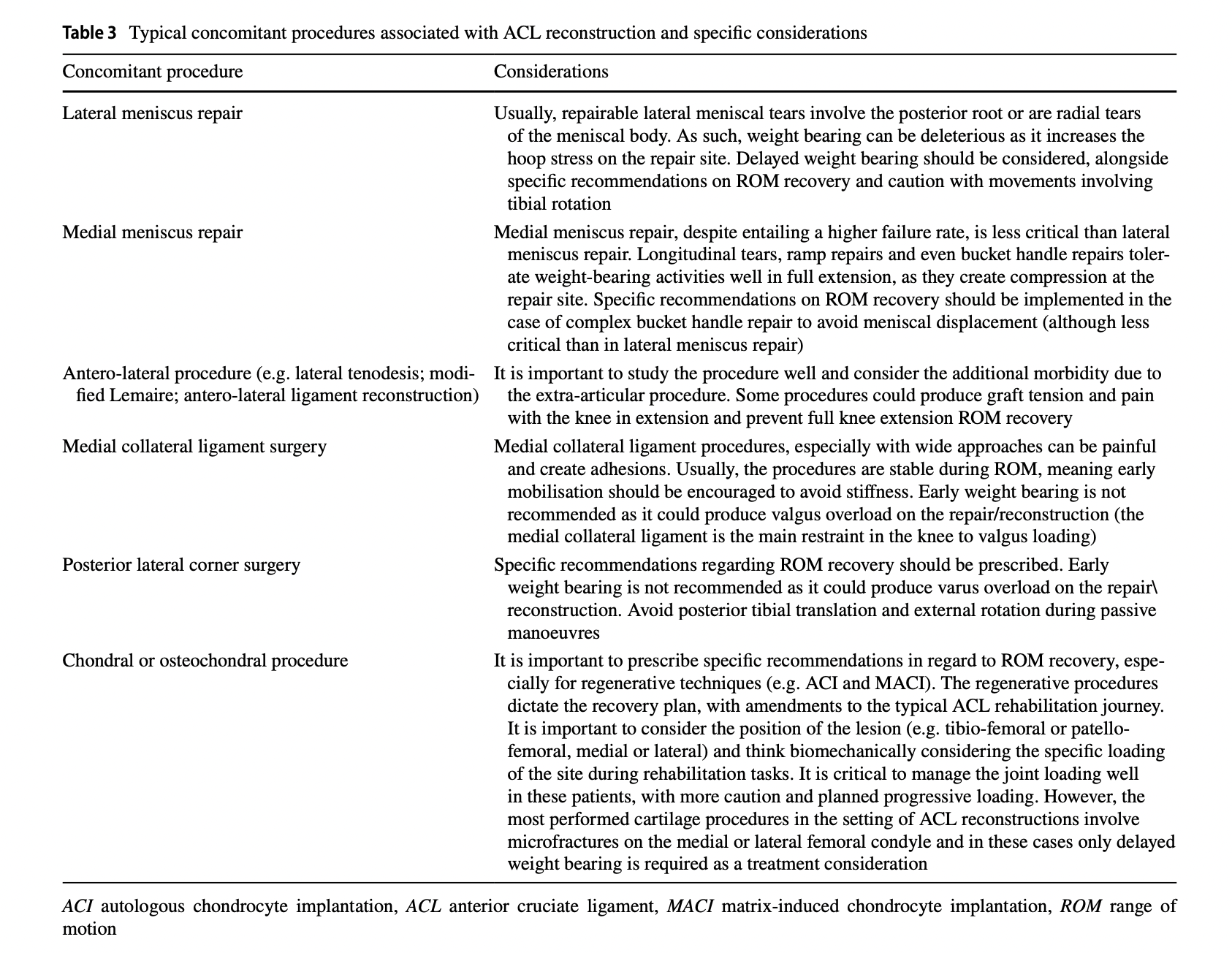
Main Takeaway: The Aspetar guidelines recommend early mobilisation with weight bearing 3 days after surgery, when ACL injury is isolated. When other injuries accompany the ACL tear, like a meniscal injury, MCL tear... the weight-bearing instructions should be discussed with the operating surgeon. Of course, weight bearing is a therapeutic goal that should be accomplished early on, it still needs to go in accordance to the patients confidence in their knees, which takes a bit longer for some. But it should happen in the first week post-surgery.
Treatment modalities:
Cryotherapy application could potentially lead to a reduced medication intake and decreased pain, although it had no effect on swelling. When compression is added (compressive cryotherapy), results were superior. Therefore, for the first 0-3 days post-surgery, compressive cryotherapy is recommended to increase patient satisfaction due to its easy to use characteristics. Although education on safe application to avoid adverse events is indicated (Kotsifaki et al., 2023).
cryotherapy is effective in decreasing pain immediately after application up to 1 week postsurgery after ACLR, but has no effect on postoperative drainage or ROM (Van Melick et al., 2016)
NMES (neuromuscular electrical stimulation) has been shown to provide moderate effects on quadriceps strength and reduce knee joint swelling when implemented. Using NMES during functional activities led to better outcomes. Its application is recommended in the early stages, to work against atrophy. Should be used for the first 6-8 weeks (Kotsifaki et al., 2023).
Low load BFRT (blood flow restriction training) improves hamstring and quads strength in early stages. I can easily be implemented used as an addition to standard care. It is especially recommended for those with high levels of knee pain, who are unable to tolerate high loads (and also clarify possible contraindications, such as cardiovascular disease...) (Kotsifaki et al., 2023).
In the included study, the limb occlusion pressure (defined as the pressure required for full arterial occlusion) was set at 80% intensity (Hughes et al., 2019).
Training Protocol after ACLR
Training after ACLR can be divided into 3 stages: file:///Users/felixschenk/Downloads/Optimising_the_Early-Stage_Rehabilitation_Process_.pdf(Buckthorpe et al., 2024)
early stages with the aim of restoring functions that have been lost due to the operation and prepare for mid-stage.
mid-stage with the aim of restoring movement quality, lower limb strength and overall fitness and prepare for late stage.
late stage with the aim of improving neuromuscular and movememnt performance and RTS training and maximise overall fitness.
Early stage:
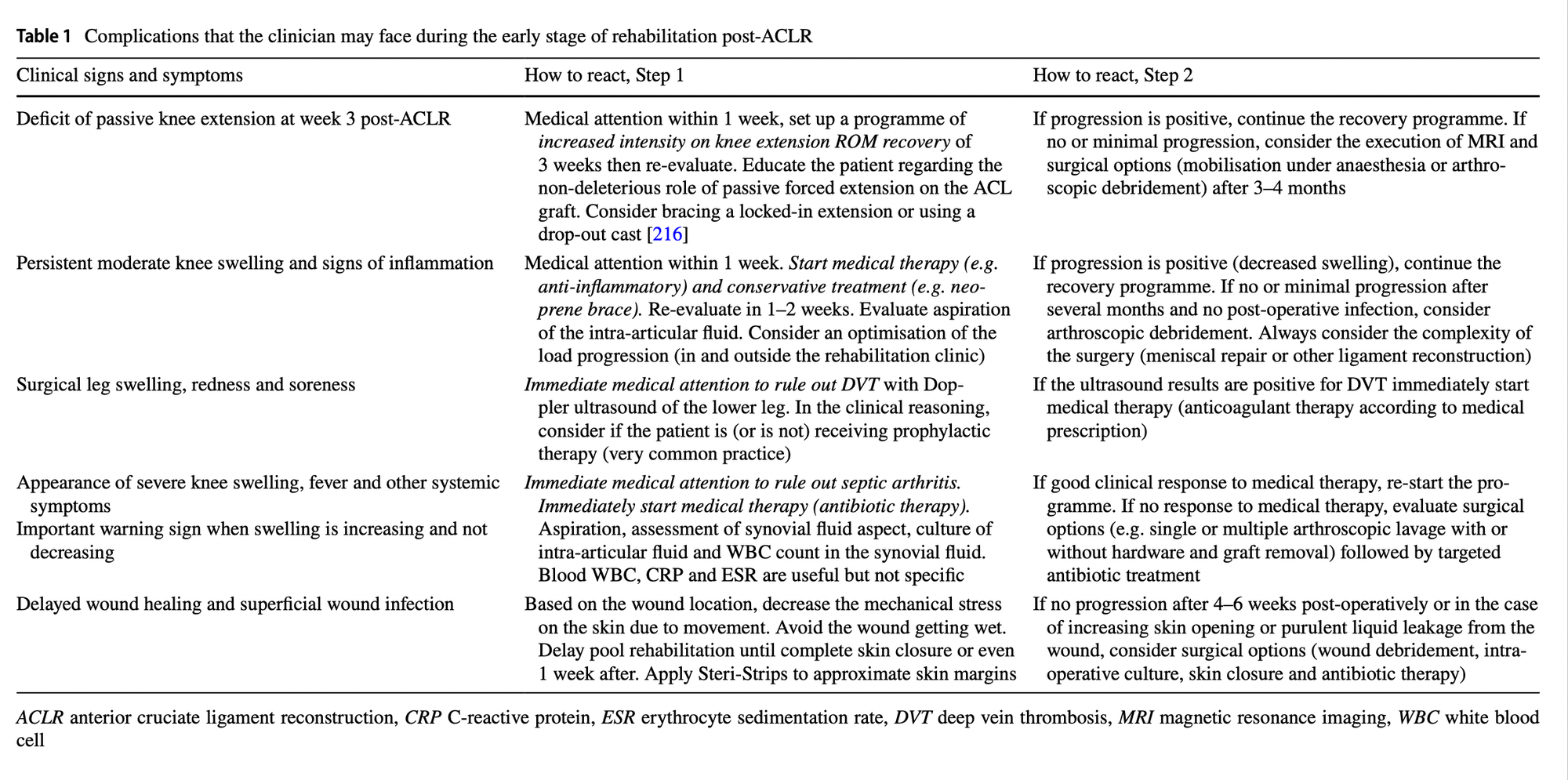
- Pain and swelling
pain and swelling is normal in the early stages and should be combatted with compressive cryotherapy as well as lower leg elevation. To get the blood pumping, increase venous return and thereby reduce swelling, exercises such as ankle pumps, stationary cycling, lymphatic drainage, patellar mob, scar management, soft tissue release of the surrounding muscles... are initiated early.
A maximal score of VAS 4/10 is allowed during rehabilitation, as recently recommended (Buckthorpe et al., 2024).
Swelling should be assessed regularly (even daily) in the early stages. By either the "stroke test" or knee circumference measurements. If increases in swelling are assessed after increasing rehab intensity, adjustments need to be made. Tracking a patients activity (steps...) is also important, to make sure the increases in symptoms are actually coming from the rehab sessions and not other factors that you might be missing.
Full knee extension should be generated before getting rid of the crutches.
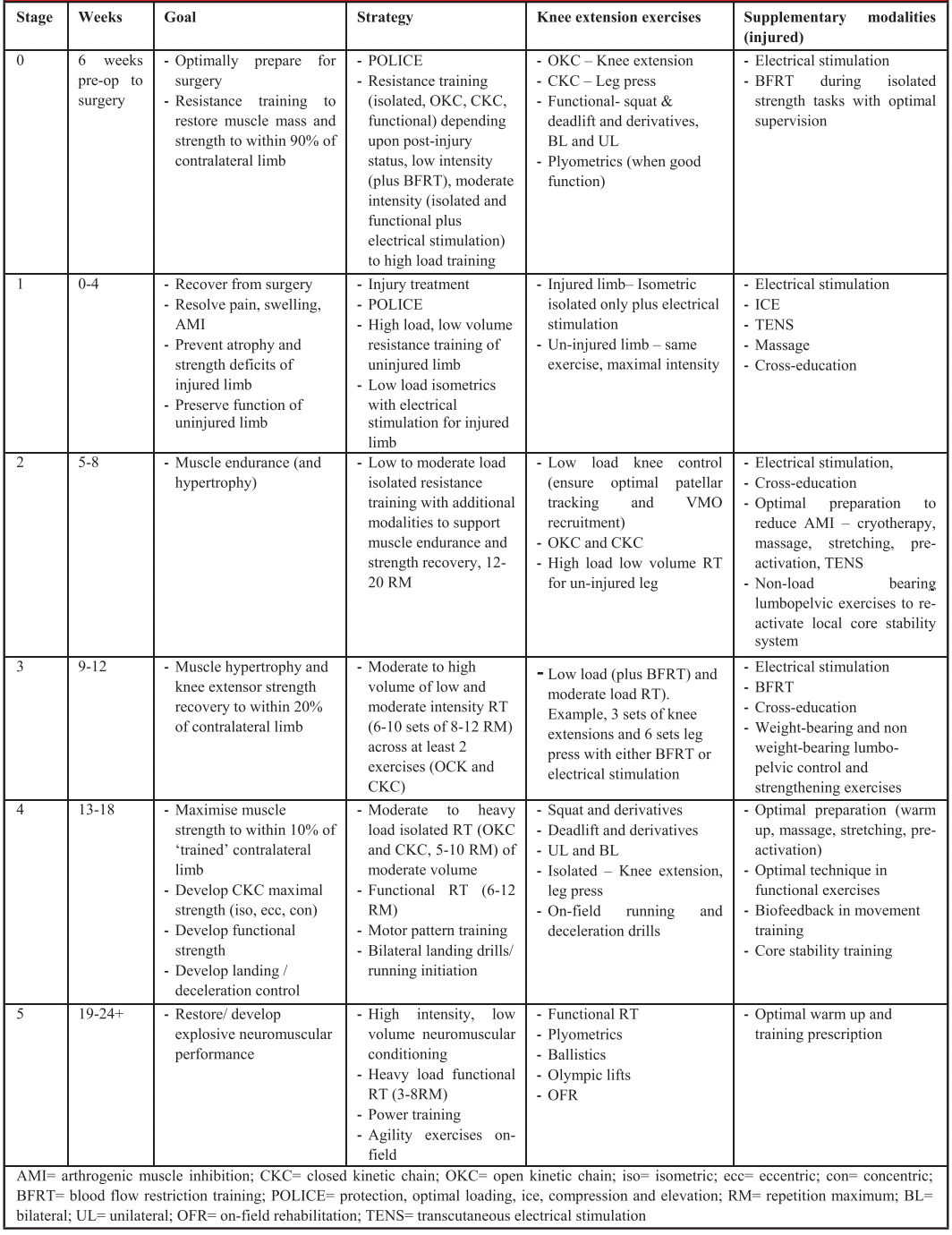
In terms of exercise selection during the earlystage, we recommend using isolated and/or non-weight-bearing tasks (e.g. leg press/knee extension) as opposed to functional exercises (e.g. squatting/deadlifts), at least for the purposes of strengthening (and the associated neural and morphological adaptations). Patients will likely still have considerable neural inhibition of the quadriceps (AMI), altering technique and intra- and inter-muscular coordination
Importantly, with every step during walking, strain on the ACL is two to three times higher than that during full ROM knee extensions with a+3-kg load [104, 120]. As such, relatively low load OKC knee extensions are safe for the ACL/knee. Importantly, although we encourage the use of OKC exercises, even during the early stage, we also encourage some caution. During isoinertial knee extensions, there is no or minimal hamstring muscle co-activation [121], which can leave the ACL more vulnerable to unopposed anterior shear forces on the graft, if high loads are used. For structured strengthening of the knee extensors during the early (and mid-) stage and particularly when the patient can begin use to use heavier loads (e.g. 10–15 kg), we suggest restricting the ROM to limit ACL and PFJ loading. The quadriceps muscle forces required to extend the knee is three to four times higher near a full knee extension (than at deeper knee fexion angles)
ACL strain isminimal (0.0% peak strain) and PFJ reaction forces are dramatically reduced when OKC quadriceps contractions are performed at 60–90° of knee fexion [104, 115, 123]. Thus, restricted ROM (e.g. 45–90°) knee extensions, will allow for higher loads to be lifted at lower relative ACL and PFJ loading [104, 114, 122–125] and thus, makes sense. To reiterate, we still recommend using full ROM loaded knee extensions to support enhanced strength and activation (particularly at extended knee angles), but anecdotally believe heavier loaded restricted ROM knee extensions are superior
Lower loads performed to fatigue (e.g. 4–6 sets of 20 RM with minimal recovery [e.g. 30–60 s] between sets) will predominantly target adaptations related to muscle endurance and work capacity and lead to muscle hypertrophy via metabolic stimuli/adaptations [129]. Taking the working set close to volitional fatigue can facilitate more complete activation of the motor unit pool, thereby facilitating activation of higher threshold type II motor units [129]. As an athlete becomes stronger and overcomes pain, swelling and AMI, higher intensities can and should be used, in a progressive manner, as part of a periodised resistance training programme
Initially, addressing pain, swelling and consequential AMI is essential. Focused quadriceps strengthening should only occur when patients have minimal pain (0–2) and swelling and sufcient quadriceps activation (no lag on straight leg raise). Use of neuromuscular electrical stimulation and/or passive blood fow restriction in the initial weeks performed alongside transcutaneous nerve electrical stimulation and early introduction of isometrics is recommended [80]. These isometrics should be performed at restricted ROM (60° and/between 90° knee fexion), with repetitive sustained holds (e.g. 5×45 s [2 min rest between each repetition]) 1–2 times per day (based on anecdotal experience and lower limb tendon pain research)
Full ROM (0–90°) OKC knee extensions against gravity/low loads (e.g. 1–3 kg) can be performed once able to comfortably achieve a 90° knee fexion angle
We also recommend assessing knee extensor muscle strength (and where possible morphological and neural aspects of neuromuscular function) as part of the transition to mid-stage rehabilitation. This should involve assessing isometric knee extensor strength, using a dynamometer (ideally an isokinetic or isometric bespoke build dynamometer/portable dynamometer) [132] at/or between 60–90° knee fexion
In essence, ACLR with an HG should be treated as ACLR plus a severe hamstring strain, with a periodised resistance training programme similar to that utilised for the knee extensors adopted [80, 145] for the hamstring muscles. It is typically recommended that specifc strengthening of the knee fexors be delayed for 6–8 weeks post-ACLR with an HG to allow healing [104, 146, 147]. But an acute hamstring injury however severe would not be left this long unloaded. Therefore, Buckthorpe et al. [145] advise using isometric/concentric exercises of low intensity at short-medium muscle lengths during the early stage, which we advocate here, and which would be expected to support more optimal recovery.
Patients should be able to initially fex the knee to 90° while standing (prior to adding load to this task as tolerated) and undertake a bilateral straight leg bridge (heels on a 30-cm-high box) for 10 repetitions to a neutral hip extension
We recommend including non-weight bearing hip (see ESM) and lumbo-pelvic (‘core’, see ESM) muscle strengthening alongside knee extensor strengthening. There is strong evidence that patients with patellofemoral pain have defcits in hip abduction, extension, and external rotation strength [162] and that hip muscle strengthening is efective in reducing the intensity of pain and improving functional capabilities in patients with patellofemoral pain
We recommend including both land- and water-based gait, balance and foundation movement (e.g. bilateral squat, step-ups in the pool) re-training during the early stage, which should include specifc technique coaching and movement practice, ideally with some biofeedback on limb loading strategies (asymmetries in ground reaction forces) and kinematics employing an external focus of attention [180]. The walking gait re-education programme should include optimal use of crutches, teaching good control in knee extension–fexion ROM and hip adduction during the stance phase, and dynamic stability as well as selective movement retraining exercises to support the motor re-training process (e.g. standing marches in place, with optimal lumbar pelvic control and hip, knee and ankle fexion)
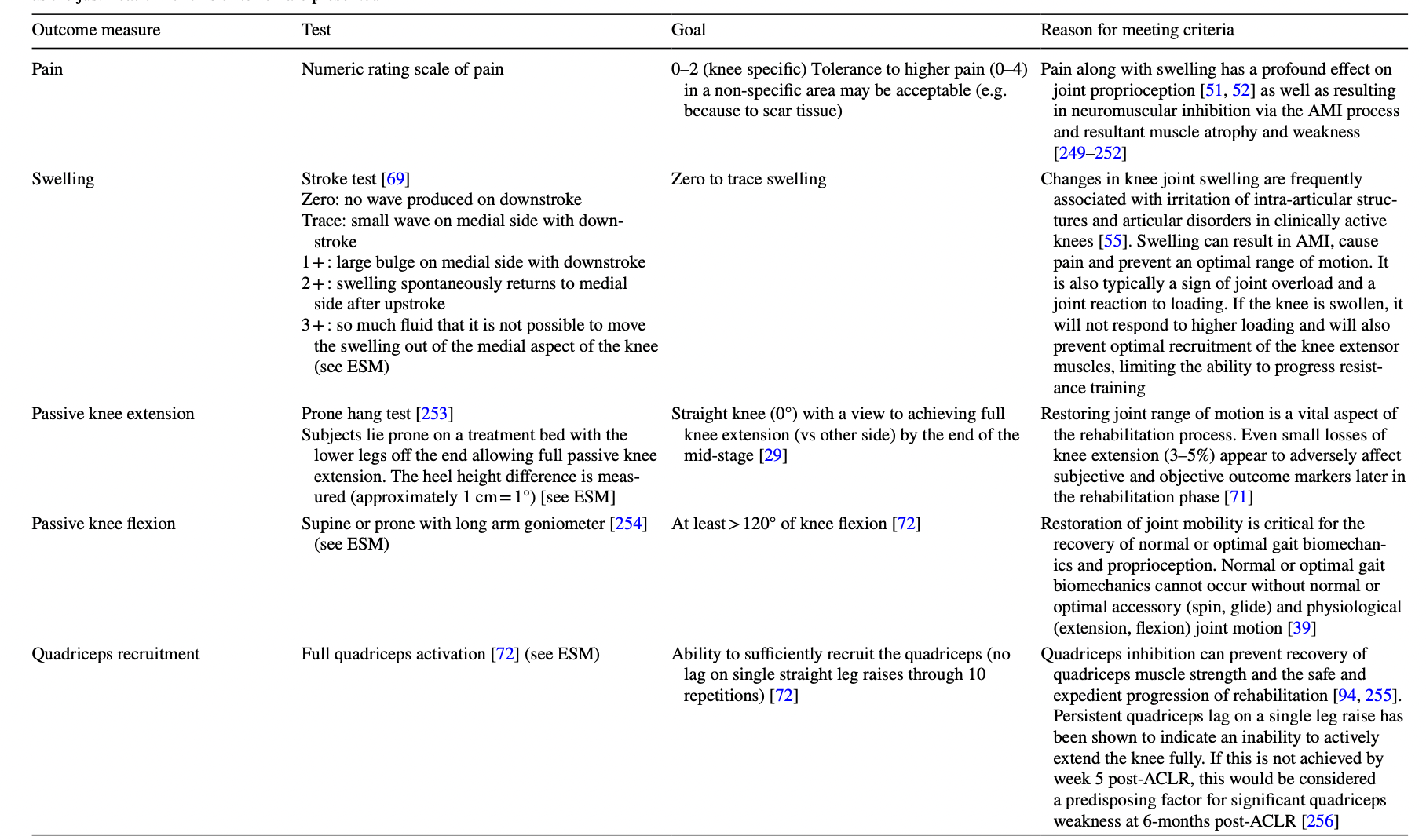
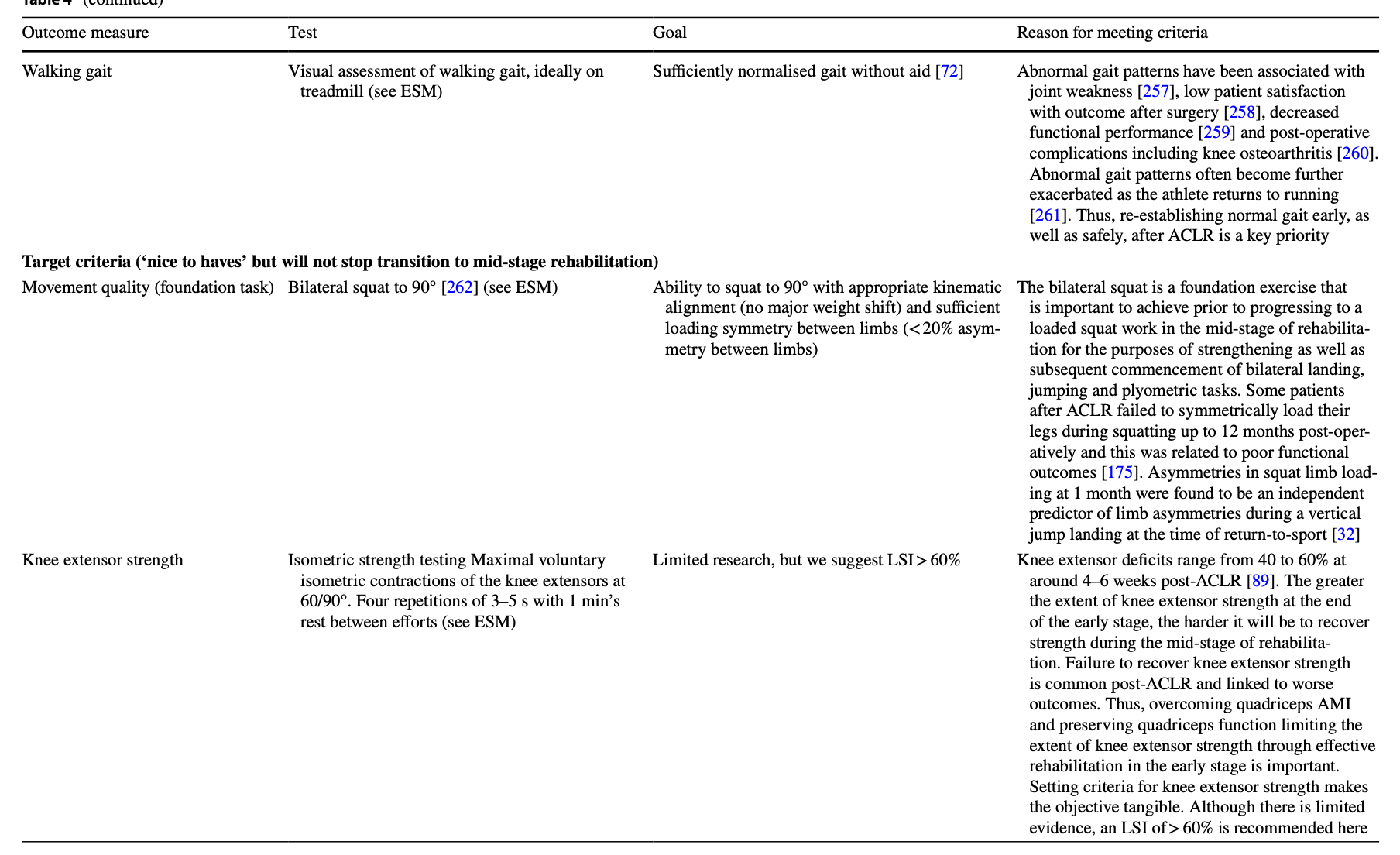
A key decision post-ACLR is when patients are ready to ‘leave the crutches’. Patients under assessment should have sufciently normalised gait (ideally, video analysis of walking gait on treadmill), be able to achieve full active knee extension, have control of swelling and no ‘joint overload’ (e.g. clinical increase of swelling [>1 cm, at the patella], or pain [+1 point]) and no quadriceps lag on an active straight leg raise [29, 72]. We recommend assessing the bilateral squat technique and limb loading as part of early-stage criterion-based rehabilitation. The goal should be achieving good technique and limb loading (<20% defcit) with a bilateral squat to 90°.
Efective communication and a strong patient–therapist (therapeutic) alliance have been shown to be associated with improved rehabilitation outcomes following a musculoskeletal injury [182]. An “alliance” is often used to describe relationships in which a therapist and an injured athlete mutually collaborate to help manage the injury by creating a climate of trust, forging an emotional bond, and agreeing upon goals and treatment options
Key elements of early-stage re-conditioning entail minimising CV ftness defcits, preventing loss of adjacent joint and contralateral limb muscle mass/strength using contralateral strength training, which may also support resolution of the respective injured limb’s muscle group through the crosseducation efect [212–215], and preventing increases in body fat
We typically suggest focussing more on addressing pain, swelling and passive joint ROM restrictions, whilst addressing quadriceps AMI and preserving quadriceps muscle volume (with supplementary modalities such as blood fow restriction, neuromuscular electrical stimulation, cross-education) in the initial weeks, followed by a stronger focus on active ROM, gait/motor pattern recovery and quadriceps strengthening (as well as physical ftness preservation for professionals) in the subsequent weeks. Hydrotherapy typically commences when the patient is safe to enter the water, around 2–3 weeks post-ACLR. The main contraindications to its use in this stage are wound healing and the risk of infection; thus stitches must be removed, and surgery scars should be free from the signs of infammation
CRITERIA to enter from early-to mid-stage

There is likely no perfect micro-cycle planning system for early-stage ACL rehabilitation. The specific week’s activity (between-session) and within-session design (e.g. planning the ordering of treatment and rehabilitation activity) will depend on the patient; whether they can attend the clinic regularly, how far from the clinic they live and how much supervised rehabilitation they can have (based on fnances and/or insurance and life factors). Across the author team, diferent approaches to micro-cycle planning are evident. A key theme across the group’s philosophy is the need for daily work, early commencement of rehabilitation post-ACLR, and regular communication between the patient and clinical team (surgeon, sports medicine physician and/or sports physiotherapist).
MID STAGE:
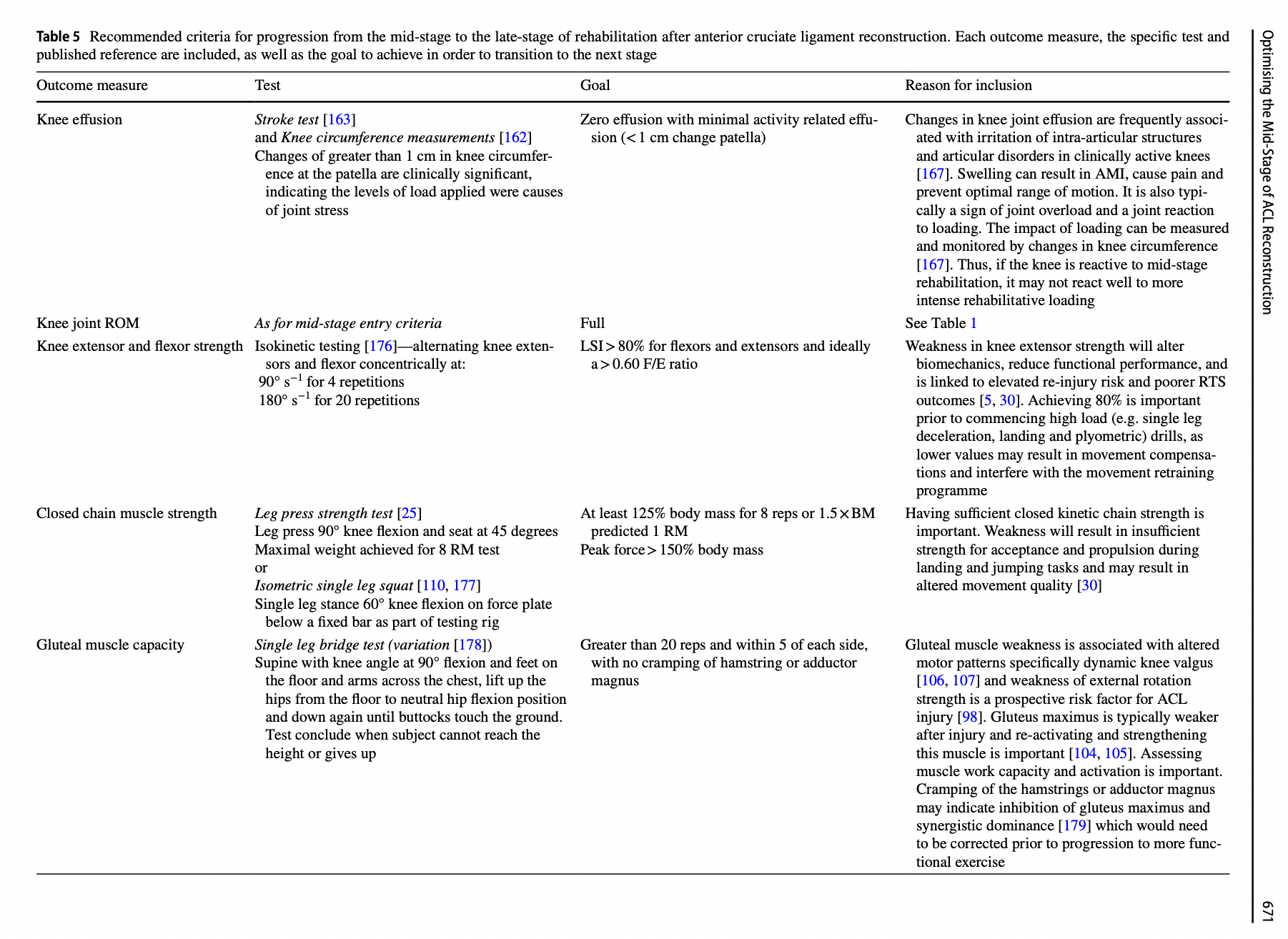
We recommend, based on both evidence [11, 14, 70] and clinical experience, an LSI of 80% knee extensor strength (compared to a ‘preserved’ contralateral limb) and>2 Nm kg−1 peak torque on the isokinetic machine (90° s−1) (80% of 2.5 Nm kg−1) be achieved prior to progressing to the late-stage rehabilitation and RTS programme [11].
, incorporating a range of techniques early during the mid-stage to target AMI within the session and support increased neuromuscular activation during resistance training is recommended. --> bfrt
We also recommend the inclusion of more ‘isolated’ open and closed chain knee extensor strengthening techniques (e.g. knee extension/leg press) as opposed to use of ‘functional strengthening’ (e.g. squatting, deadlifting, step-ups, lunges) during most of the mid-stage, but particularly in the earlier periods of the mid-stage
This is not to say functional strengthening (squatting...) is not important during the mid-stage, as it is essential to develop both the isolated capacity of the muscle to produce force, as well as the intermuscular coordination to express this capacity during functional tasks
. It is important to recognise that neuromuscular function defcits following ACLR are typically bilateral, in which the contralateral limb is weaker than its pre-operative values [23]. For example, only 29% of patients achieved a limb symmetry index (LSI) greater than 90%, when the reconstructed limb was compared to pre-surgery strength values at 6-month post-ACLR (note, pre-surgery, not pre-injury), whilst 57% were able to restore the injured limb’s strength to within 10% of the uninjured limb (i.e. the conventional LSI) [23]. The contralateral limb often serves as a ‘control limb’ on which targets for the injured limb are based, both for progression through the functional recovery approach (e.g. LSI>80% for progression to late-stage rehabilitation [11]), as well as for RTS (> 90–100% LSI depending upon the sport). Avoiding training the uninjured limb will likely result in an atrophy and strength loss, resulting in an earlier restoration of the LSI during the mid-stage (i.e. easier to achieve 80% LSI, as the target is efectively lower) and result in the patient being under-prepared to tolerate the higher loading demands of the subsequent programme (i.e. a sufcient LSI, but low levels of absolute strength). Furthermore, RTS without sufcient training of the uninjured limb will result in over-estimated knee function of the injured limb, and under-preparedness of both limbs, likely increasing the risk of re-injury for both sides. The high rates of ACL injury on the contralateral side after RTS following ACLR [65] are a particular concern
Our advice is to include strength training for both limbs as part of the ACL functional recovery process. There is some evidence that training the contralateral limb can also result in strength gains for the injured limb, via the crosseducation phenomenon
The strength training approach to the contralateral limb should aim to preserve, not enhance, the strength and muscle size. Developing muscle size and strength of the contralateral limb beyond its pre-injury values will result in greater difculties normalising LSI. However, maintaining strength on the uninjured side, recovering the desired LSI (strength of the injured limb versus the uninjured limb) as quickly as possible (mid- and late-stage), prior to then adopting a conditioning approach to both limbs (e.g. RTS training) is recommended. During the mid-stage, this would involve performing the same exercise on the uninjured as the injured limb, but doing so at higher intensities and much lower volumes. For example, 6 sets of leg press for the injured side at 12 repetitionmaximum (RM) would be complemented with 3–4 sets of 3–5RM for the uninjured side. Recent evidence suggests that high-intensity eccentric training of the contralateral limb may be more efective than concentric training, in terms of the cross-education beneft
the addition of hamstring exercises which elicit more selective medial hamstring muscle activation (e.g. Nordic hamstring curl [85], hamstring exercises performed with tibial internal rotations [86]) be incorporated to target potential residual defcit in medial hamstring muscle size and strength. A holistic approach to hamstring muscle strengthening [56, 87, 88], incorporating both knee and hip dominant exercises is also recommended for all patients. In those with hamstring graft, a periodised resistance programme similar to the knee extensors should be adopted, and knee fexor strengthening delayed for 6–8 weeks after surgery to allow healing of the harvested graft [64, 89, 90]. Hamstring strengthening should commence with isometric knee fexor exercises as well as low to moderate intensity hip extension exercises. Those without hamstring graft can be less cautious, respecting the load capacity of the knee as a whole. Higher intensity pain-free hamstring strengthening should be able to be commenced towards the end of the mid-stage, with at least an 80% LSI by the end of the mid-stage. After this, a stronger focus on high intensity, eccentric, high speed, longer muscle length and functional (e.g. higher speed running) strengthening should occur.
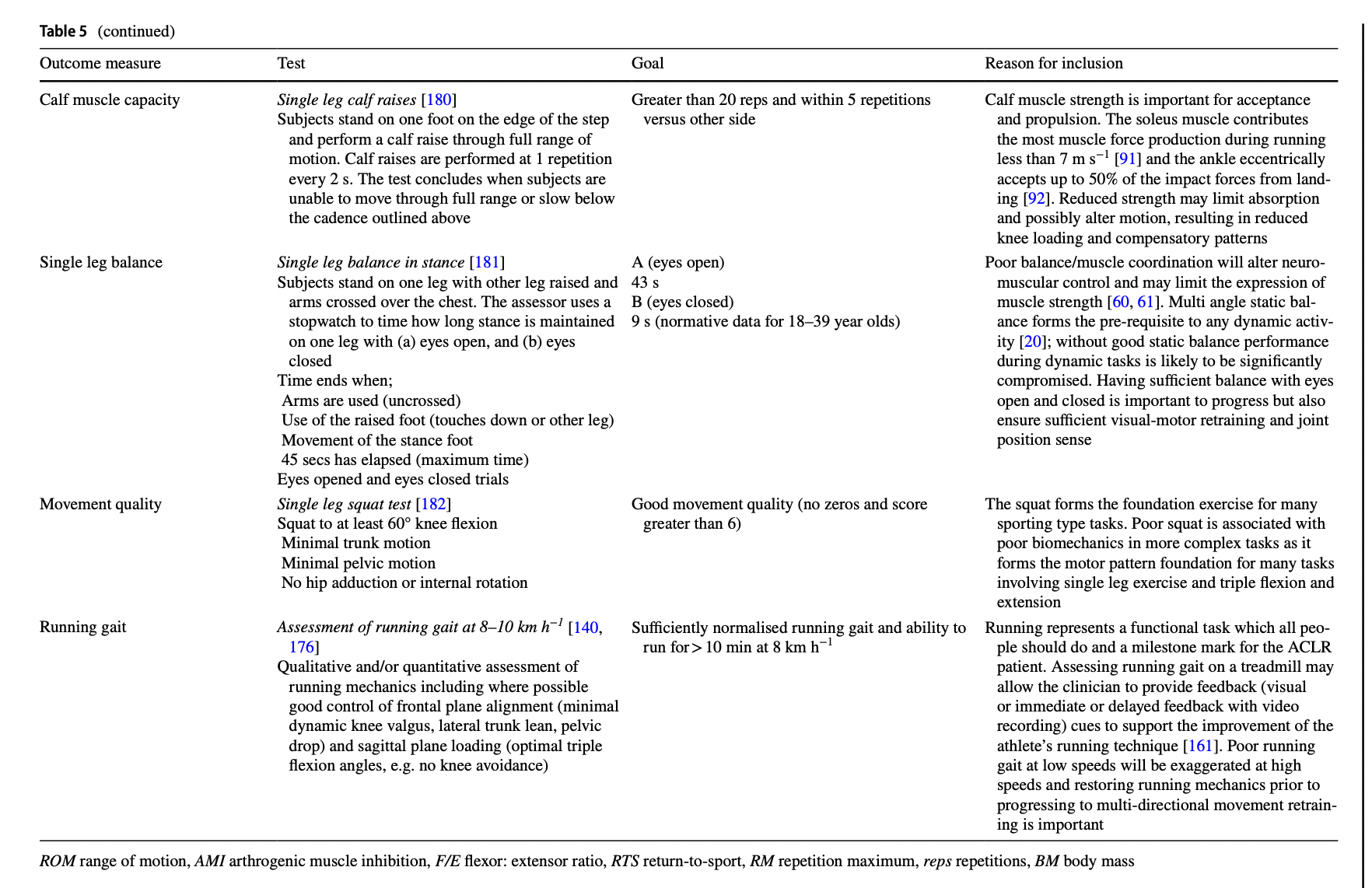
train the calfs: the ankle joint eccentrically accepts around 40–50% of the impact forces when landing [92]. The soleus muscle in particular acts as an agonist to the ACL, preventing anterior tibial translation, through restricting the shin moving anteriorly in relation the knee, by providing restraint to tibial advancement at the ankle
The gluteus maximus is thought to become ‘inhibited’ (defned as reduced activation or delayed onset) after lower limb injury [104, 105] and is an important muscle alongside other gluteal muscles (gluteus medius and gluteus minimus) in preventing dynamic knee valgus during high load closed chain tasks [106, 107]. In addition, weakness of the gluteal muscles can contribute to altered movement patterns which increase knee and ACL loading and are thought to be important risk factors for ACL injury.
In the context of mid-stage rehabilitation, it is important to restore the necessary closed kinetic chain strength to support transition to more demanding functional tasks undertaken during the mid-stage (e.g. single leg squats, bilateral landing tasks) and ultimately to late-stage rehabilitation [11]. For example, bilateral landing, treadmill-based running and single limb plyometric tasks typically involve ground reaction forces of 1–1.5 [112], 2–3 [113] and 2–6 [112, 114, 115] times body mass, respectively.
Having optimal task progressions according to both task complexity and loading parameters is recommended as too is developing sufcient closed kinetic chain strength to tolerate these tasks. It is recommended to be able to tolerate comfortably 1.5 times body mass single limb (e.g. leg press or single leg isometric squat, peak torque or predicted 1RM) before progression to late-stage rehabilitation.
Disruption to the native ACL leads to mechanical instability of the knee and can alter neuromuscular control due to disrupted mechanoreceptors within the ligament [124] and altered somatosensory input and joint proprioception. The resultant decrease in joint position sense and kinaesthesia, along with nociceptor activity associated with pain and swelling, may potentially impair movement quality [125]. It appears that an ACL injury results in altered movement quality bilaterally, when compared to pre-injury movement quality [120]. Altered movement quality has been associated with increased risk for ipsilateral or contralateral secondary injury and the development of early onset of osteoarthritis of the knee joint [126–128]. Paterno et al. [128] linked altered movement quality prospectively with secondary ACL risk
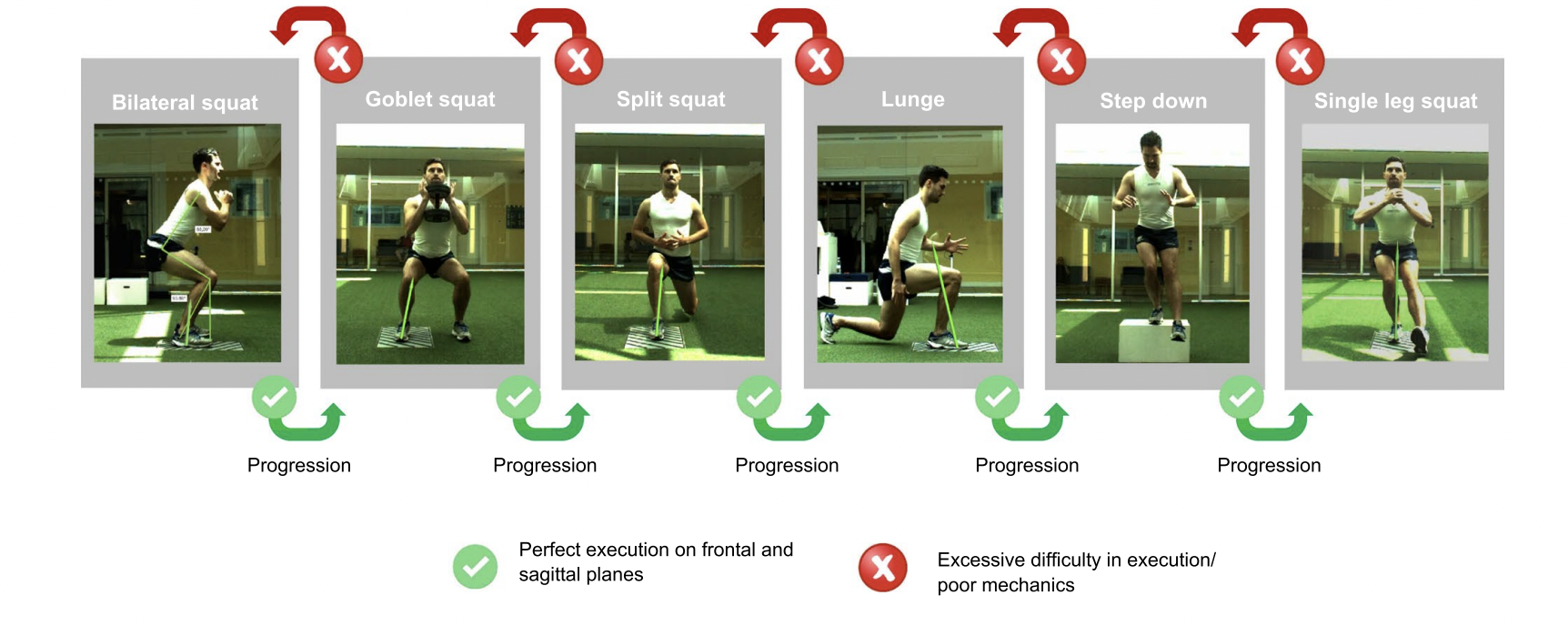
Motor learning is defned as the process of an individual’s ability to acquire motor skills with a relatively permanent change in performance as a function of practice or experience [137]. Therefore, to gain expertise and induce a motor learning adaptation, a skill must be practiced repeatedly. We advise to incorporate optimal task progression based on both complexity and load for foundation motor pattern retraining. This should include a progression from bilateral to single leg tasks, with progression based on sufcient technique profciency and strength development (Fig. 3). It is important prior to adding load that the optimal technique is achieved, and that specifc underlying dysfunction has been addressed to ensure more optimal movement quality and adaptation from the programme
. The rehabilitation and RTS process after ACLRare long (typically 6–9 months) [13] and ofer an opportunity to develop an athlete’s physical ftness to higher levels than before the injury, as long as it is appropriately planned.
As such, an aspect of mid-stage rehabilitation should be in avoiding detraining by incorporating ‘physical ftness reconditioning’. Evidence suggests that football players’ cardiovascular (CV) ftness is lower at 6 months after ACLR than pre-injury values [141], indicating a need to better optimise the training of this important physical ftness parameter. This could in part be due to insufcient intensities in late-stage rehabilitation, but may also indicate an insuffcient stimulus to preserve aerobic ftness during the earlier stages. Key ftness re-conditioning goals will depend on the athlete’s sport, profle and previous injury history. But for most athletes incorporating specifc sessions of re-conditioning that include a focus on body composition, upper body morphology and strength, and importantly CV conditioning, are recommended. low or no load CV training (e.g. deep water running in swimming pool, stationary bike, cross-trainer, alter-g, etc.) and additional corrective strengthening (e.g. extra ‘lumbopelvic-hip strength session’ focusing on areas of weakness).
. The knee is often load compromised throughout the mid-stage of rehabilitationand thus, cannot tolerate excessively high forces (e.g. very high-intensity resistance training, 85–90%+, 5RM). Excessive forces on a compromised knee joint would result in overload and pain and swelling and could potentially stretch or loosen the ACL graft [64, 143]. Thus, the functional recovery programme requires careful planning and well-designed progressions of increasing challenge. Current evidence concerning training theory in uninjured individuals reports that strength adaptations are achieved across a range of training intensities (40–95% maximal intensity) [144]. It is typically recommended that 40–60% neuromuscular activation is needed at a minimum for a strengthening efect [145], although there is a dose–response relationship with greater gains in strength from exercise which elicit higher neuromuscular activation values [146–148]. The American College of Sports Medicine recommends loads of 60–70% 1RM for the development of muscle strength and 70–85% for hypertrophy
As such, although not optimal for muscle hypertrophy, low load to fatigue can be used as a strategy for hypertrophy during the earlier stages of ACL rehabilitation, when the knee is load compromised. The efcacy of low to moderate load strengthening exercises (≤70% maximal intensity) for developing maximal eccentric strength and rate of force development is, however, questionable, thus requiring higher load training for full optimisation of neuromuscular function [152–155]. As such, there is a need to incorporate a periodised resistance training programme with increasing task difculty. During the mid-stage, we recommend initially beginning with low- to moderate-intensity resistance (e.g. 12–20 RM), focused predominantly on muscle work capacity and hypertrophy [40], targeting metabolic stimuli for adaptation, as opposed to high mechanical stimulus or muscle damage, when the joint is highly load compromised [40]. There should then be a progressive increase in intensity and volume to support more optimised muscle hypertrophy and strength recovery, respecting the knee joint load tolerance. Very high intensities are often contraindicated in this stage, and more suited for late-stage rehabilitation, when the knee can tolerate higher loads
In light of the above, we recommend splitting the midstage of rehabilitation in two separate halves/blocks of training, to allow specifc work:
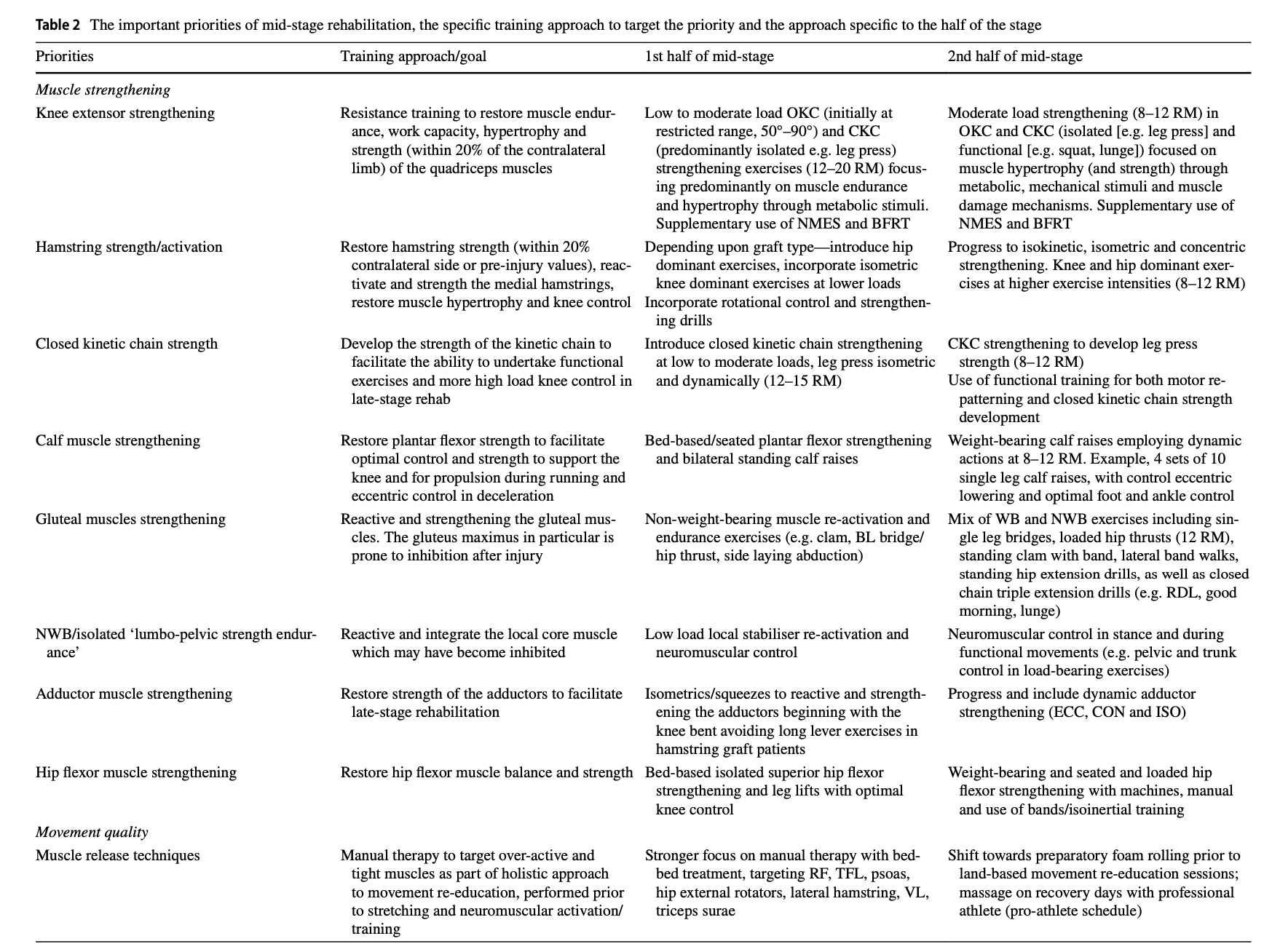
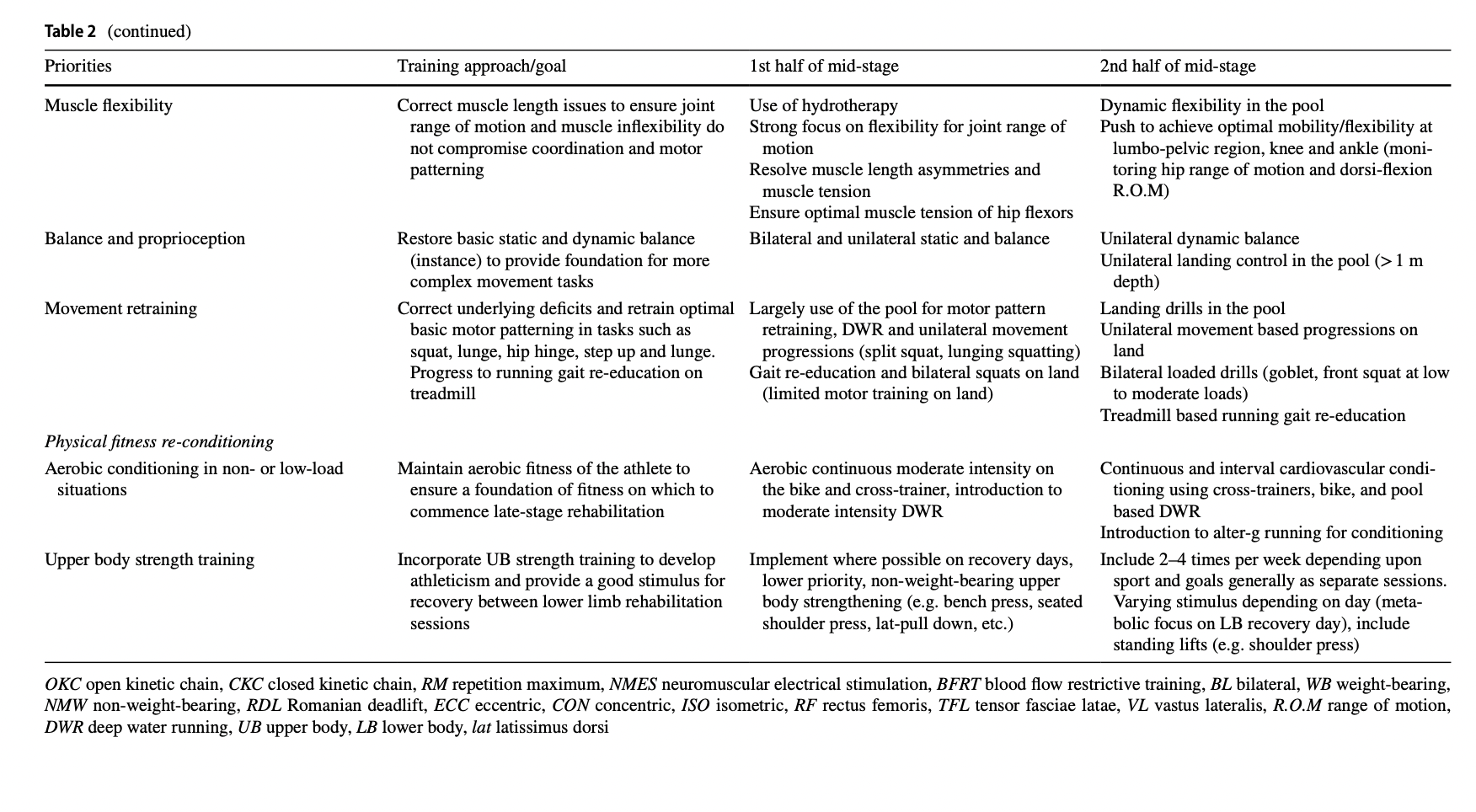
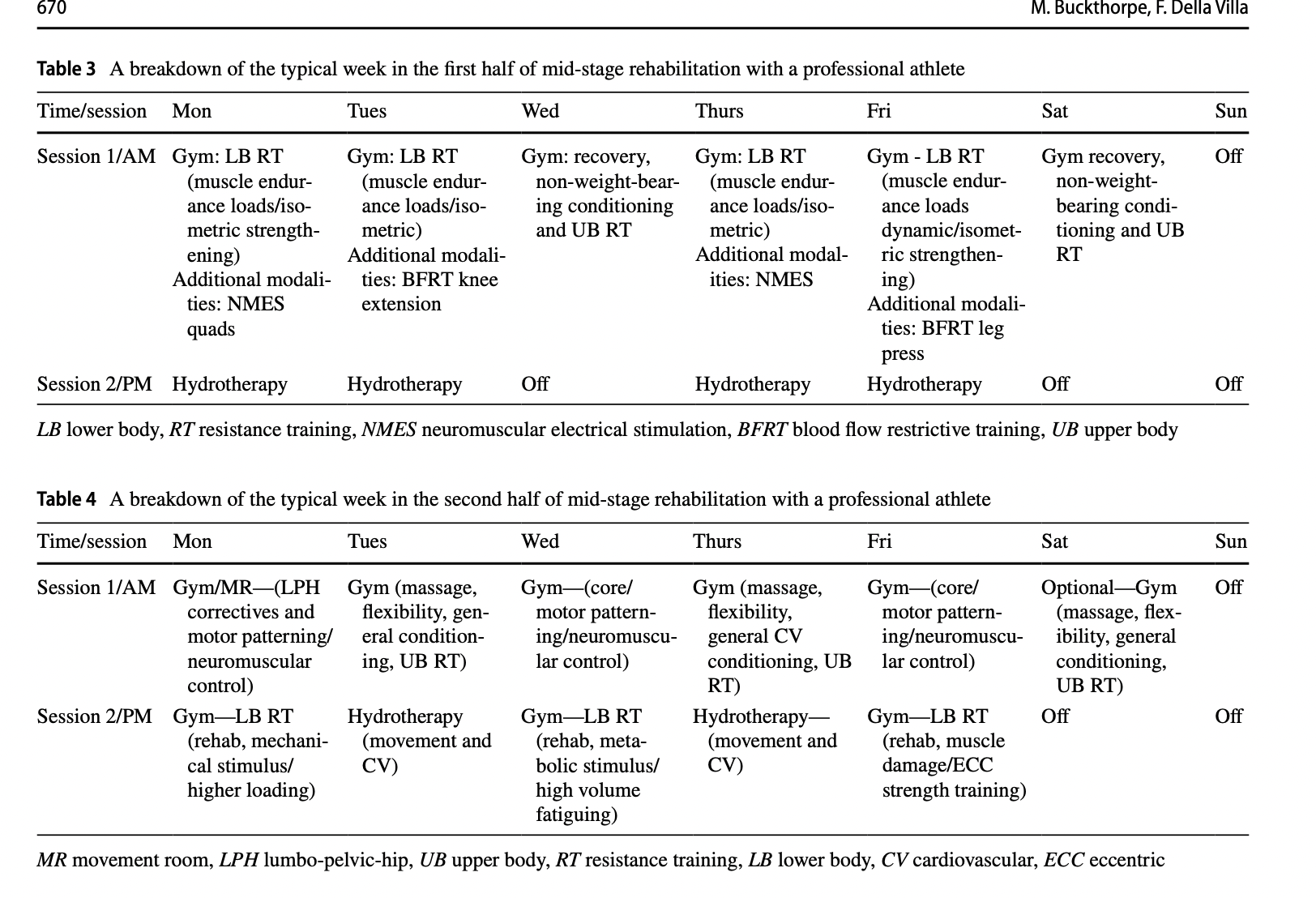
The frst half of activity recognises the load compromised athlete often with severe quadriceps weakness and dysfunction, unable to perform the majority of functional tasks on land (Table 2). During this stage, we recommend the use of lower intensities of resistance (e.g. 12–20RM), and a stronger focus on nonweight-bearing exercise (including lower limb and lumbopelvic-hip exercises) and machine-based strengthening tasks (e.g. leg press, knee extension). We recommend that this is accompanied by additional modalities to overcome the negative efects of AMI, allowing for higher neuromuscular activation (e.g. neuromuscular electrical stimulation), and/or supporting the accumulation of metabolic stimuli (e.g. blood fow restrictive training). Although this lacks task specifcity and transference to functional exercises/movement [156], as described, it can often target a specifc muscle group better in isolation. We still recommend the use of functional exercise during this time, but mostly with the goal of teaching optimal technique as well as improving intermuscular coordination [60, 61], as opposed to for enhancing muscle size and strength. During this frst block of training, the athletes will be unable to perform the majority of functional tasks on land. As such, where possible we recommend utilising the hydrotherapy/swimming pool to practice functional movement tasks such as lunging, squatting, as well as deep water running (as well as the other benefts including active joint range of motion, gait and CV conditioning with deep water running). In water, the buoyancy force controls the downward (landing) movement of the body, thus generating higher upward (concentric) and lower downward (eccentric) forces. At the appropriate depths, there is also around a 45–60% reduction in body weight, allowing the earlier practice of functional tasks at lower loads
During the second block of training, we encourage a progression to slightly higher intensities of strength training, typically 8–12 RM or 70–80% maximum for the injured limb [40]. Furthermore, including progressive land-based movement retraining and functional strengthening is now encouraged, as well as a combination of non-weight-bearing and weight-bearing lumbo-pelvic-hip exercises. The pool can again be used where available to allow for the inclusion of higher load movement activities such as single limb landing, as well as plyometric tasks. Plyometric type activity in water versus land appears to result in reduced joint infammation and perceived pain [157, 158], but similar gains in concentric power development [114, 115]. This is typically though done only in those undertaking a pro-athlete programme in our clinics. include introduction to bilateral landing/jumping, as well as treadmill-based running re-education.
We suggest achieving a single leg closed kinetic chain peak strength of at least 1.25 times body mass, an LSI for knee extensors and fexors of greater than 70% [159], as well as good single leg squat and bilateral landing movement quality as part of the return to run decision-making process
It is also important that mid-stage rehabilitation activity is efectively planned to ensure an optimal stimulus for adaptation, as well as sufcient load variation and recovery within and between weeks (e.g. periodisation). For recreational athletes, programme planning is often simpler, as they typically train a maximum of 2–3 times per week, and as such require a focus on priorities, as well as typically session replication. This would normally involve 2–3 days between sessions allowing sufcient recovery.
Pain and swelling can be used to determine exercise-based progressions as these factors will relate to the loading stress experienced by the knee [161]. Measurement of knee circumference at the patella has been shown to be clinically relevant, with good reliability and sensitivity to change [162]. Changes greater than 1 cm were reported to be clinically signifcant, indicating possible exercise overload. Other techniques include assessing knee efusion via the stroke test [163]. Furthermore, regular measurement of joint range of motion can facilitate progression, and changes in range of motion may refect the level of joint efusion [164]. Pain can be monitored using a 10-point numeric rating scale (0 no pain, 10 worst imaginable pain), which has been shown to be sensitive to changes in pain which afect function [165] with a reduction or increase by 1 point being regarded as the minimal clinically important change
Mid-stage activity can be divided across (1) muscle strengthening, (2) movement training and (3) ftness re-conditioning. The programme should be planned according to the functionality of the athlete, and we recommend splitting the programme into 2 halves, with a greater focus on isolated and non-weight-bearing corrective exercise during the frst stage, with support from hydrotherapy and a more functional higher load land-based movement programme in the second half
LATE STAGE:
. Rapid (<50 ms) re-stabilisation of joints following mechanical perturbation to prevent injury [15], or explosive athletic tasks such as sprint running (100–120 ms) [16], involve contraction times that are shorter than the time it takes to produce the maximal isometric voluntary force, which is typically in the order of 300 ms [17]. Hence, the capability to produce force during rapid sporting tasks (i.e. explosive eforts) may be more dependent upon the ability to increase force quickly from low levels, termed rate of force development (RFD), than on maximal muscle strength. As such, RFD appears to be an important aspect of neuromuscular function and may require additional consideration in late-stage rehabilitation programmes
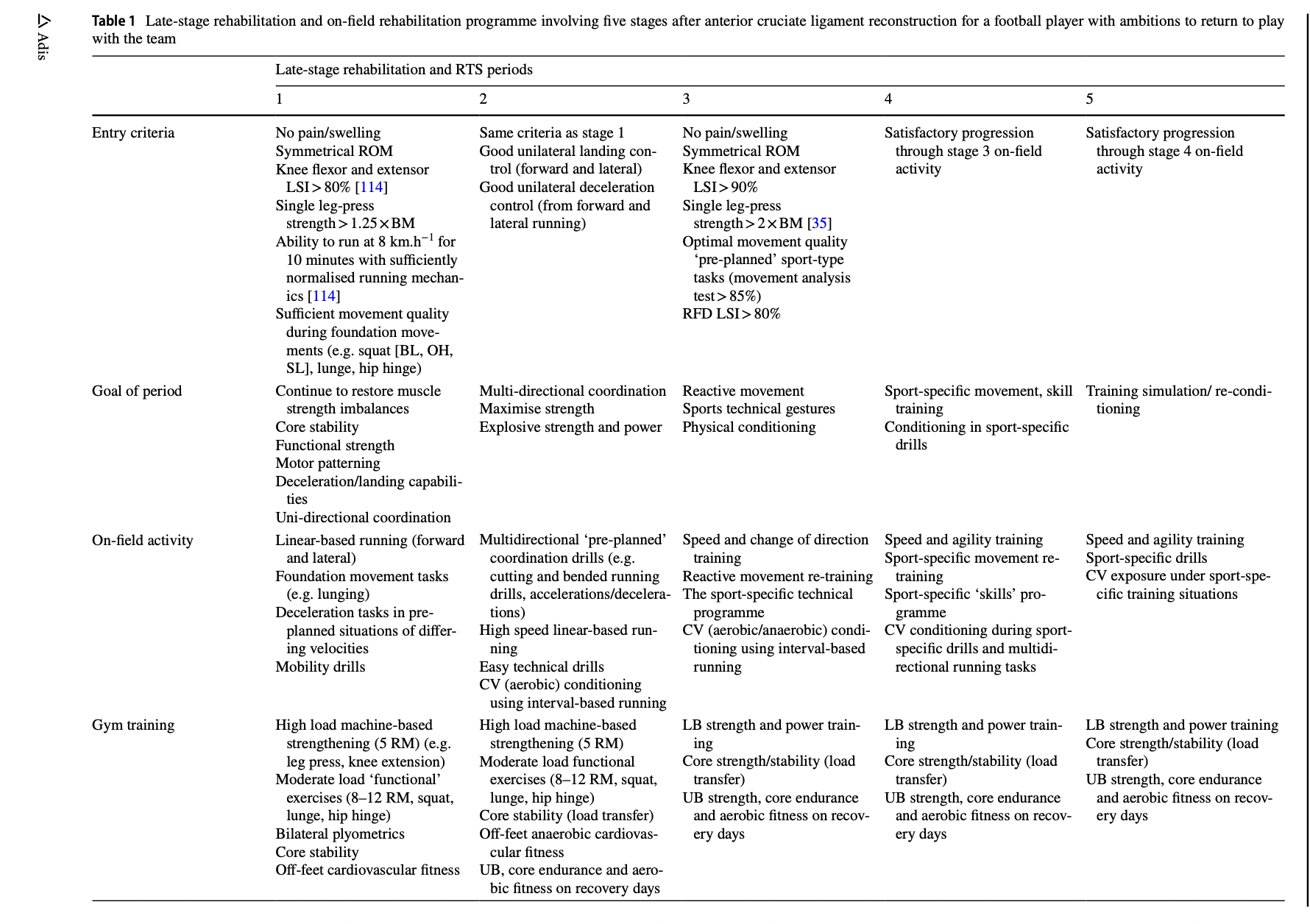
It is recommended after achieving sufcient basic neuromuscular function after ACLR (e.g. minimum of at least 80–90% limb symmetry index [LSI] for isokinetic knee fexor and extensor strength [25–27]) that a period of additional advanced neuromuscular training be undertaken to restore explosive neuromuscular performance. Moderateload resistance training (e.g. 70% maximal load that can be lifted for 8–12 repetitions), which is highly efective at developing muscle size and maximal strength [22, 23, 28], appears largely ineffective at training or restoring RFD [22, 29, 30]. Instead, specifc stimuli are required to develop RFD over the initial 50–100 ms, including explosive strength training, which involves the rapid development of force from low to high levels, typically under isometric conditions, ballistic strength training [32], such as jumping or bounding [33]; and heavy (<5 repetition maximum) strength training [30, 32]. Gains in RFD over the initial 50 ms of 50–80% can be expected after as little as 4–8 weeks of training with these modalities, at least in uninjured individuals [31, 32, 34]. Thus, late-stage rehabilitation should incorporate these specifc training practices (explosive isometrics, ballistics, plyometrics) as part of a mixedmethods approach to restoring neuromuscular performance. It is important these are included alongside specifc strength training involving an eccentric component [34] of moderate to high loads (e.g. 5–8 repetition maximum training) to fully restore maximal muscle strength. This should aim to fully restore (e.g. achieve a 100% LSI [25, 26]) open kinetic chain maximal strength of the knee extensors and fexors, as well as closed kinetic maximal strength (e.g. leg press strength of two times body mass, for 8 repetition maximum and 100%LSI [35]).
Testing RFD is experimentally challenging [14, 20], but by controlling certain factors that infuence RFD performance such as countermovement, system compliance (the amount of compliance within the testing equipment) and athlete instructions [14, 20], it is possible to obtain valid and reliable information [39]. Assessment of closed kinetic chain RFD (e.g. leg press [18] or squat [40, 41]) explosive isometric contractions can provide useful information on the explosive strength characteristics of the lower limb and should be included where possible. However, it must be noted that multiple joint measures of RFD may not capture defcits specifc to individual muscle groups (e.g. knee extensors or fexors). Thus, in addition to closed-chain RFD assessment, it is also advised to assess RFD during singlejoint open kinetic chain tasks (e.g. explosive isometric knee extensors and fexor contractions) [42]. Force/torque should be assessed over the early (e.g. 100 ms) and late (200 ms) portions of the force/torque–time curve following force onset [19, 22, 34], alongside peak RFD and peak force. As there are no published recommendations for assessing RFD after ACLR, it is advised here to have a minimum of 90%, in line with research on maximal muscle strength testing prior to RTS training [25]. Maximising reliability by capturing a suffcient number of explosive contractions (e.g. eight explosive contractions with an emphasis on fast and hard [20, 23]) and taking the average of a number of trials (e.g. n=3) is recommended [39].
Movement quality: Firstly, neuromuscular and biomechanical factors such as muscle strength imbalances/agonist weakness (e.g. knee extensor weakness [57] and altered reciprocal muscle inhibition [58]) and neuromuscular activation (e.g. altered timing of muscles, such as delayed or reduced activation of medial hamstrings [59]) may afect movement quality. Assessing and resolving these factors are important initial steps in the movement retraining process and a well-designed neuromuscular training programme can support enhanced movement quality [60] and ACL injury risk reduction
secondly, there is a need to incorporate movement practice to relearn and optimise movement coordination during these tasks [62]. The training should include movement coaching to support cognitive understanding of the movement tasks [63], using biofeedback techniques such as mirror training, videofeedback and dyad training [64], and encourage an external as opposed to internal focus of attention [65]. It is also important to incorporate optimal movement progressions of progressive increase in loading through systematic increases in movement complexity [66] and speed [67], ensuring optimal ‘coach’ feedback (correct timing, content, amount of information). These movements should be relearned under both controlled tasks in the gym (or specialist movement environment) and during linear and then multi-directional movements on the feld. In addition, confrming movement quality using two-dimensional (2D) video analysis and qualitative movement assessment in an array of ‘sport-type’ tasks is recommended (e.g. squat, landing, jumping, decelerating, changing direction).
finally, Although optimising patients’ movement quality during movements such as squatting, jumping, landing and change of direction tasks, and confrming this with 2D visual movement assessments [12], is an essential improvement in the traditional ACL rehabilitation approach, it is important to note that ACL injuries in sport do not typically occur during these ‘pre-planned’ movement tasks [68]. Rather, ACL injuries occur during the performance of highly complex tasks [15, 68]. Specifcally, ACL injuries are generally thought to occur as a result of failure to maintain neuromuscular control whilst attending an external focus of attention, involving highly complex dynamic visual stimuli, variable surfaces, movement planning and rapid decision making with variable player positioning and environmental interaction during unanticipated movements
In addition, reactive movements induce worse biomechanics and higher knee loads than planned movements, with knee loads being twice as high during unplanned than planned side-stepping in the frontal and coronal plane [66]. Thus, re-training reactive movement quality and confrming quality of movement during reactive movement tasks prior to RTS appears an important and often neglected element of RTS training.
GEM:Furthermore, the combination of fatigue and unanticipated movement (typical of team sports) further results in heightened ‘at risk’ ACL biomechanics [82]. Thus, practicing movements under fatigue and confrming movement quality whilst fatigued are important additional elements of the movement re-training programme.
Recognising the required movement patterns of the athlete’s sport and ensuring a staged and multi-targeted approach to movement re-training is recommended to optimise athletes’ movement quality upon RTS. In the author’s experience, this should include and progress by (1) addressing the neuromuscular and biomechanical factors that afect movement quality and motor learning, (2) including a progressive movement retraining approach to re-learn an array of functional tasks optimising coordination and motor learning and (3) performing the fnal aspect of rehabilitation and movement training on the feld, in realistic environments, progressively simulating the sporting movement demands and environmental constraints. This can be achieved through a sportspecifc movement programme, with gradual increases in sport specifcity through the provision of a greater number of options (e.g. three passing options as opposed to one) and movement choices, opponents and distractions to prepare the athlete for the chaotic and highly complex demands of their sport. Although screening should occur throughout the functional recovery approach according to criterion-based rehabilitation, RTS testing should consider incorporating qualitative movement assessment of functional tasks during both planned and reactive scenarios (e.g. cutting), whilst not fatigued and fatigued, as well as assessing movement quality on the feld in realistic sporting scenarios. When athletes move optimally ‘on the feld’ in realistic sport-specifc conditions they can be considered to be ‘movement ready’ to RTS.
Acute fatigue typically arises from acute periods of anaerobic activity during match play [86]. Although the research is equivocal [77, 78], experimentally simulated acute fatigue has resulted in reduced neuromuscular function and altered movement quality [79–83], some of which are considered ‘at-risk ACL movements’ Thus, avoiding fatigue where possible is important for both athletic performance and general injury risk.
Important considerations in the management of fatigue appear to be (1) ensuring sufcient cardiovascular ftness to increase work capacity; (2) sufcient training prior to RTS to develop the ability to compete with the demands of match play and limit the cumulative fatigue over the course of match play (i.e. 90 minutes of work in competitive 11 v 11 football); and (3) sufcient exposure to sporting practice in a fatigued state so the athlete becomes accustomed to fatigue as well as training to avoid at-risk behaviours in this state. It appears that although an athlete may pass RTS criteria in a non-fatigued state (i.e. biomechanics, knee fexor/extensor ratio etc.), fatigue can result in altered neuromuscular function and control that may preferentially endanger the ACL
, testing in both a non-fatigued and fatigued state appears warranted when possible. This should ideally refect the acute infuence of fatigue from anaerobic work (e.g. the assessment of movement quality whilst acutely fatigued, such as following an intermittent running protocol) and assess the cumulative fatigue changes that result from training and match play (e.g. assessment of strength and movement quality at the end of or after a hard training session) where possible and plausible.
The RTS process should include a progression from on-feld rehabilitation to return to team training and return to competition [109, 110], which is performed alongside sport-specifc physical re-conditioning. On-feld rehabilitation acts as a bridge from the rehabilitation and strength and conditioning environment to the return to sporting involvement with the team or coach.
This would be expected to have a positive impact on psychological readiness to RTS, which is becoming recognised as important for optimal and timely return to previous levels of performance [10, 111, 112]. Various factors such as poor conditioning, sport-specifc movement patterns and the required sport-specifc skills can afect performance and anxiety about RTS
Those completing a greater proportion of their functional recovery programme on the feld after serious knee injury reported superior RTS outcomes
. In the context of late-stage rehabilitation and RTS, failure to develop sufcient chronic training loads prior to returning athletes back to sport would likely increase their injury risk [101], although there is limited actual evidence within the context of RTS. --> athletes need to be trained enough
Blood lactate concentrations recorded during football match play typically range from 2 to 12 mmol L−1, with recorded individual values in excess of 12 mmol L−1 [128]. The most decisive eforts leading to important outcomes/actions are anaerobic in nature and often involve a directional change [129]. As such, restoring explosive acceleration, deceleration and change of direction ability appears an essential element of RTS training.
During match play, players typically record average and peak heart rates of 85% and 98% maximum, respectively [130]. This represents an average of around 70% of maximal aerobic capacity (VO2 max). Thus, players need to develop a very good aerobic and anaerobic cardiovascular capacity, specifcally the ability to work for longer periods of time at high heart rates, to compete without the adverse efects of fatigue. Recent research indicates that football players fail to fully restore their aerobic ftness (measured as V̇O2 max) 6 months following ACLR [131], indicating a greater need to prioritise and programme cardiovascular conditioning during the functional recovery period
In addition, on-feld rehabilitation needs to be supported by an appropriate reconditioning programme in the gym, in order to achieve the necessary function and physical conditioning to optimally RTS. This gym-based re-conditioning programme should focus on fully restoring maximal strength (isolated [e.g. knee extension], compound [e.g. leg press] and functional [e.g. squat]), explosive power performance (maximal power and RFD) and cardiovascular conditioning (e.g. an of-feet cardiovascular conditioning programme to complement the on-feld conditioning programme), whilst targeted movement re-training using novel movement techniques, movement coaching and visual–motor re-training with biofeedback techniques is needed to specifcally address issues with movement quality
In line with the need to develop sport-specifc endurance and achieve the neces - sary intensity of activity to mimic training demands, heart rate (HR) measurement is important, with the minimum assessment being the time in aerobic (I use 70–85% HR maximum) and anaerobic (>85% HR maximum) zones. A key aim to gradually progress the intensity and volume of activity towards that of at least 90% team training (or 45% of match activity), and achieve a 70% chronic training load (expressed as percentage of the player’s normal train - ing week, excluding match play) prior to return to team training
Where GPS technology is not available, standardising the on-feld rehabilitation programme (e.g. distinct periods of work and optimal progressions of drills) and recording the expected workload (e.g. drill 1, expected distance, high speed running exposure), whilst measuring the internal loading response via athlete session rating of perceived exertion and HR monitoring, is recommended.
. I adopt an approach of varying on-feld ses - sions between high quality and quantity sessions and hard, moderate and easy days. Quality sessions focus on optimal performance of the tasks at hand, with fewer repetitions and longer rest between eforts (to minimise possible fatigue). There is also a greater focus on sport-specifc technical and tactical training during these sessions and they are designed to introduce new work or improve the quality of the work (e.g. movement or sports ‘technique’). Quantity sessions involve greater workload, with more repetitions, less restbetween repetitions and at higher intensities. They also aim to develop tolerance of higher training loads and stress the body system. This on-feld rehabilitation programme is completed alongside a re-conditioning programme balancing the specifc lower limb loading to provide a holistic approach to the functional needs of the athlete. This programme should be supported with recovery days using efective strategies (rest, massage, sleep, nutrition, upper-body strength training) [133, 134] the day after the ‘quantity’ sessions to enable efective recovery and support adaptation
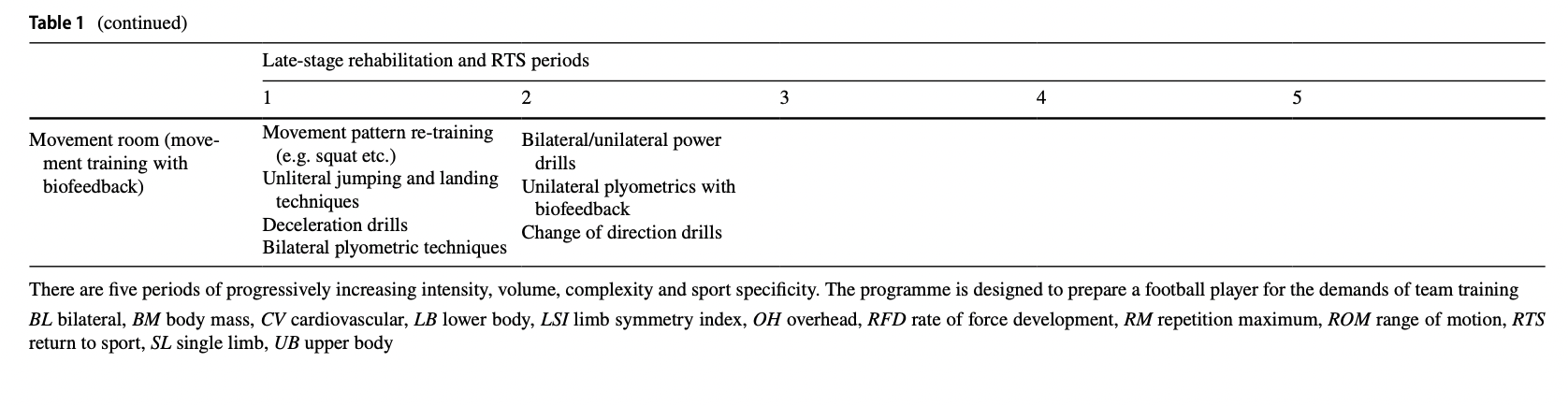
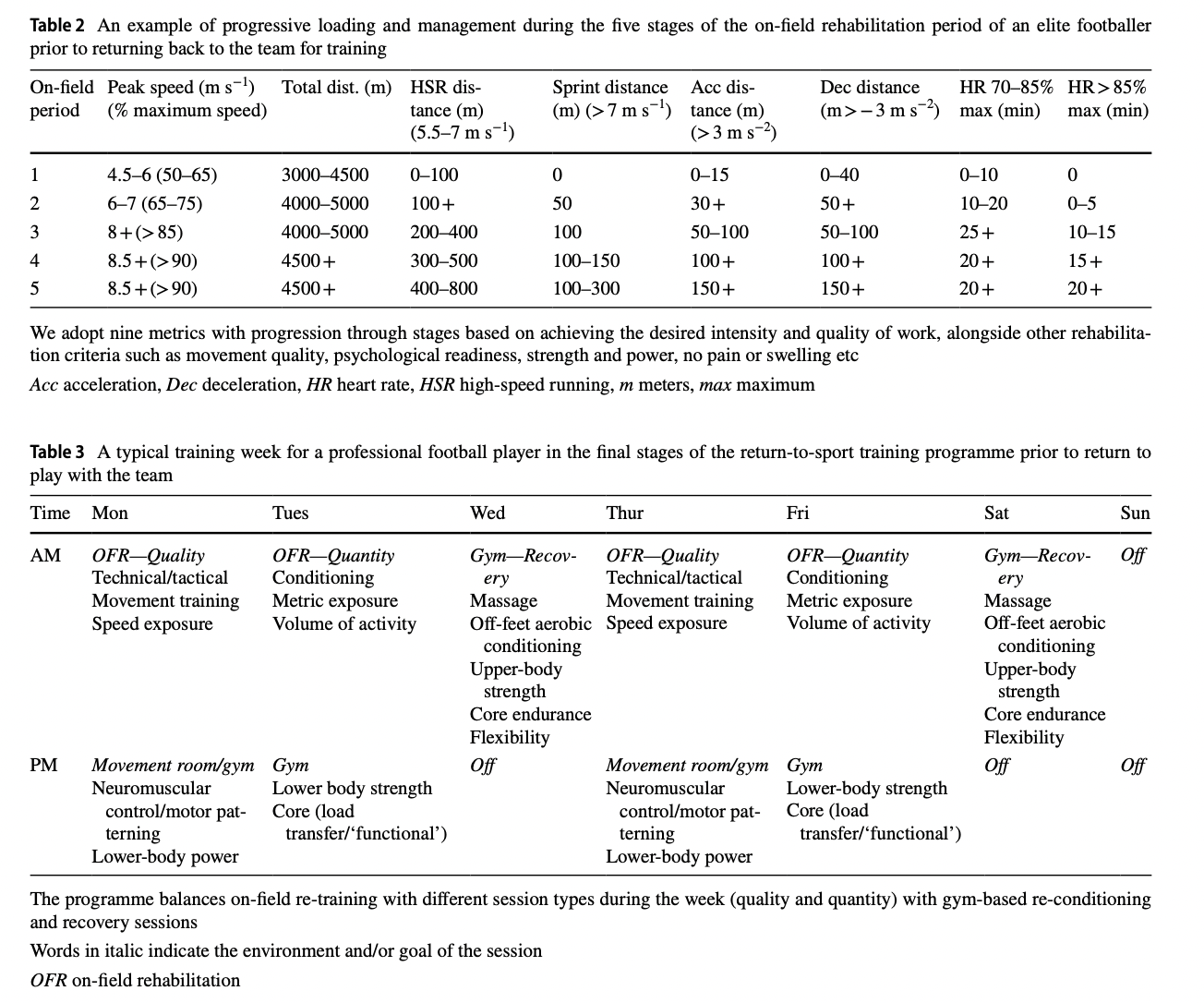
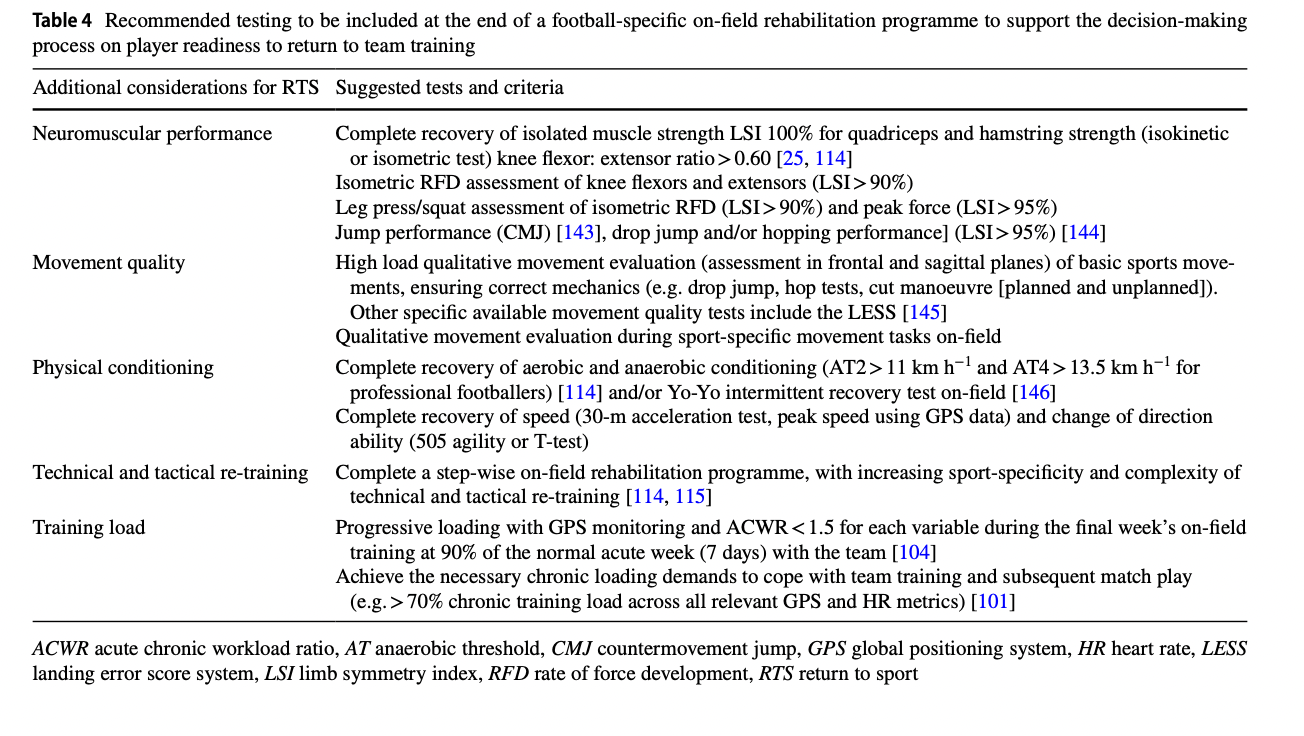
Although one cannot perfectly guarantee that an injury will not recur when the athlete returns back to sport, there are several factors that, if taken into consideration when determining return to competition, can help determine whether the risk of playing is acceptable. Recently, meeting RTS criteria prior to RTS has been shown to reduce the risk of re-injury by 75–84% [7, 115]. Having comprehensive rehabilitation and RTS processes in place, with criterion-based progressions and key discharge criteria, is thought to reduce the risk of re-injury and enhance outcomes after ACLR [7, 115]. However, it must be noted that passing RTS criteria by no means guarantees a player is safe upon RTS
testing also consider other important and more commonly known factors that have been excluded from this review. These include the consideration of time [7, 13], psychological readiness [111, 112], knee status, confdence, stability and the more standard hop testing
It is important to also set acceptable risk tolerance [140] as part of the RTS decision-making process, and that this be dependent upon the specifc contextual factors (injury, individual, sport etc.). However, given the devastating efects of secondary ACL re-injury, these risk tolerance levels should be set as low as realistically possible, whilst balancing the possibility of a risk aversive approach and reduced patient satisfaction. Use of non-linear, multi-variate and complex systems thinking models, given the web of determinants that give rise to an injury, may be important and have a place in elite sport RTS diagnostics in the future
This study has identified that the low or unstrained ACL exercises include isometric hamstrings contraction (at 15°, 30°, 60°, and 90°), isometric quadriceps contraction (at 60° and 90°),
The protocol that is based on activities that do not strain the ACL would include exercises that are either dominated by the hamstring muscle group, or that involve quadriceps muscle activity with the knee in a flexed position (60° or greater).
Neuromuscular training is a type of physical therapy intervention advocated to mitigate movement pattern deficits and abnormalities
The response to perturbation training was different between our male and female non-copers as well. Following training, all but one of the women’s gait asymmetries had resolved, suggesting perturbation training may be an effective pre-operative intervention to address aberrant gait strategies in female non-copers. Knee extensor moment asymmetries, however, persisted after training for both the men and women in our group of non-copers (which isn't unexpected).
Our female non-copers not only presented with poorer performance following injury, but also seem to possess the abnormal gait behavior that is characteristic of non-copers as previously described. These data suggest that women may benefit the most from pre-operative perturbation training, as evidenced by the adoption of more symmetrical movement patterns.
(Di Stasi & Snyder-Mackler, 2012)
20 years ago, we coined the terms copers (athletes who resume prior levels of activity without dynamic instability following ACL rupture) and persistent non-copers (athletes who continue to have episodes of dynamic instability despite progressive rehabilitation).
Dynamic knee stability can improve with rehabilitation after ACL rupture.9, 20 When treated with rehabilitation alone, 70% of those who were classified as non-copers early after injury became true copers after 1 year.20 These findings indicated that early coper classification is not static, and is mutable with intervention.
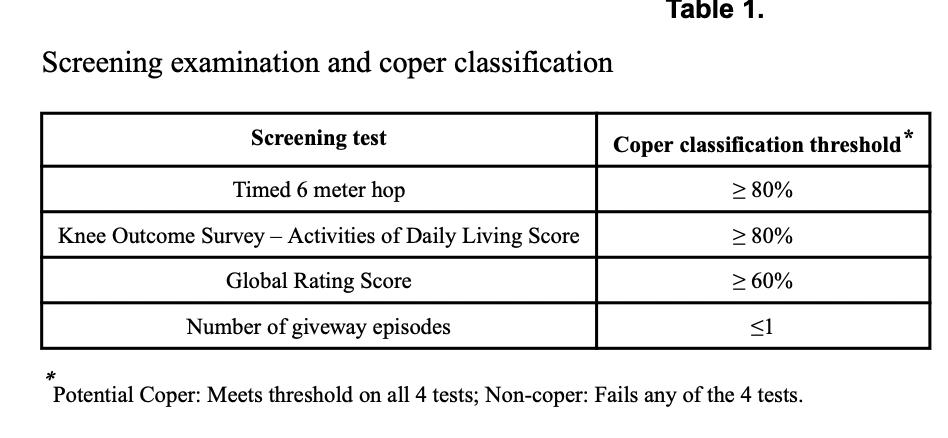
Participants completed clinical testing before and after NMST (Table 1) and were classified as potential copers or non-copers based on our previously established screening criteria.11 Briefly, potential copers were identified as those with Knee Outcome Survey-Activities of Daily Living Scale (KOS-ADLS) score ≥80%, global rating score ≥60%, ≥80% symmetry on the timed hop (uninvolved/involved*100), and ≤1 recent episodes of giving way during activities of daily living. Non-copers failed to meet at least one of these criteria.
Nearly half (45%) of non-copers became potential copers following NMST, while conversion from potential coper to non-coper was uncommon (13%).
, athletes who were potential copers post-training were more likely to have a successful two-year outcome regardless of operative management compared to the non-copers who received ACLR. Early progressive rehabilitation (i.e. 10-session NMST program) after the athlete achieves a quiet knee, is a hallmark of the Delaware-Oslo ACL study, and provides a model of care that improves upon current standard care following ACL rupture in athletes
athletes who demonstrate dynamic stability after NMST have 2.7 times the odds of success two-years after ACLR compared to non-copers. Taken together, these studies strongly support the addition of early progressive NMST prior to ACLR to standard care to improve the long-term success of our patients after ACL rupture.
The rationale for ACLR after ACL rupture is to restore mechanical stability to the joint. Yet, the results of this study suggest that dynamic stability (potential coper vs. non-coper) was more important than mechanical stability (ACLR vs. Non-Op) for functional success two years later.
That is, athletes who were potential copers and chose Non-Op rehabilitation in lieu of ACLR had 2.9 times the odds of success compared to non-copers who received an ACLR. Within potential copers, we did not observe differences in outcomes between those who chose ACLR or Non-Op rehabilitation. These findings indicate that potential copers who choose non-operative management after NMST (i.e. prehabilitation) may succeed without an ACLR. The odds ratio for ACLR non-copers was 0.51, favoring ACLR, but the exceedingly small sample of non-copers who chose non-operative management leaves us unable to confidently make recommendations.
Coper classification can be changed with a 10-session NMST program early after ACL rupture, and robustly predicts the long-term outcome of the athlete. Specifically, athletes who demonstrate dynamic stability after NMST have the highest odds of success over two years later, regardless of their surgical status. For athletes who present initially as noncopers, a NMST program is warranted, as nearly half may become potential copers and thus have higher odds of long term success.
Restoring knee extensor strength:
Loss of mechanoreceptors from the ACL is thought to disrupt the ligamentous–muscular reflex between the ACL and the quadriceps, leading to an inability to actively recruit high-threshold motor units during voluntary quadriceps contractions. Furthermore, pain and swelling both result in neuromuscular inhibition via the AMI process and resultant muscle atrophy and weakness.6,15 AMI typically limits the ability to achieve desired intensity levels and neuromuscular activation, and is often present bilaterally following unilateral ACLR, and in some cases, can be equivalent to the injured limb.
Two strategies exist to normalize quadriceps strength after surgery. These include: 1. Limit strength loss after injury and surgery and 2. Maximize and accelerate the recovery of strength after surgery.
prehabilitation (a five to six-week program focusing on restoration of muscle strength, quadriceps hypertrophy and hop performance) results in superior knee function post operatively.18-20 Recent research shows that patients with better pre-operative quadriceps activation demonstrated greater post-operative activation, whilst patients with better pre-operative strength also demonstrated better post-operative strength
Resolve Arthrogenic Muscle Inhibition (AMI) quickly post-surgery via
Use Anaesthetics. Local anaesthetics may reverse AMI through the reduction of pain and may also reduce AMI by blocking other afferents contributing to the inhibition. AMI persists once pain has subsided and can be induced in the absence of pain (e.g., the effusion model does not cause pain but results in AMI),24 therefore, rehabilitation strategies effective in removing AMI, should not be focused solely on removing painful stimuli.
Use of cryotherapy (ice), compression and elevation are standard practices as part of acute injury management,Cooling of the knee joint may also may serve to decrease AMI24 and facilitate increased quadriceps activation. The effects are thought to be maintained after the removal of cryotherapy and as such, may serve as a strategy to temporarily reduce AMI and increase quadriceps recruitment prior to exercise.
Utilize transcutaneous electrical nerve stimulation. Transcutaneous electrical nerve stimulation (TENS) of the cutaneous nerves has been shown to reduce presynaptic inhibition,25 which is a contributor to AMI.26 Hopkins et al.24 demonstrated that 30 mins of TENS treatment reversed the inhibitory effects of induced knee effusion. However, this was temporary as the inhibition returned to baseline levels after the machine was turned off. As such, the greatest effect of TENS appears as a supplement to active exercise with an effect to minimize AMI and promote quadriceps recruitment
Monitoring pain and joint effusion particularly during the early phases of rehabilitation are important to ensure that the applied training stimulus is not excessive and causing tissue overload. Measurement of pain via the use of the visual analog scale should be taken regularly and recorded. Swelling can be measured with limb girth daily. Measurement of knee circumference at the patella has been shown to have strong intra-tester reliability and good sensitivity to change.30 Within, the knee, change greater than one centimeter was shown to be clinically significant.
Key strategies after ACLR are to restore muscle mass, strength (across the force-velocity curve), explosive strength (rate of force development), power and coordination (e.g., ability to use this strength in sport-specific movements).
Periodization can be defined as the planned manipulation of training variables (load, sets and repetition) in order to maximize training adaptations and prevent over-training.33 There is a lack of evidence concerning the best periodization approach after ACLR, but it is the authors view and that of others31 that the use of periodization in rehabilitation is superior to non-periodized approaches and the use of nonlinear approaches, respecting the phases of rehabilitation is important.
The manipulation of various resistance training variables can influence muscle strength and size and include training volume, loading of exercise intensity, training frequency, training to failure, exercise variation, contraction type and recovery between efforts
In general, it appears that high volume resistance training is necessary to bring about increased strength and muscle size. Schoenfeld et al.37 concluded that high volume resistance training produces greater gains in muscle mass than low volume training. This exact value is not known and may relate to the individual, the training history, recruitment, recovery strategies as well as lifestyle outside of the clinic (e.g., sufficient recovery practices, sleep, nutrition and rest etc.), and possible unresolved biological consequences of injury (e.g., pain, swelling and AMI) -> max hypertrophy? 10+ sets per week
Recently, Mangine et al.46 showed that moderate intensity resistance training with loads at 70% 1RM over eight weeks resulted in no change in RFD, whereas strength training using high loads (90% maximal) elicited large increases in RFD (+70%). As such, each training intensity may bring about specific underlying adaptations and evoke differing alterations in mechanical variables (strength, power, RFD). Obviously, high load strength training (>85-90% 1RM) can only be implemented following satisfactory recovery of range of motion, pain and swelling, AMI and sufficient muscle mass to tolerate these high forces
beginning with optimal post-operative recovery, prior to moderate to high volume low to moderate loads resistance training until failure to promote initial strength gains and hypertrophy of all motor units (achieved largely through metabolic stimuli), when the joint is more load compromised and cannot likely tolerate high forces; followed by a period of moderate to high intensity (70-80% 1RM) resistance training with moderate to high volume (5-8 sets) with the goal to fully restore muscle size and maximise strength; finishing with very high intensity strength training (90%, / 5RM) and lower volumes in the latter phases of rehabilitation to target maximal voluntary activation, eccentric maximal muscle strength and restore power and explosive strength
A particular consideration with knee extensor strengthening after ACLR, is minimizing patellofemoral joint (PFJ) stress, given the high prevalence of patients who go on to develop patellofemoral pain syndrome (PFPS) after ACLR surgery.55-57 In OKC exercises such as knee extensions, quadriceps muscle force and PFJ stress are greatest near full extension.58,59 Conversely, in CKC exercises such as lunges and the leg press, quadriceps muscle force and PFJ stress are highest near full flexion.55,56 As such, it is recommended to initially restrict high load OKC strengthening between 40-90 degrees of knee flexion, and CKC between 0-80 degrees, which collectively can enable complete strengthening through the arc of motion, at reduced PFJ stress. Each can be implemented at a similar time (typically 4 weeks after surgery, but with an initial focus on control as opposed to load), respecting the principles of optimal load progressions.
The authors suggest that isolated machine based strengthening techniques be the main strategy to restore knee extensor strength in the early to middle phases of rehabilitation (e.g., week 4 to week 12 after surgery as an example) and once the patient has resolved at least 80% of the knee extensors strength of their contralateral limb70 (assessed through isokinetic testing of the knee extensors, typically at 90-120 days post-surgery in our patients). Once the patient has restored knee extensors strength to within 20% of the contralateral side, moderate to high load strength training using both isolated (high load, 5RM) and functional (moderate load, 8RM) techniques can be used.
When PFP is a problem and pain leads to inability to properly load the knee --> In those with patella maltracking, the use of electromyography (EMG) biofeedback measures during neuromuscular contractions can provide auditory or visual feedback signals, designed to increase awareness and voluntary control of muscle activation. When utilized in conjunction with strength training, EMG biofeedback aimed at increasing VMO activation while maintaining constant vastus lateralis (VL) activity has been shown to improve VMO/VL activation ratios.82 Additionally, taping of the patella may be an effective strategy to transiently optimise patella tracking. Using taping techniques to control patella tracking during resistance exercise have found increased patient tolerance to knee joint loading, increased VMO activity, and improved onset of the VMO in relation to the VL muscles.83-86
Hip muscle strengthening is effective in reducing the intensity of pain and improving functional capabilities in patients with PFP95 and should form part of the ACLR rehabilitative program focused on resolving knee extensor strength deficits.
Neuromuscular electrical stimulation (NMES) appears to be a promising intervention for use after ACLR. NMES allows for the direct activation of the motor axon, and could allow for the direct recruitment of the inhibited motoneurons. Muscle activation by means of NMES allows for the recruitment of a greater proportion of type II muscle fibers when compared with voluntary contractions of a similar intensity.96-98 Furthermore, although, during voluntary contractions there is a logical order of recruitment beginning with the smallest motor units and progressing to the largest motor units,42 NMES results in a reversal of the order of motor unit recruitment.99 The activation of type II motor units are essential to achieve a higher level of quadriceps force production, as well as sufficient power and RFD. As such, their recruitment by means of NMES undoubtedly should aid in the quest to achieve complete recovery of quadriceps strength
Low-intensity resistance training with BFR can result in in greater strength and muscle hypertrophy when compared to resistance training with the same intensity under normal flow100-103 and comparable to gains with moderate to high intensity resistance training. As such, BFR therapy at low loads can may be a useful tool to develop muscle strength in patients who are unable to perform high-resistance exercise or patients who have persistent extremity weakness despite traditional therapy, or maybe used sparingly as part of a periodized strength training program
An ACL injury has recently been suggested as a single leg injury, but a double leg problem.105 Deficits in knee extensor strength, neuromuscular control and proprioception, which are prevalent in the injured limb are also present in the contralateral uninjured limb.106-108 As discussed, this lower than optimal level of strength in the contralateral limb can result in an overestimation of knee extensor strength of the injured when examining the limb symmetry index in the conventional manner (injured versus uninjured).8 As such, it is advised to ensure that rehabilitation target both limbs
Restoring balance between the quadricep muscles and resolving possible patellar tracking issues, through manual therapy, biofeedback training and stretching are important additional considerations.
MOvement quality:
I have previously attempted to defne movement quality after ACL injury as ‘the ability to control the limbs and achieve sufcient balance and kinematic alignment during functional activities, not displaying movement asymmetries or risk factors linked to ACL injuries’
. In sport performance, there actually exists no ideal movement pattern.
In support, it has been found that alterations in quadriceps activation (motor unit discharge rate) occur not only in the presence of pain, but also with the anticipation of pain --> swelling, pain, AMI affect movement quality; Targeting the resolution of pain as well as addressing possible compensation patterns which emerge due to pain are important rehabilitation considerations.
Weakness of the primary agonist muscle to produce force in functional situations would be expected to result in synergistic dominance [81] and/or compensatory of-load to other joints [45]. For example, weakness of the knee extensors would mean reduced ability to produce and accept force at the knee and is known to limit the ability to perform and progress through functional tasks [82]. Defcits in knee extensor strength greater than 20% are associated with reduced knee function and movement compensations during high load activities (e.g. jumping and hopping) [82]. Furthermore, weakness of the hamstring (particularly medial hamstring muscles) and gluteal muscles would be expected to contribute to dynamic knee valgus [83–85], a known ACL injury risk factor
Furthermore, rapid (<50 ms) re-stabilisation of joints following mechanical perturbation to prevent injury [112, 113], or explosive athletic tasks such as sprint running (100–120 ms) [114], involve contraction times which are shorter than the time that it takes to produce the maximal isometric voluntary force, which is typically in the order of 300 ms [115]. Hence, the capability to produce force during rapid sporting tasks (i.e. explosive eforts) may be more dependent upon the ability to increase force quickly from low levels, termed rate of force development (RFD), than on maximal muscle strength. Defcits in explosive strength are typically greater than for maximal strength after ACLR near the time of RTS
neuromuscular training such as isoinertial resistance training or jump/land/plyometric type actions are known to result in task-specifc adaptations, thought due to learning and optimisation of muscle coordination
ACL ruptures have been shown to occur within 50 ms of ground contact [112, 113], which is much longer than the ACL/ hamstring refex arc (85–110 ms) [121]. Thus, optimal feedforward motor patterns with appropriate muscle preactivation to develop tension and stabilise the joint prior to ground contact are considered essential in injury prevention
Alterations in joint range of motion can impair kinematics due to movement compensations to achieve full range of motion during a task. For example, reduced ankle dorsifexion range of motion is thought to lead to a compensatory frontal and/or transverse plane strategy to allow for task performance. Foot pronation [131–133], reduced gluteal activation (to permit the femur and consequently the tibia to internally rotate, [134]) and dynamic knee valgus [28, 29, 40–42] are apparent in those with reduced dorsi-fexion range of motion
Fatigue has also been shown to negatively afect movement quality of ACLR athletes more than peer matched controls [143]. There is considerable debate as to whether the alterations in fatigue lead to increased ACL injury risk [141, 141, 144–146], with observations that ACL injury risk is typically higher during the earlier periods of the match [145, 146], when players are fresher and not when fatigued. It is important to note that fatigue as a risk factor will operate within a complex web of determinants [147].
, it is important to provide the right challenge to neuromuscular control, with a progressive increase in movement complexity, rate and intensity of loading of movements which may facilitate motor learning and develop the required coordinated tissue interaction required for efcient movement
Indeed, it is unknown what ideal movement quality is and in fact if there is an ideal way to move. In interpreting movement quality, current recommendations are to confrm that the patient has sufciently normalised mechanics, as described as no presence of ‘excessive’ dynamic knee valgus, knee avoidance, trunk lean or Trendelenburg appearance [5, 6], during the specifc movement task. It is unknown at present which specifc angles and cut-ofs are acceptable, and movement quality and injury risk are unlikely to be linearly related.
Incorporating a qualitative movement assessment of functional tasks during both planned and reactive scenarios (e.g. cutting), whilst both not fatigued and fatigued, as well as assessing movement quality on the feld in realistic sporting scenarios has been recommended.
Here, it is recommended to visually assess and use video recordings of sport-specifc movements (e.g., reactive cutting or change of direction at an obstacle, high-speed running/sprinting and sport-specifc tasks such as shooting, crossing etc.) during on-feld sessions and/or specifc feld-based assessments. Furthermore, qualitative movement assessment is recommended as part of a criterion-based functional recovery process after ACLR [5, 6]. This should include qualitative movement assessment to transition from mid- to late-stage rehabilitation (e.g., single-leg squat, static and dynamic single-leg balance, jogging gait analysis, bilateral landing tasks) [6] and from late-stage rehabilitation to RTS training (e.g., high-load tasks such as single-leg deceleration and landing drills, change of direction tasks, bilateral and unilateral drop jumps) [5]. This can ensure that the patient has attained satisfactory movement quality during the tasks relevant to that stage, and achieved the required movement foundations prior to progressing to more advanced training.
, use of external focus of attention, which is induced when a patient’s attention is directed towards the outcome or efects of the movement, as opposed to their own movements (internal focus) [177] can result in more efective and efcient movements [178] and is thought to speed up the learning process, through facilitating movement automaticity
Observational learning, either with a partner or one’s own performance as with video feedback is an efective way to enhance motor skill learning [179–181]. Providing the athlete with a visual model either as a coach demonstration or pairing them with another patient (dyad) can be highly efective [180]. Observation and practice appear to provide unique contributions to learning, such that the combination of the two can result in more efective and cumulative learning than either type of practice alone
. Furthermore, random allocation of tasks, as opposed to block practice, may induce contextual interference (defned as the interference in performance and learning that arises from practicing one task in the context of other tasks [185]), which, whilst reducing practice task performance, frequently leads to better motor skill acquisition learning compared with blocked practice
From the complex systems perspective, movement variability is not perceived as detrimental or as the refection of inconsistency in a motor skill, but rather as a key signature of adaptability [27]. According to Dingenen et al. [188], movement variability should ideally increase with environmental variability. Hence, some consideration is needed between requiring athletes to move consistently well on each task/repetition and allowing some variability to increase a mover’s adaptability. Allowances for movement variability should alter depending on the stage of motor (re) learning and complexity of the task. Recent research has actually demonstrated that ACLR patients performing single limb landings (31 cm box) with more rigid posture (i.e., stif landing with minimal deviation of frontal plane angles at leg [valgus], pelvis and trunk) are at increased risk of subsequent ipsilateral graft re-injury
Here, it is recommended to adopt a three-staged neuromuscular/movement re-training process after ACLR. This should include and progress by (1) addressing the neuromuscular and biomechanical and sensorimotor control factors which afect movement quality and motor learning, (2) including a progressive movement re-training approach to re-learn an array of functional tasks optimising coordination and motor learning and (3) performing the fnal aspect of rehabilitation and movement training on the feld, in realistic environments progressively simulating the sporting movement demands and environmental constraints
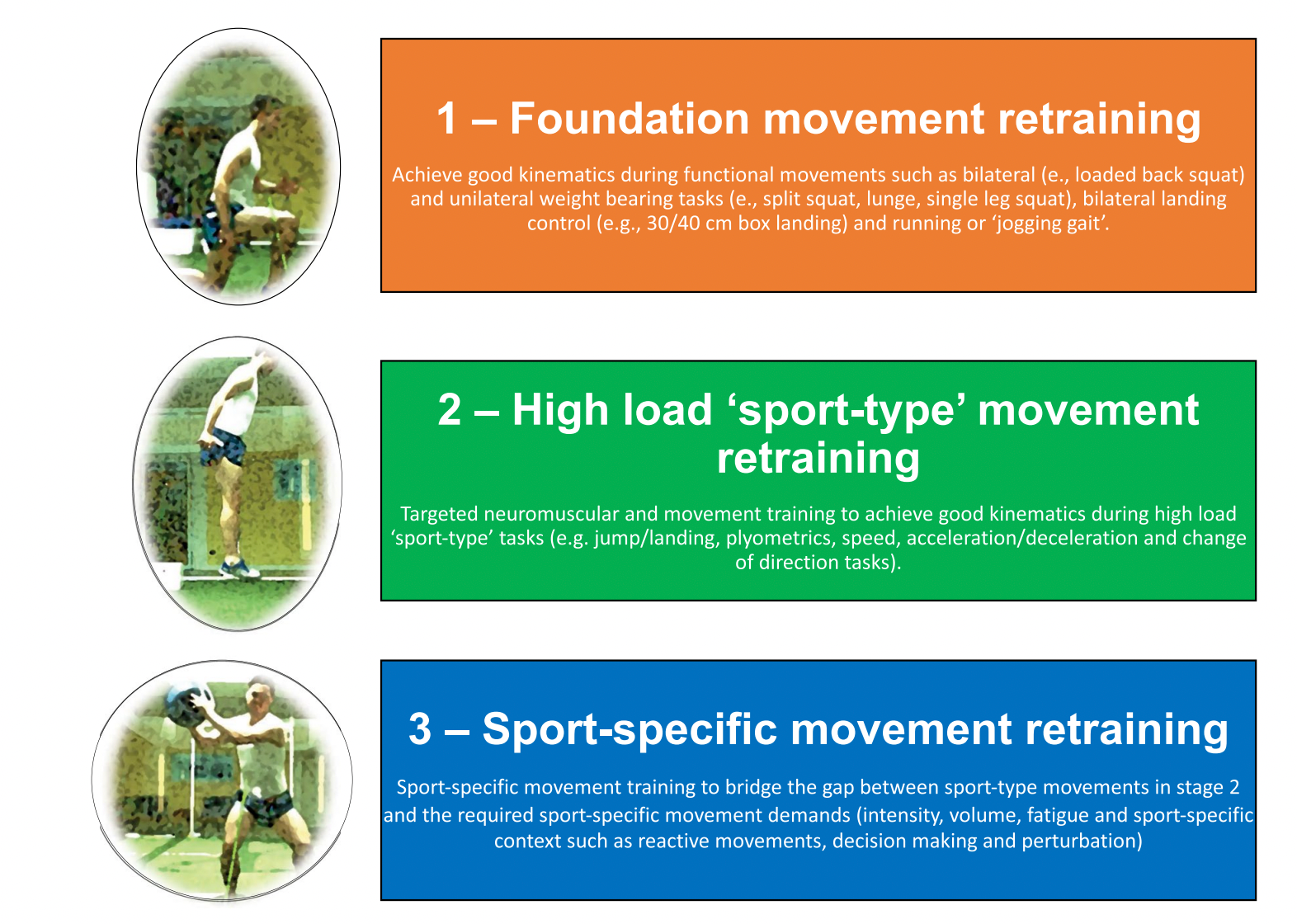
general rules for movement progressions though this continuum which entail a progression from bilateral to unilateral movements; landing to concentric only jumping/ballistics and then to plyometric tasks; linear to multi-planar movements; and pre-planned/controlled to reactive/chaotic movements
. The tasks should be performed slowly initially or using a constraint to simplify the task (e.g., additional support), prior to been intensifed either through the addition of load, alterations in base of support or increase in intensity of efort or speed of entry (e.g., running approach speeds prior to a deceleration/ change of direction task).
Stage 1 of the movement re-training programme is aligned to the early and mid-stage of rehabilitation after ACLR [6] and should address ‘foundation motor patterning’. This includes achieving good kinematics during functional movements such as ‘walking gait’ (initially with and then without crutches), bilateral (e.g., loaded back and unloaded squat) and unilateral weight-bearing tasks (e.g., split squat, lunge, single-leg squat), bilateral landing control (e.g., 30/40 cm box landing) and running or ‘jogging gait’. [5, 6, 150]. To achieve this, it is important to address the biomechanical, neuromuscular and sensorimotor control factors which infuence the motor patterning. Furthermore, to progress to stage 2, which is aligned to late-stage rehabilitation, other non-movement related late-stage entry criteria are required
In terms of activity, stage 1 mostly uses ‘corrective exercise’ (defned as exercises to address defcits in joint-specifc strength [e.g., knee extensor strengthening] and activation [e.g., coordination between muscles of a group], closed chain strength, muscle fexibility and joint range of motion and posture, but in non-functional/isolated situations [e.g., separate to specifc movement tasks]), as well as ‘movement practice’ to integrate the changes in function and re-learn the appropriate motor pattern. Failure to overcome neuromuscular defcits or biomechanical alterations will negatively afect motor re-learning. Overcoming quadriceps dysfunction and restoring knee extensor strength (to within 20%) is the number one priority of the mid-stage rehabilitation stage [6] and a key factor supporting progressions of movements through stage 1
Key considerations are the need to bridge the gap from being able to perform weight-bearing tasks at or around 100% body weight (e.g.., single-leg squat or body weight loaded back squats) and perform multidirectional landing/deceleration, ballistic and plyometric tasks. These tasks often involve high velocity (sprint running), high loads (such as landing from a jump at 1.5 times body weight) [77], fast stretch–shortening cycle actions and minimal ground contact times (50–200 ms) [106]. ACL injuries typically occur during these sporting-type tasks [105, 145, 192]. Use of functional strengthening, landing/deceleration and plyometrics are particularly relevant to train both movement quality and restore neuromuscular function (functional, explosive and eccentric)
A gradual increase in intensity of movements to realistic sport-specifc practice Although ‘in clinic’ movements such as jumping, landing, multidirectional plyometrics can prepare an athlete for sport-specifc tasks [193], they often lack the speeds of sporting actions. ACL injuries in sport generally occur during high horizontal velocities, as opposed to vertical velocities [145]. A football (soccer) player will perform many intense sporting actions, including high-speed running, accelerations, decelerations, jumps and change of directions. The intensity of movement has implications for both joint-specifc loading and also muscle force production. For example, in running, there is a two-fold increase in hamstring and gluteus maximus muscle force production from 7 to 9 m·s−1 running speed in high-speed athletes [197], whilst knee loads are increased with increasing movement velocities during change of direction tasks. Failure to achieve peak speeds during an array of sporting actions during on-feld rehabilitation would undoubtedly result in exposure to loading demands for which the athlete is unprepared for either in training and/ or match-play. This may heighten risk of re-injury
It is important to progressively develop an athlete’s movement volume to arrive at or near their required movement volumes for RTS. This entails achieving regularly the required training loads they will be returning to (e.g., total distance, high speed running, sprint distance, acceleration and decelerations); and restoring their chronic training loads (e.g., 4 week average training load) to limit the spike in acute:chronic workloads upon RTS [5, 154, 169, 198]. Additionally, it is important to expose the players to peak workload intensities not only to prepare for worst case scenarios upon RTS [199], but also to familiarise them with acute fatigue
Mechanical perturbation, often coupled with a distraction immediately prior to injury, are thought to be important in the causation of ACL injuries. Nearly half of ACL injuries in soccer or American Football have been shown to involve indirect contact [145, 200], predominantly to the upper body and/or pelvis at or prior to injury. Mechanical (or visual) perturbation can place an athlete in unaccustomed and potentially dangerous positions for the limb. Exposing athletes to progressive contact to prepare them for sporting contact they will experience, anecdotally, is important
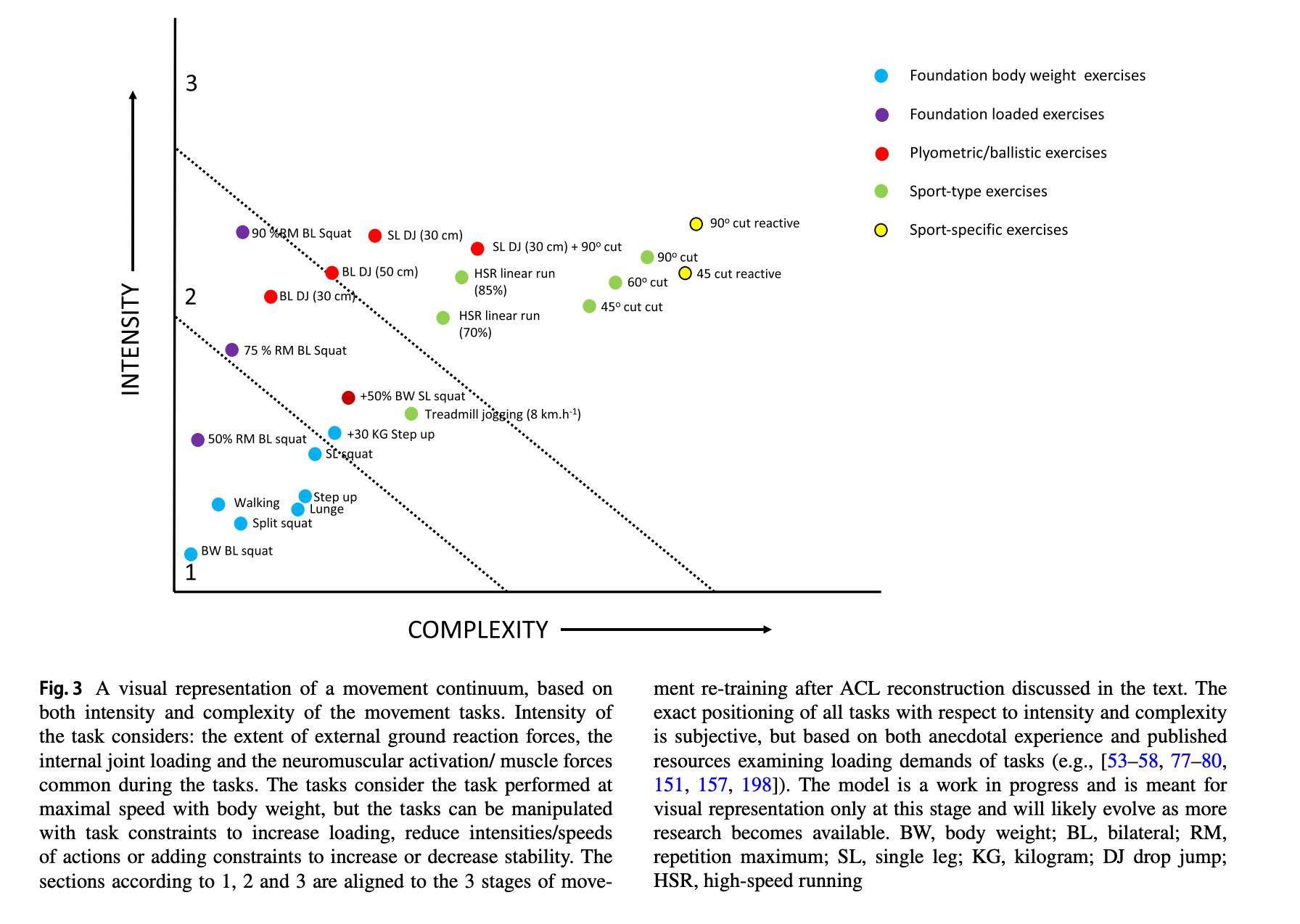
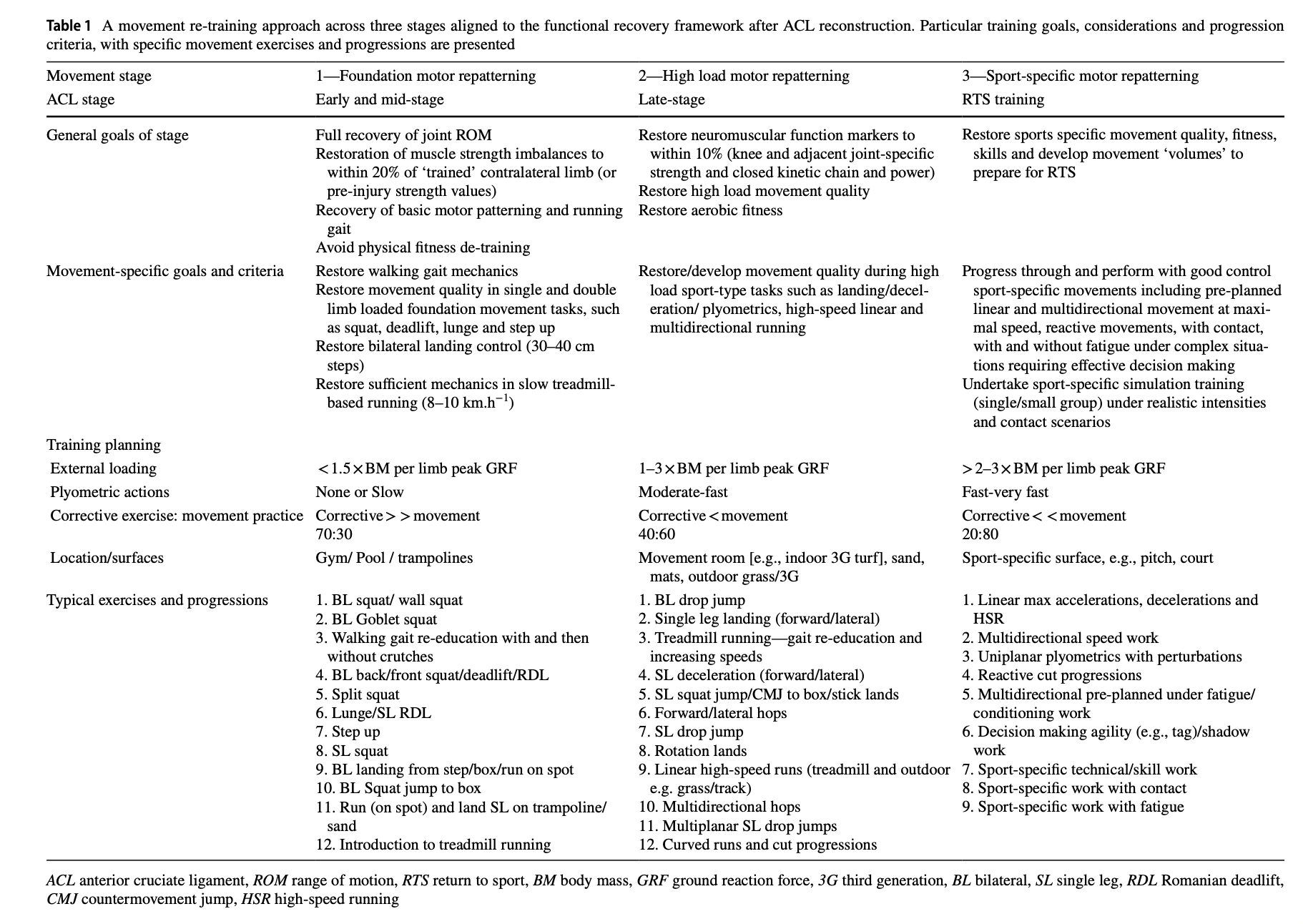
Plyometrics:
Plyometric training has long been used to optimize explosive sporting performance (e.g., speed, jump height) of athletes and is regarded as an excellent training method, due to the wide ranging neuromuscular and motor control benefits.28–32 In particular, plyometric training has been reported to be superior to more traditional resistance training for development of explosive lower limb performance (power/RFD),30,31,33 as well as effective at eliciting gains in maximal strength,32 and sports performance variables, such as linear34 and multiple directional29 movement speeds.
intensity:
. During the eccentric phase of a plyometric task, the athlete will need to decelerate the center of mass, prior to producing force and power to ballistically propel oneself as part of the plyometric action. The peak eccentric forces will largely be dictated via the velocity or the relative momentum of the system, as a whole at impact/ landing.40 The higher the momentum (mass x velocity) prior to/ at impact, the greater the eccentric work required to decelerate the body. As such, intensity of effort and height of landing and/or horizontal speed prior to deceleration are major determinants of peak loading of plyometric tasks
Strength: greater total lower extremity energy absorption in the sagittal plane has been associated with smaller vertical GRF and greater knee-flexion displacements during landing
Surface: a compliant surface will deform under load and as such joint loading is influenced by the surface stiffness. Performing plyometrics in water or on sand has been shown to reduce the high impacts and results in less muscle soreness than performing plyometrics on more rigid surfaces
also instructions given for performance of the task (e.g., land and jump leaving the ground as quickly as possible).40 GCT (and associated RFD and neural activation during the task) are important considerations in terms of specificity of training adaptations. Improvements in explosive neuromuscular performance appear to be specific to the GCT, 29 with longer GCT (>250-500 ms) suited to acceleration and multidirectional movement performance, whilst linear based (horizontal and vertical) fast (GCT < 200 ms) plyometrics may be better suited for developing linear peak running speeds
The specific joint loading will be influenced by task selection,40 and kinematics during the task. For example, altering the trunk alignment during plyometric exercise would alter the center of mass and position it closer or further away from the joint.49 A more upright andstiff posture, described as a quadriceps dominant behavior, 50 has been correlated with higher knee-extensor moments.51 Greater hip flexion to knee flexion ratios during plyometric type tasks has been shown to reduce knee-extensor moment and knee energy absorption52,53 and increase hip loading.49 Altered frontal- and transverse-plane knee loading has been shown to contribute to greater ACL loading.54–57 It is recommended to avoid at risk movement biomechanics, specifically a knee dominant motor strategy (e.g., upright trunk positioning) in conjunction with altered frontal (hip and tibial abduction) and transverse plane (tibial rotations and/or internal hip rotation) motions during plyometric tasks, as these will exacerbate knee and ACL loading.54–57
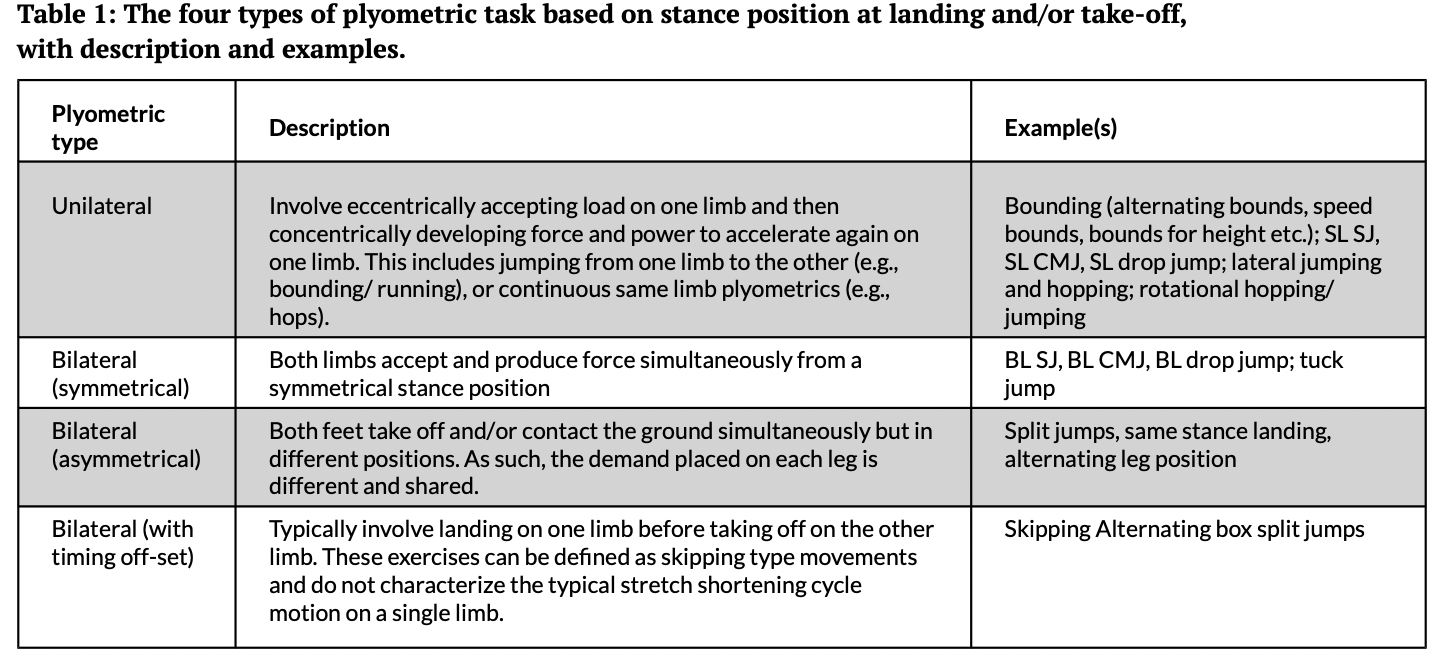
For optimal motor learning (defined as 'the process of an individual’s ability to acquire motor skills with a relatively permanent change in performance as a function of practice or experience),63 it is important that the tasks are performed repeatedly with good movement quality. 64,65 Thus, it is important to provide the right challenge to neuromuscular control, with progressive increases in movement complexity, as well as rate and intensity of loading
While considering the specific loading of a singular task or repetition is important, as discussed, it is also important to consider the volume of loading. Volume load is the result of many actions during a session or over time (e.g. day/ week/month). It is known that high recurrent loading of the ACL can lead to graft creeping and eventually failure.67 Furthermore, issues such as patellofemoral pain syndrome are typically the cumulation of chronic overload68 and common after ACLR.69–71 It is recommended to monitor the cumulative loading of respective tasks, which can be done through documenting the exercise sets/foot contacts alongside the task intensity.
It is well accepted that sufficient strength of the lower limb(s) is important for implementation of plyometrics
The assessment of closed chain strength (e.g., leg press/squat strength) has been suggested to determine the readiness for the introduction of running on treadmill (e.g., 1.25 times body mass single leg press),9,76 unilateral plyometrics (1.5 times body mass single leg press)8,76 and RTS (2 times body mass single leg press).8
Knee extensor limb symmetry index (LSI) is often used to support progression through stages of an ACLR rehabilitation pathway. 8,9 It can be used to support decision making of when patients are ready to perform certain functional tasks including jogging on the treadmill (LSI, 0.70),9,76,80 single leg landing and jumping drills (LSI, 0.80),8,9,76 RTS training (LSI, 0.90)8,76 and return to high level competitive sport (LSI, 1.0).8,80
Movement quality after ACL injury has been defined as 'the ability to control the limbs and achieve sufficient balance and kinematic alignment during functional activities, not displaying movement asymmetries or risk factors linked to ACL injuries’
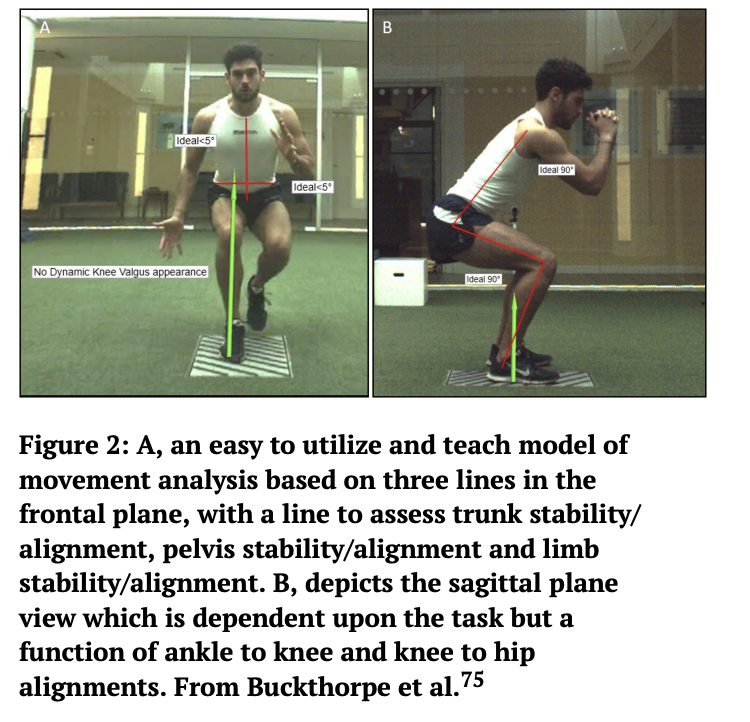
If the tasks cannot be performed at a minimum task competency, then the tasks should be simplified.8 Qualitatively assessing movement quality (frontal and sagittal plane) as part of the ACL functional recovery process during foundation, landing, plyometric and sport-specific tasks is also recommended.
In general, the program has some rules or themes which include progressions in intensity and specificity of the movements with progressive increases in entry speeds (vertical loading height/ horizontal velocity), a gradual reduction in GCT, progression from bilateral to unilateral tasks and from linear (vertical to horizontal to lateral) to multi-planar tasks. Furthermore, it is recommended to use different surfaces, beginning with more compliant surfaces and progressing to stiffer surfaces
Progressions through stages and exercises within the stage is based on good quality performance of the tasks, ideally no or only minimal pain (e.g., <2/10 on numeric rating scale)83 and/or swelling of the joint to the specific loading demands83 and continued improvement in lower limb strength. Each stage should be completed in sequence and an athlete cannot perform any task in the stage without meeting the specific stage criteria
The plyometric program begins in the mid-stage of rehabilitation (Stage 1), with Stages 2 and 3 aligned to the late-stage and Stage 4 to the RTS training stage.
Stage 1 of the program uses low intensity plyometrics, characterized as bilateral off-set and bilateral asymmetrical, but also with sub-maximal bilateral symmetrical tasks (to support movement re-training). The rise in height of the center of mass above neutral position is typically minimal. GCTs should be long (> 1-2s) and the main theme is to support movement retraining, primarily with a focus to support treadmill gait re-education
Estimated GRFs are less than two-times body mass per limb.
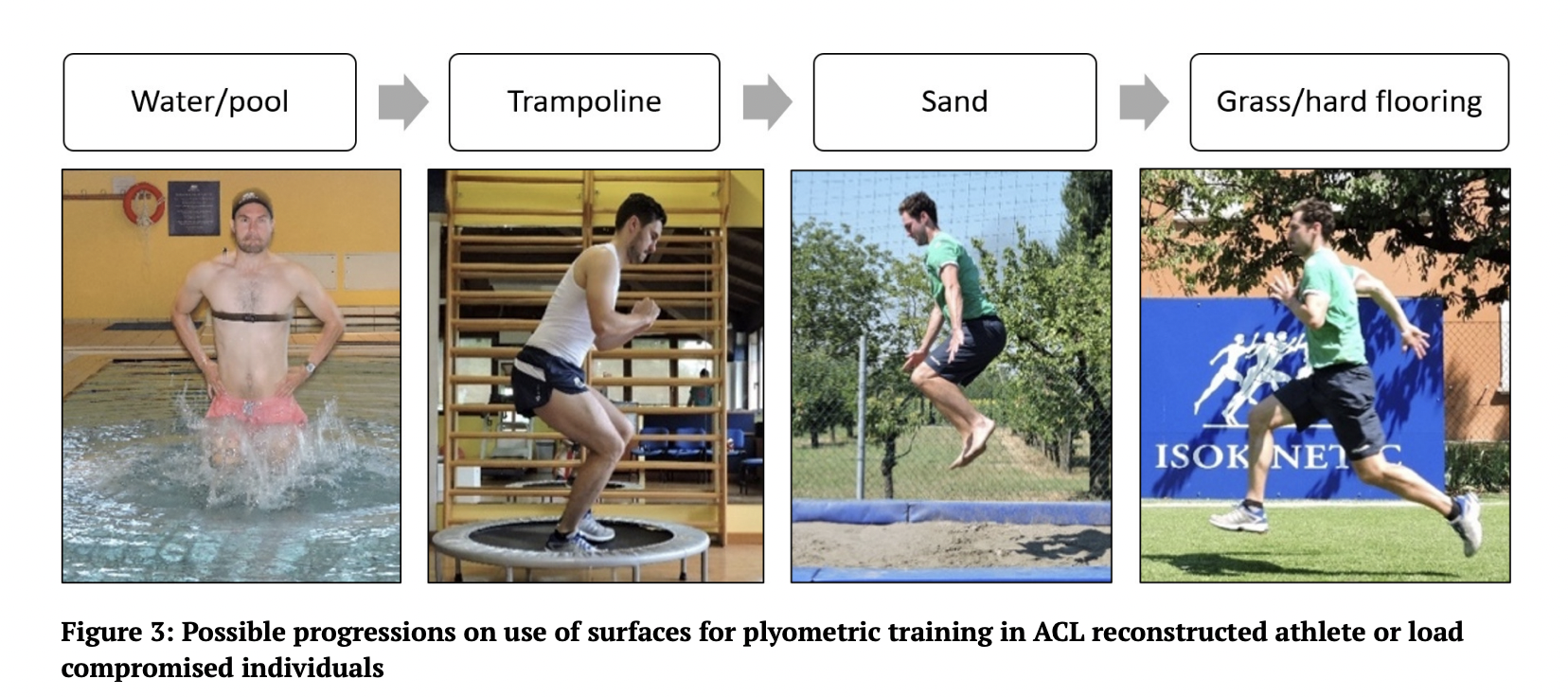
significant strength deficits result in biomechanical compensatory strategies. This may include compensatory use of the hip extensors instead of the knee extensors during unilateral tasks or compensatory loading of the un-injured limb during bilateral tasks.88–90 Even when achieving the optimal kinematics (e.g. correcting the compensatory movement pattern of greater hip to knee flexion), there is still typically inhibition of the quadriceps, resulting in lower neuromuscular recruitment, which may result in insufficient stimulus for adaptation.89 As such, the benefits of plyometric training for strength development is likely minimal in this stage. It is essential to ensure optimal technique during the movements,64,65 ideally using real-time biofeedback,64 to support appropriate motor learning. Poor task selection may result in movement compensations,49,64 which could interfere with optimal motor repatterning.65 Thus, quality over quantity and intensity is recommended
stage 1 exercises:
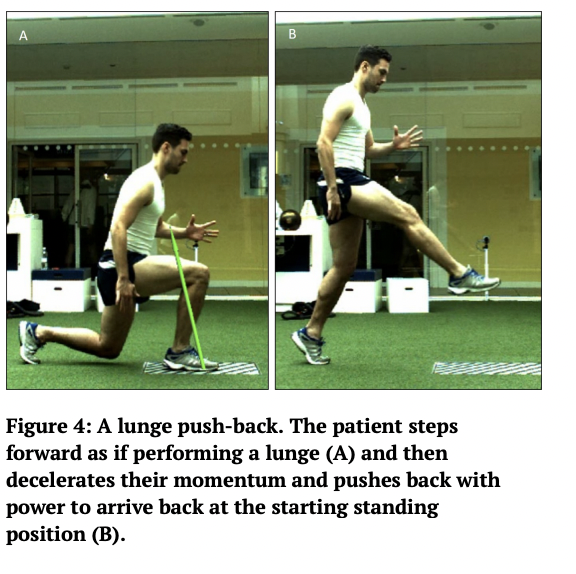
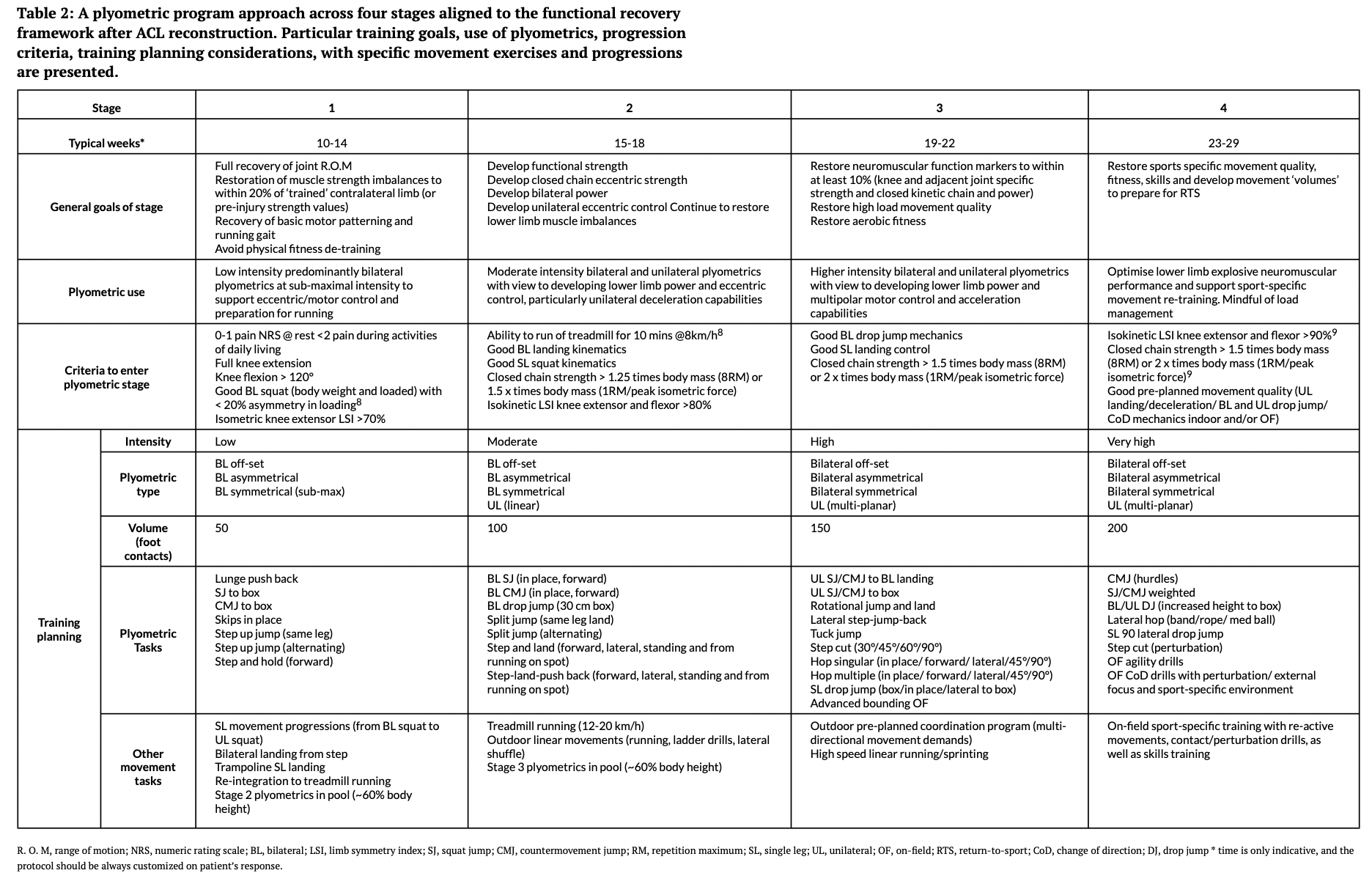
STAGE 2:the program commences when the athlete can achieve the necessary late-stage rehabilitation criteria
Key themes of late-stage ACL rehabilitation are developing single limb eccentric control (deceleration/landing) and restoring power and maximal eccentric strength.9 However, there is a strong use of bilateral plyometric tasks for developing explosive lower limb strength and high load mechanics. The stage now allows for maximal effort bilateral plyometrics for automatization of the motor pattern, but more specifically for improving kinetics in explosive movement tasks. Consideration though of landing height is needed. A key aim of the stage is to achieve a good bilateral drop jump (kinetics and kinematics) (30 cm) and single leg landing/deceleration control
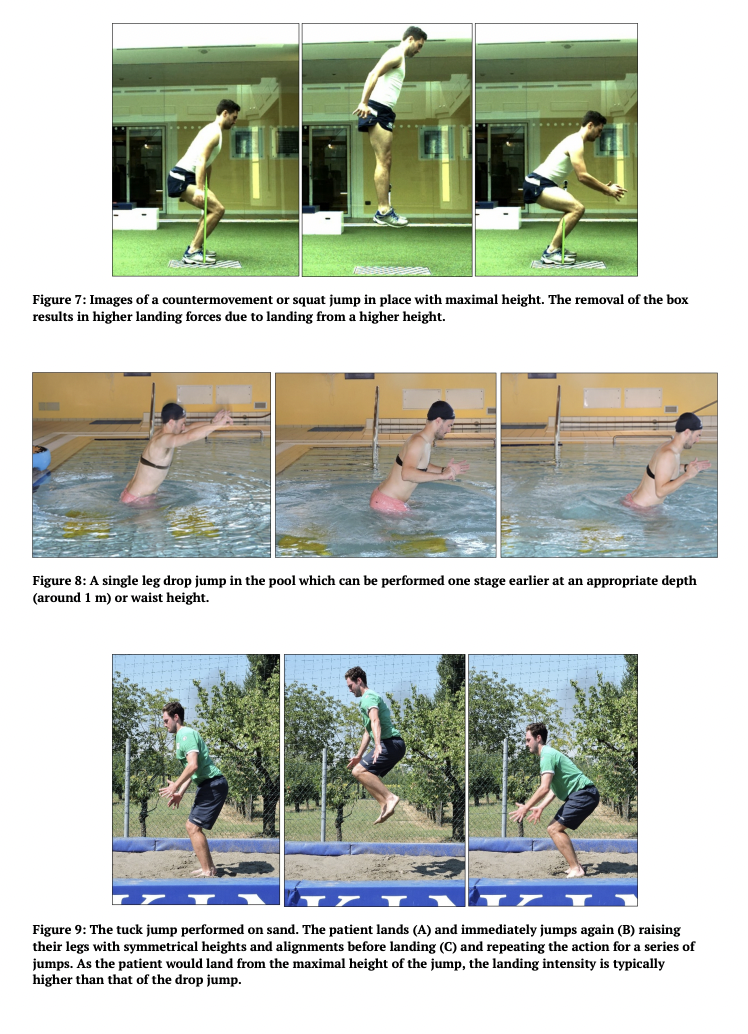
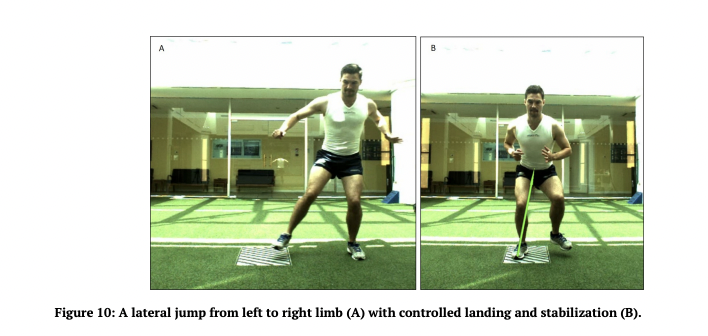
Stage 3:
a greater use of unilateral plyometrics and is performed in conjunction with a multi-directional on-field coordination program (pre-planned coordination tasks). It transitions from forward and vertical unilateral plyometric to lateral and then multidirectional unilateral plyometric tasks. The key aim by the end of the stage is to have good kinematics during high speed change of direction and good single leg drop jump and hop performance (multiplanar)
Key aspects of the unilateral exercises are to support enhanced motor control with gradually reducing GCT to mimic sport-type tasks (e.g., progressing from 1-2 s GCT to 0.25-0.4 s GCT)
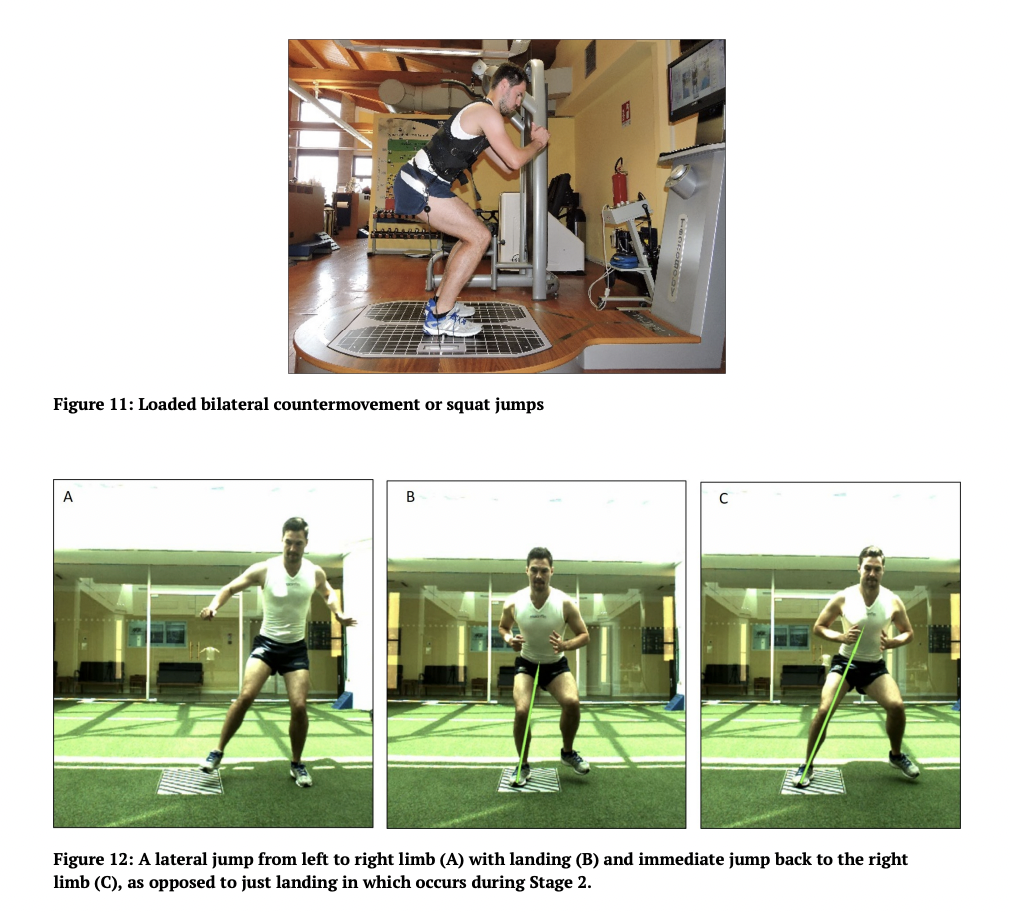
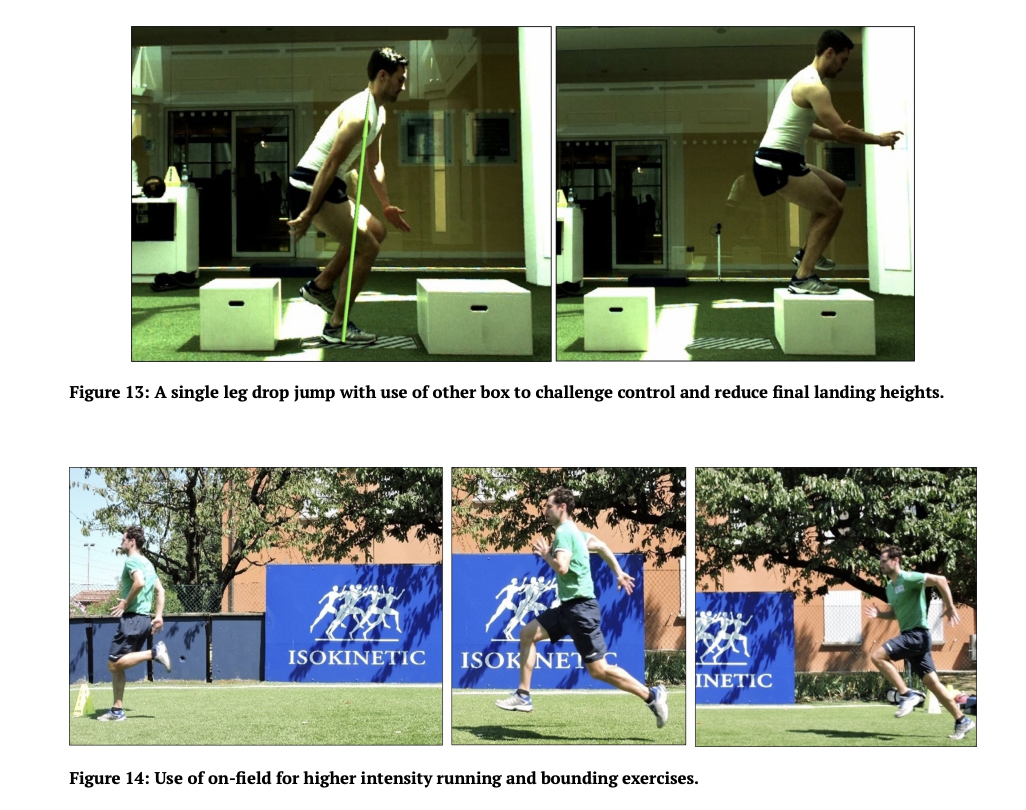
Stage 4:
focuses on the use of maximal unilateral plyometric tasks for motor pattern automatization as well as enhancement in neuromuscular performance. Furthermore, in terms of motor patterning, a key aim of the stage as a whole is to progress to re-active movements and prepare for sport-specific training (Table 2). Creating perturbations during plyometric tasks to challenge neuromuscular control is recommended (Figure 15). A key aim of the stage is to achieve good re-active movement performance under sporting type tasks to prepare for sportspecific practice. To RTS, it is recommended to possess good movement quality during sport-type tasks and under sportspecific situations.8 It is recommended to visually assess and use video recordings of sport-specific movements (e.g., reactive cutting or change of direction at an obstacle) during on-field sessions and/or specific field based assessments
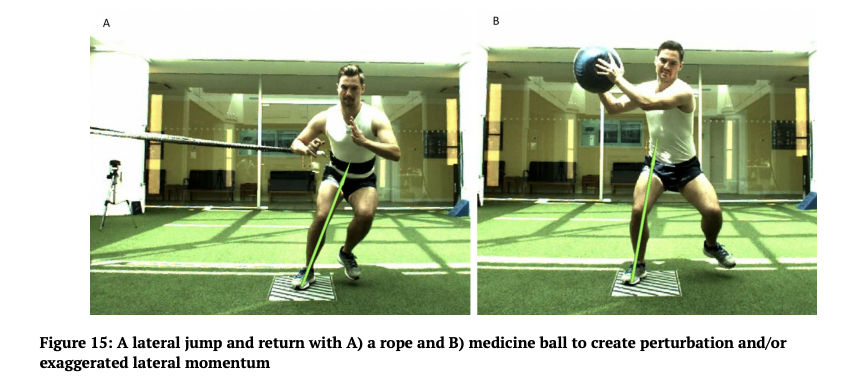
Used effectively, plyometrics can support enhancements in strength, movement quality, explosive neuromuscular function and athletic performance
(Buckthorpe & Della Villa, 2021)
Hamstring function:
surgery signifcantly impact on hamstring function, with defcits of nearly 50% reported at 4 weeks after ACLR with hamstring tendon autograft (HG)
Kyritsis et al. [29] reported a 10.6-fold increased risk of ACL reinjury upon RTS, for each additional 10% defcit in knee fexor to extensor strength ratio. Furthermore, a history of severe knee injury (including ACL injury) increases the risk of a future hamstring strain injury (HSI)
In particular, the medial hamstrings are thought to be important for preventing ACL injuries, due to their role in preventing medial condyle lift-of and dynamic knee valgus [17], a known ACL injury risk factor [62, 63]. Of particular relevance after ACLR with HG, is the commonly observed defcits in knee internal rotation strength weakness [64, 65], which would be expected to contribute to the increased external tibial rotation and dynamic knee valgus found in ACLR patients [66].
Reasons for the on-going defcits have in part been described due to insufcient volume, intensity and frequency of rehabilitation to target the defcits [8, 9, 56]. Finally, more marked defcits in knee fexor function are apparent after ACLR with HG, thought due to issues associated with the donor site. ACLR with HG, essentially results in a grade 4 muscle–tendon lesion. It is well aware after serious muscle lesion, there is often persistent hamstring strength defcits and high risk of HSI re-injury
Knee fexor strengthening in ACLR patients with HG is normally suggested to be delayed for 6–8 weeks after surgery to allow healing of the harvested graft [104–106]. However, there is no strong evidence for this and lower intensity exercises are advised earlier after surgery, based-on anecdotal experience. Those without hamstring graft can be less cautious, respecting the load capacity of the knee as a whole. Initially, lower intensity loading should be used during the earlier stages after ACLR (i.e., end of early-stage to mid-stage), when the knee is load compromised and there is likely accompanying swelling and pain, as well as arthrogenic muscle inhibition (AMI), thus contraindicating high loads [
As an athlete gets stronger and overcomes pain, swelling and AMI, higher intensities can and should be used, in a progressive manner. This should initially focus on muscle hypertrophy, with higher volumes at moderate loads (e.g., 6–8 sets of 8–12 RM). This period can then be followed by a greater focus on maximal strength (and improvements in neuromuscular activation), with higher resistance loads and moderate volume. Finally, a transition to explosive strength and power training, in conjunction with very high-intensity, low-volume resistance training (e.g.,<5RM) is recommended in the fnal stages prior to RTS. See Table 1
As such, although eccentric training may be highly efective, failure to overcome issues associated with hamstring AMI after ACLR, particularly with HG would limit their efectiveness. Thus, eccentric training for the ACLR needs to be considered within the overall functional recovery process.
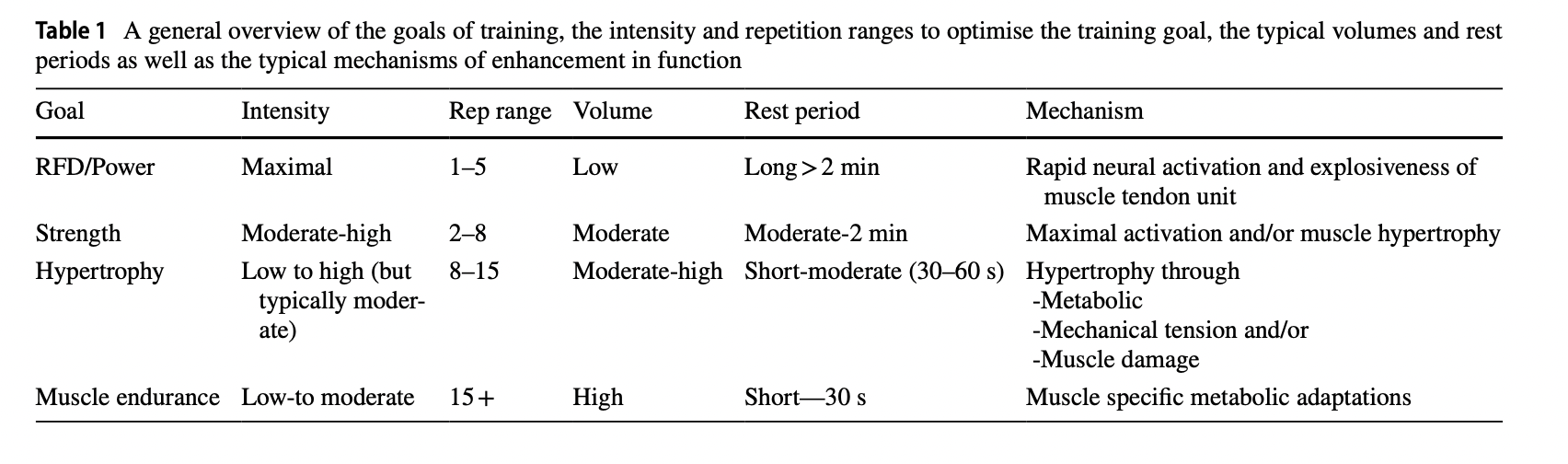
Weakness in hip extension strength was identifed as a prospective risk factor for HSI in elite level sprinters [144]. Furthermore, weakness of hip extensors may contribute to altered motor patterning in the sagittal plane, leading to increased knee loading motor patterns (Fig. 1) [145]. Thus, it is important to consider both knee fexor and hip extensor strength
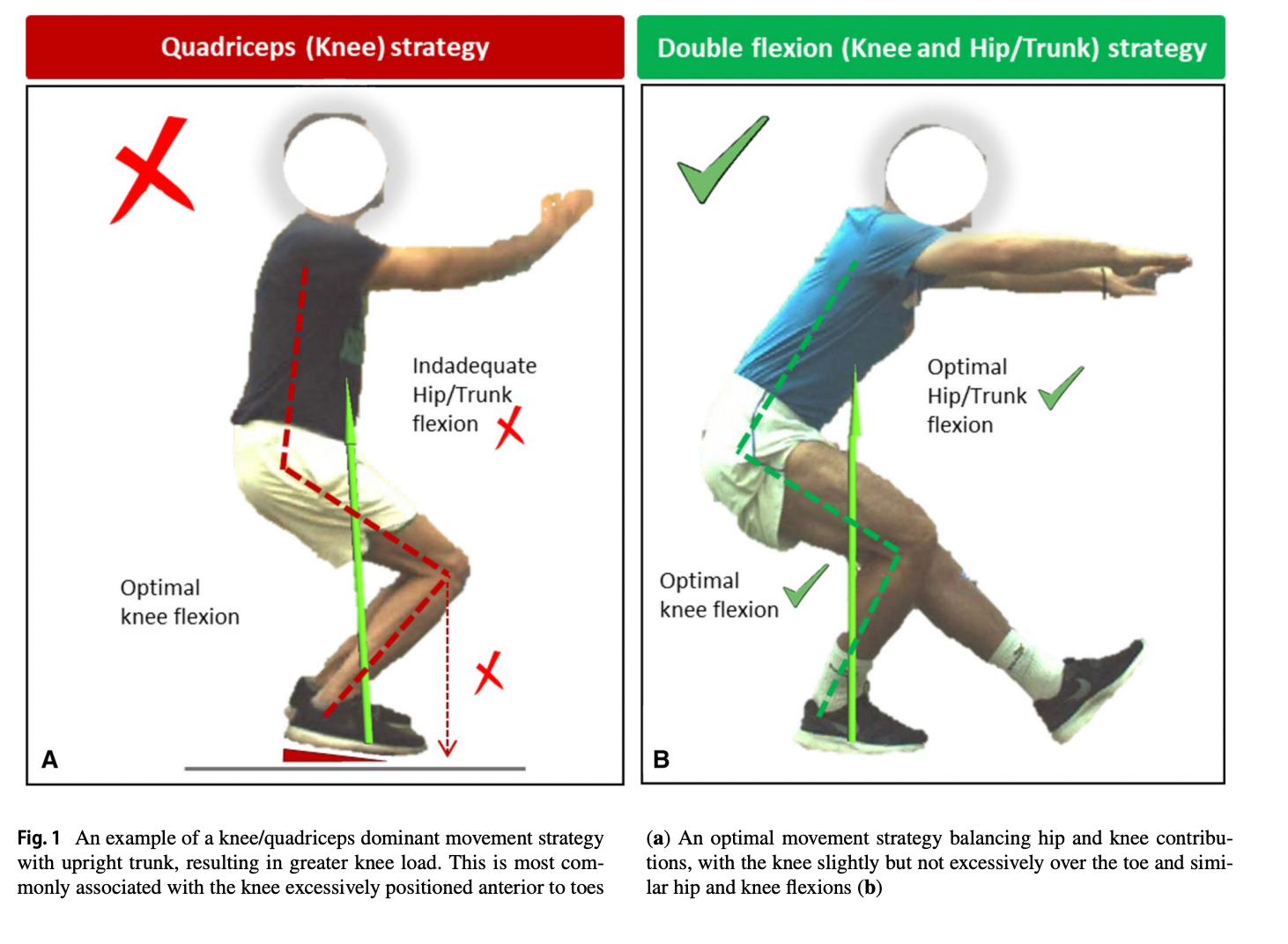
A key consideration after ACLR with HG is whether or not to target the ST. Strong use of knee dominant exercises, indicative of ST specifc training, with failed ST tendon regeneration may result in overcompensation of BF short head and altered rotational control about the knee. In this case, targeting the SM with hip-dominant exercises to compensate for the ST tendon issues and maintain medial to lateral hamstring muscle balance, may be the superior strategy. However, in the case of ST tendon regeneration, but accompanying AMI, there would appear a need to include specifc activation/strengthening exercises for the ST, to provide sufcient stimulus for muscle adaptation. In this case, it is suggested to adopt strong focus on knee dominant exercises using a periodised approach. Actual evidence on this topic is though missing.
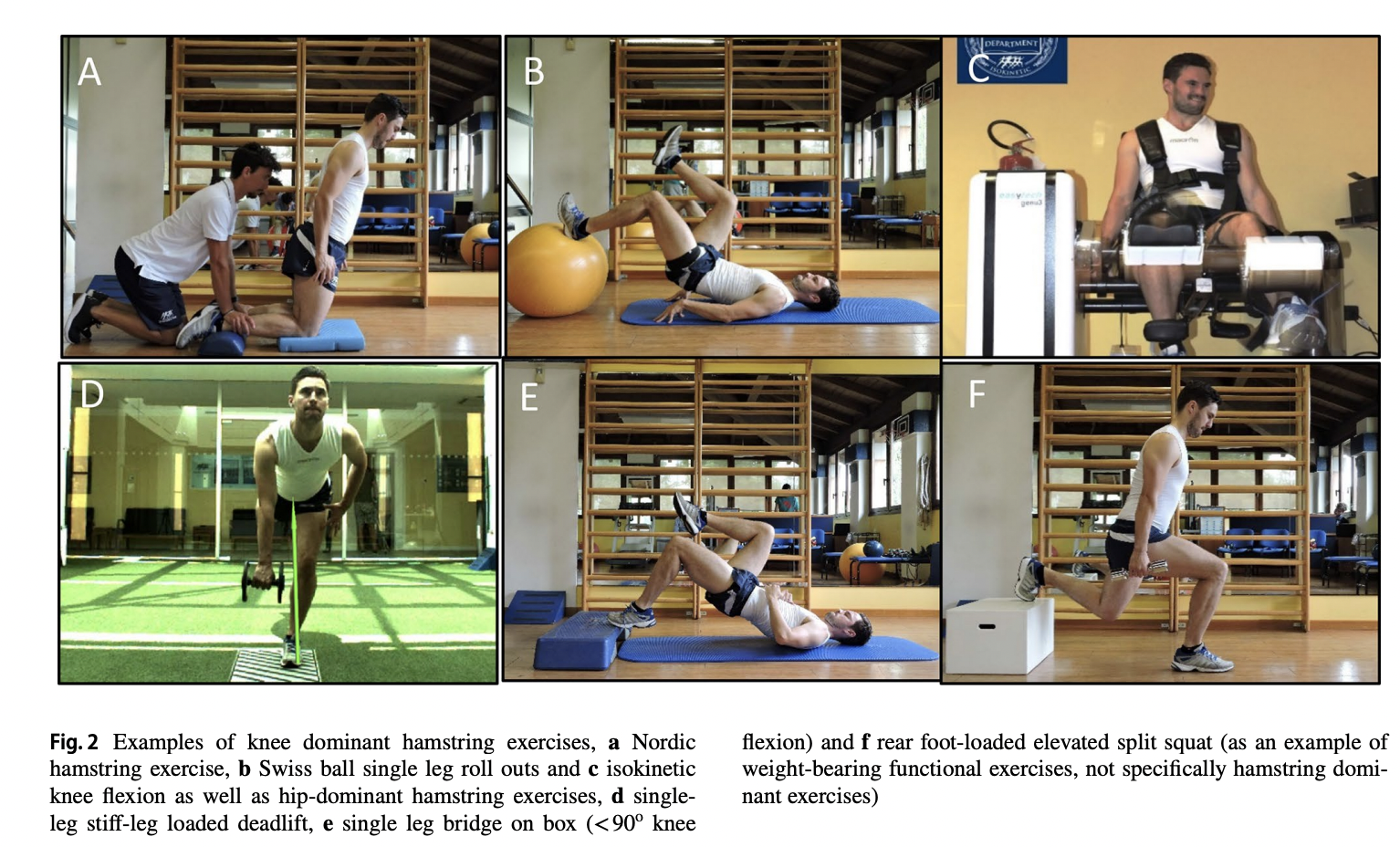
Muscle pre-activation and feedforward motor strategies are an overlooked but essential aspect of neuromuscular function. ACL ruptures have been shown to occur within 50 ms after ground contact [187]. This is about twice as long as the ACL/ hamstring refex arc [188]. Thus, the refex is longer than the injury and therefore, injury prevention in this situation does not rely on feedback processes. Therefore, dynamic stabilisation of joints via muscular pre-activation is essential for joint injury prevention. During movement there is pre-activation of the muscles with recorded surface electromyography (sEMG) values around 125–150 ms before ground contact
Neuromuscular training involving jumping, landing and plyometric type tasks has been shown to both reduce the rate of ACL injuries by half [193] and additionally result in selective upregulated of the medial hamstring muscles
Mechanical stabilisation of the joint to prevent injury, as well as explosive movements, such as sprinting, involves ground contact times considerably shorter than the time to produce maximal force (50–150 ms vs. 250–300 ms) [194–196]. Additionally, between~25 and 80% of the sprint running cycle, the hip is fexing with a peak velocity greater than 700°/s [197], whilst between~55 and 95% of the sprinting cycle, the knee is extending with a peak angular velocity greater than 1,000°/s [189]. Defcits in RFD or high-speed strength would be expected to compromise hamstring performance under explosive functional tasks.
We believe a key consideration of efective neuromuscular training is to balance the use of both isolated and functional exercises to enhance muscle strength, address factors infuencing movement quality and optimise muscle coordination and motor patterning during foundation and sporting-type tasks [9]. Inclusion of corrective lumbopelvic-hip training and functional neuromuscular strength exercises, such as foundational tasks (e.g., single leg squat/ stif-leg deadlift), landing and ballistic drills, plyometrics and agility training, is recommended alongside specifc isolated hamstring strengthening, as part of a holistic approach to hamstring re-conditioning
It is known that enhanced muscle strength does not directly transfer to enhanced functional performance (kinetics and kinematics) [201–203]. Instead, coordinative changes are required to be able make full use of the enhanced muscle strength [201]. Functional strength exercises require greater coordination and result in task-specifc adaptations, due to neural adaptations
Therefore, they (=isolated exercises) can be highly efective in the presence of specifc muscle weakness or inhibition, or when load compromised during the early periods after ACLR. Thus, we recommend a combination both strength and neuromuscular training exercises to optimises neuromuscular function and motor control
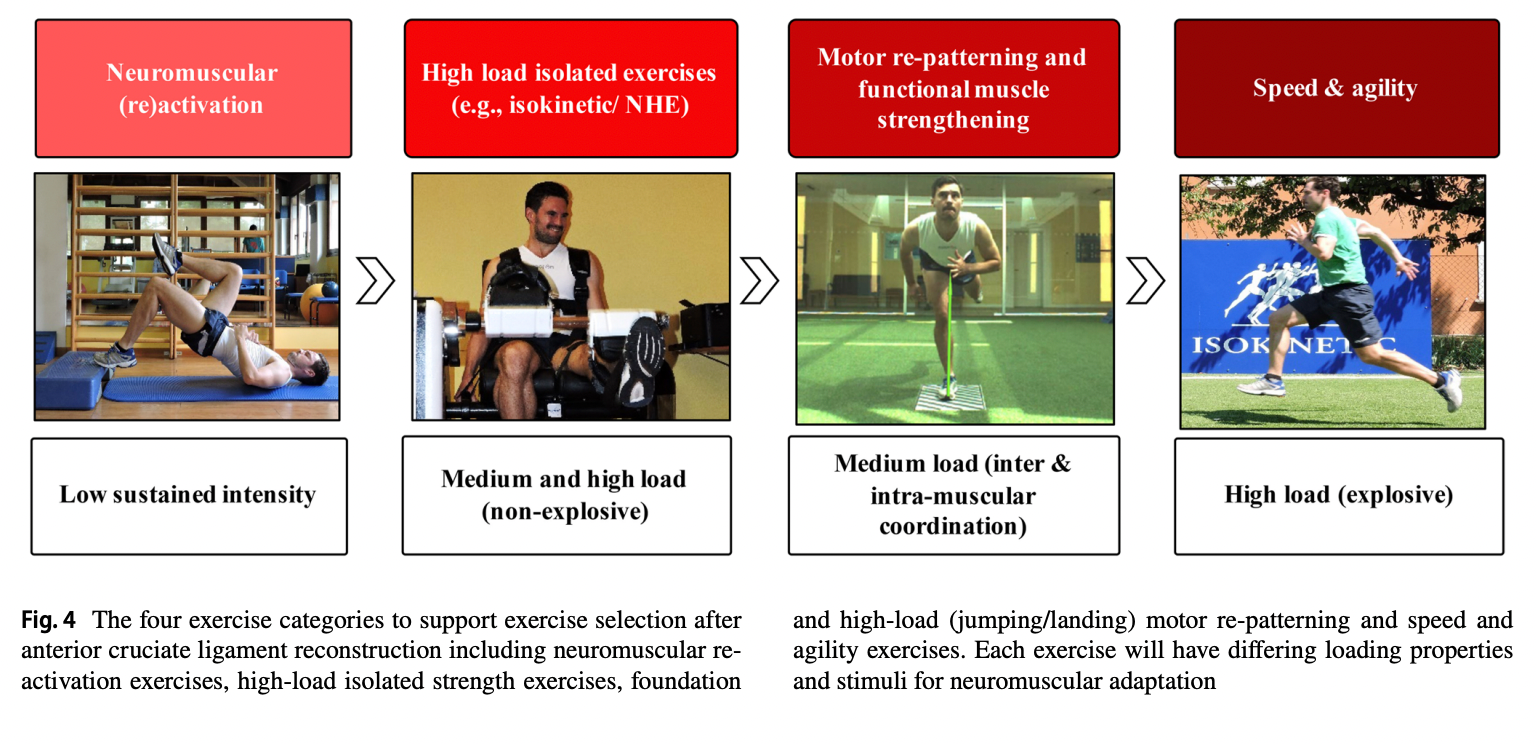
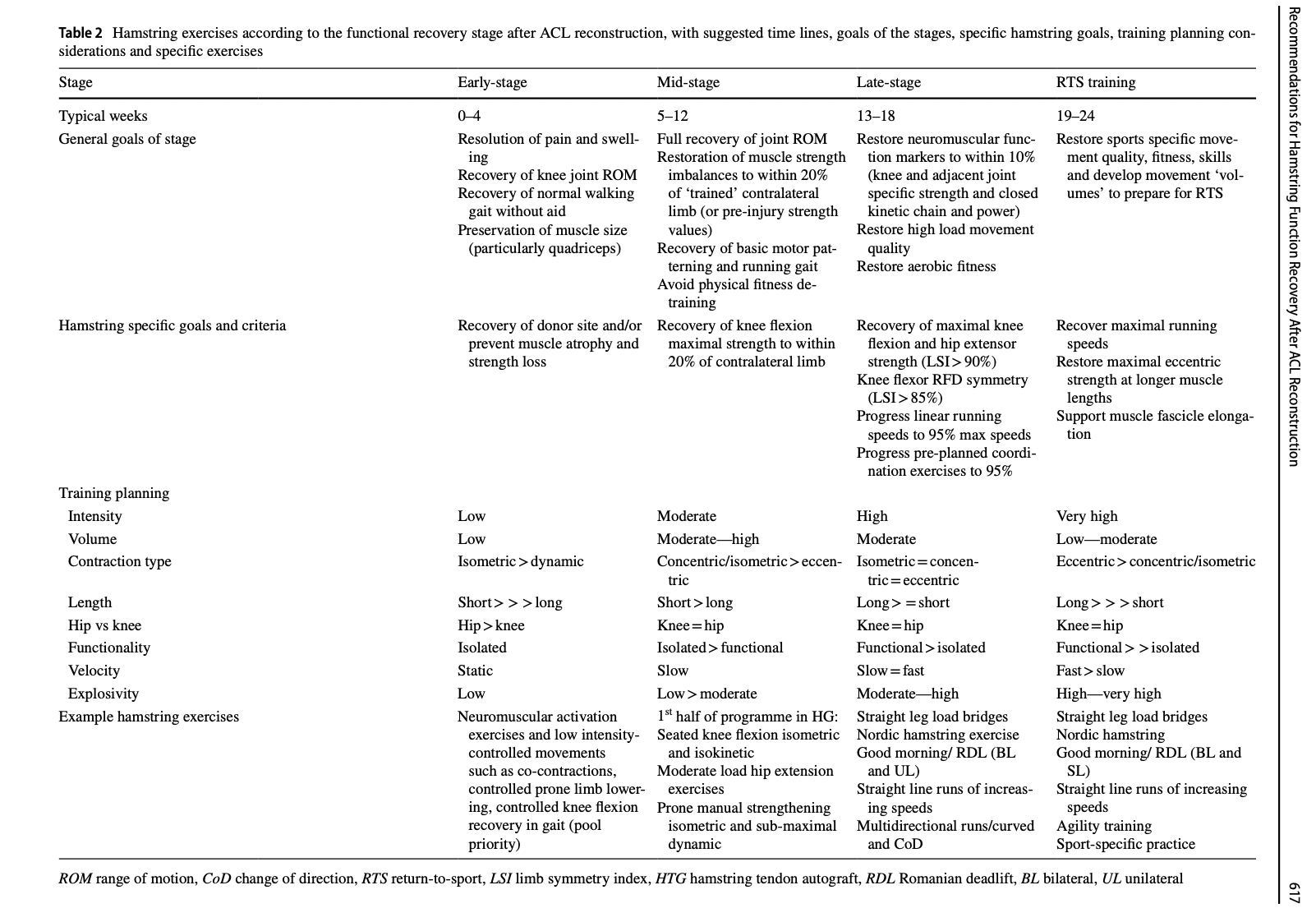
EARLY STAGE:
Current recommendations are to delay specifc strengthening of the hamstrings after ACLR with HG for 6–8 weeks. However, we advise use of isometric/concentric exercises of low intensity at short-medium muscle lengths. to try to minimise muscle atrophy
MID-Stage:
The mid-stage has been described as having three primary goals, (1) resolution of large muscle strength asymmetries; (2) restoration of movement quality during foundation motor tasks (weight-bearing functional tasks and jogging on treadmill) and physical ftness re-conditioning
A key goal in mid-stage, is to restore knee fexor maximal strength to within at least 20% of the contralateral limb
suggested separating mid-stage into a frst and second half. The frst half in regards to hamstring conditioning would use low-to moderate loads, potentially conjunction with supplementary modalities, such as blood fow restriction training to restore muscle volume and work capacity [9]. A balance of both knee and hip-dominant exercises is recommended, with a focus on isometric or concentric actions.
second stage (not based on criteria, but clinical experience): isolated and functional exercises at moderate loads (6–12 RM), to maximise muscle volume and reduce muscle strength defcits.
LATE STAGE:
optimally prepare an athlete safely for RTS at low risk of re-injury and in terms of hamstring function, aims for (1) full normalisation of isolated knee fexor and hip extensor muscle strength; (2) optimisation of hamstring control during sporting-type tasks; (3) full restoration of eccentric strength at long muscle lengths and (4) restoration of maximal and explosive strength across all velocities.
Running (high speed and sprinting) has both high specifcity and intensity, both in terms of the resultant ground reaction forces and hamstring-specific muscle work and neuromuscular activation and may support optimisation of hamstring neuromuscular function (e.g., maximal strength, RFD, power) and motor patterning. The evidence on the use of high-speed/sprint running indicates similar gains in eccentric maximal muscle strength versus the NHE [211]
if used appropriately considered essential for HSI prevention
RTS:
Although, more comprehensive investigations could be made, ensuring restoration of 90% LSI knee fexor strength and 60% knee extensor/fexor ratio is recommended for all patients after ACLR. Furthermore, considering the absolute strength is recommended, with a 1.5 Nm kg−1 knee fexor peak torque advised prior to RTS (assessed isokinetically at 90 ° s −1) (e.g., 60% of 2.5 Nm kg−1 for knee extensors)
Psychological readiness after advanced group training:
Poor psychological readiness for re-turning to sport has been identifiedas a factor that may prohibit return tosport after injury3 and one that can existeven when physical impairments are re-solved.25,30,46 Components of poor psycho-logical readiness for returning to sportinclude increased fear of reinjury4,16,25and decreased confidence (self-efficacy)related to athletic ability or performingsport-specific tasks
The program consists of 2 training ses-sions per week for 5 weeks (10 total ses-sions), held in a group format, with amaximum of 8 participants who start andfinish the program collectively. The focusof the program is on plyometric exercises,with additional lower extremity and core-strengthening exercises and agility drills
The ACL-RSI scale and hop test limbsymmetry scores significantly improvedfrom pretraining to posttraining
The ACL-RSI scale scores increasedafter advanced group training, indicat-ing better psychological readiness forsport. This finding corroborates previ-ous work showing increased self-efficacyafter plyometric training during ACLRrehabilitation
the find-ings of this study add to the understandingof the potential for meaningful psycholog-ical improvement following completion ofadvanced ACLR rehabilitation.
the advanced group training programhad greater psychological than functionalbenefit in this sample.
The authors found that about a quar-ter of the sample improved on the ACL-RSI scale criterion and another quarterimproved on the hop test limb symme-try criterion, but about 40% showed nochange on either criterion. These resultshighlight the potential for an individualresponse to advanced ACLR rehabili-tation and the need to consider bothpsychological and functional status inreturn-to-sport decision making.51
Previous studies have focused on edu-cation17,41 or cognitive-behavioral tech-niques (eg, goal setting,14,22 imagery,31,33self-talk,43 relaxation,12,23 and graded ex-posure18,56) as interventions to improvepsychological outlook after injury. How-ever, a recent systematic review foundlimited evidence for the efficacy of psy-chosocial interventions to improve func-tional recovery following ACLR.11
The advanced group training programincluded exercise progressions with in-creasing physical demand, without specif-ically targeting psychological outlook. Theexercise progressions are similar in princi-ple to a graded exposure, whereby patientsare progressively exposed to situationsthat cause fear,18 and this might have fa-cilitated the psychological improvementsseen at posttraining. However, patientswere not specifically queried about thetasks or situations that caused fear or lackof confidence, and this might have lim-ited psychological improvement in somepatients. Future work could incorporateexercises that target patient concerns re-lated to fear of reinjury or lack of confi-dence, possibly in combination with otherpsychologically based interventions, to en-hance the psychological response.
improved psychological and func-tional status was observed in patientswith ACLR following the completionof an advanced group training program.Moreover, a greater proportion of pa-tients showed psychological and func-tional readiness for returning to sport atposttraining. However, psychological andfunctional improvements were not corre-lated, and the measures were only weaklycorrelated at posttraining.
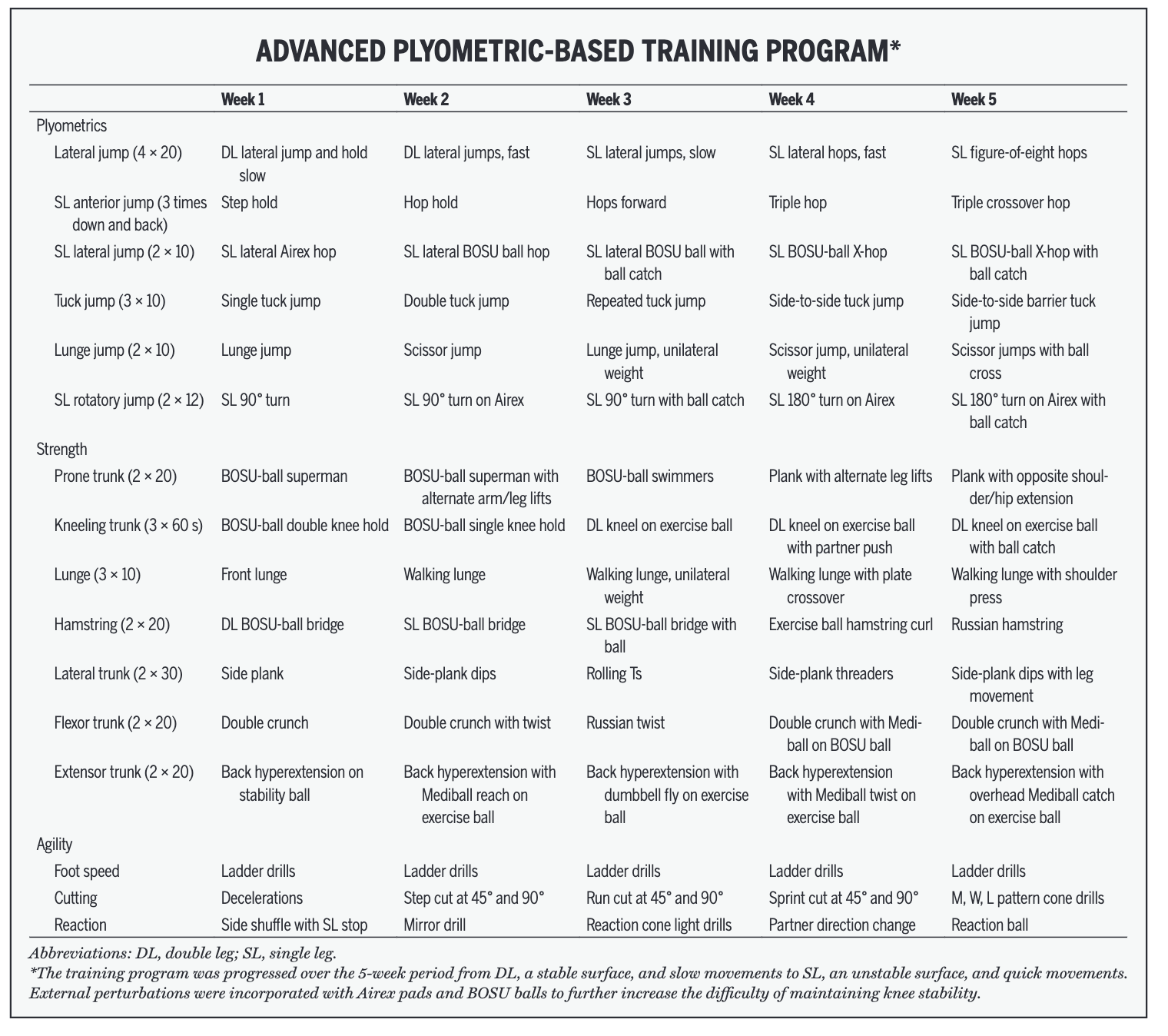
three distinct mechanisms:
Interestingly, all players getting injured while kicking were clearly out of balance and most players being injured after heading landed out of balance on one leg. Thus, our findings suggest that ACL injury preventive exercises in male footballers, similar to what has been shown for female players,27 28 should target neuromuscular and postural control in out-of-balance situations, including footwork and running technique training during changes of direction as well as jumping and landing technique training.
it seems that a majority of ACL injured athletes are likely to have a relatively straight knee at the time of injury. Vertical compression at a straight knee has previously been shown to load the ACL through anterior tibial drawer and internal rotation
knee valgus is also an important injury component in football. A sudden knee valgus increase was also reported in a non-contact ACL injury in a male professional football player
DIfferent loadings from different exercises:
clinicians should un-derstand that NWB exercises generallyload the ACL more than WB exercisesand that, for both types of exercises, theACL is loaded to a greater extent between10° and 50° compared to 50° and 100° ofknee flexion
The quadriceps,when contracting, exerts via the patel-lar tendon an anteriorly directed forceon the proximal tibia when the knee isbetween approximately 0° and 60° offlexion, loading the ACL.9,25 Conversely,an active quadriceps exerts a posteriorlydirected force when the knee is in great-er than approximately 60° of flexion,unloading the ACL.9,25 In contrast, thehamstrings, when contracting, exert aposteriorly directed force on the proximalend of the tibia throughout the full rangeof knee motion, and especially at higherknee flexion angles, unloading the ACL
leg extensions: It can be concludedfrom these data that when the goal isto minimize ACL loading, this exerciseshould be performed at higher knee flex-ion angles (between 50° and 100°), re-gardless of the location of the resistancepad, and with the resistance pad locatedcloser to the knee if exercising at lesserknee flexion angles. with no ACL loading at kneeflexion angles greater than 60°.
This approach may also be useful forindividuals with an ACL-deficient knee,because in this population performingseated knee extension exercises with thepad positioned nearer the ankle may pro-mote excessive anterior tibial translation,which may result in altered and possiblyinjurious tibiofemoral joint loading. -> more proximal weight application might help
Isometric and isokinetic knee flexionexercises performed in a seated position(knee flexion exercises can also be per-formed in prone or standing positions)have been shown to produce no loadingon the ACL
Therefore, seated resisted knee flexionexercises are appropriate for rehabilita-tion post–ACL reconstruction if a bone-patellar tendon-bone graft was used, asthese NWB exercises generate very littleor no load on the ACL. However, for indi-viduals with a hamstring autograft, kneeflexion exercises that stress the ham-strings musculature should be delayedfor 6 to 8 weeks to allow healing of thegraft harvest site
the standard squat typically re-sults in minimal or no ACL tensileforce (TABLE 2). The minimal or ab-sence of ACL loading during the squat is,in part, due to the increased hamstringsactivity and force generated duringsquatting. Escamilla et al12 and Wilk etal62 reported that peak hamstring activ-ity during the barbell squat was betweenapproximately 40% and 80% of a maxi-mum voluntary isometric contraction,and even at smaller knee flexion angles(eg, 30°) when peak ACL loading poten-tially occurs, hamstring activity was stillapproximately 30% to 60% of a maxi-mum voluntary isometric contraction
In contrast to when performing kneeextension in a seated position, peakACL strain was not significantly dif-ferent when squatting with or without136 N (30 lb) of external resistance.3,4,23Therefore, increasing resistance duringthe squat, at least up to 136 N, does notseem to increase the amount of strain onthe ACL. Among several other potentialfactors, it may be that adding resistanceaffects muscle recruitment, including re-cruitment of the hamstrings to a greaterextent, which has the potential to unloadthe ACL.
Technique variations of the squat mayaffect ACL loading. For example, squat-ting with the heels off the ground, whichtypically results in greater forward kneemovement beyond the toes at greaterknee flexion angles, results in over 3times more ACL loading compared tosquatting with the heels on the ground.57It has been demonstrated that during asquat, as the knees go forward beyondthe toes, the tibial plateaus slope anteri-orly, resulting in increased ACL loading.41Escamilla et al12,14 reported significantlygreater ACL loading during the single-legsquat, in which the knee moved forwardan average SD of 10 2 cm beyond thetoes, compared to performing a double-leg squat with the knees remaining overthe feet.
Trunk position during the perfor-mance of a squat can also affect ACLloading. Compared to a more verticaltrunk position, performing a squat withthe trunk tilted forward, using hip flex-ion, has been shown to decrease ACLloading.
Ohkoshi et al42 reportedthat there was no ACL loading at any ofthe knee flexion angles (15°, 30°, 60°, and90°) tested when maintaining a squat po-sition with the trunk tilted forward, witha forward trunk tilt of 30° or more beingoptimal for relatively high recruitmentof the hamstrings and minimizing ACLloading.
Progressively increasing for-ward trunk tilt during the squat tends toincrease hamstrings activity and decreasequadriceps activity, both resulting in ACLunloading at knee angles less than 60°
There is, therefore, consis-tent evidence that trunk position can beused to promote recruitment of the ham-strings and further reduce ACL loadingduring single- and double-leg squatting.
Therefore, perform-ing double-leg squat exercises early inthe ACL rehabilitation process througha limited range of motion (eg, 0° to45°), with light resistance (initially bodyweight alone), may be appropriate dueto minimal or no ACL loading (depend-ing on squat technique, which affectsACL loading)
Like the squat, ACL loading is minimalduring the forward and side lunge (TABLES1 and 2). The low ACL loading during theforward and side lunge is, in part, dueto relatively high hamstrings activation,peaking at approximately 150 N at kneeangles less than 30
Lungingwith increased forward trunk tilt com-pared to a more erect trunk position hasbeen shown to increase hamstrings activ-ity,17 and an increase in hamstrings forcehas been shown to decrease ACL load-ing.15,16,35 Because of low ACL loading,forward and side lunging may be benefi-cial after ACL reconstruction, beginningwith limited range of motion (eg, 0° to45° of knee flexion) and lower intensity, and, as the knee becomes more mobile,later progressing to full knee range ofmotion and moderate intensity, with theadded benefit of excellent knee and hipmuscle recruitment.
During the early rehabilitation pro-cess following ACL reconstruction, thepatient may begin the leg press with lightresistance between 0° and 45° knee flex-ion angles. As the patient’s knee swellingdecreases and lower extremity strengthimproves, the patient can perform the legpress with increasing knee flexion anglesbetween 0° and 90°, and with increas-ing loads. Although ACL strain has beenshown to be low during the leg press, onlylimited technique variations have beeninvestigated.12,13 Because quadriceps ac-tivity is high during the leg press (espe-cially with higher-intensity training),12,62which has the potential to load the ACLat lower knee flexion angles (especiallybetween 0° and 30°) when employinga variety of technique variations, it maybe appropriate to perform the leg pressat higher knee flexion angles (eg, 40° to90°) once these knee angles are obtain-able. Higher knee flexion angles mini-mize ACL loading and are more effectivein recruiting the quadriceps, hamstrings,and gluteal musculature than lowerknee flexion angles, when performingthe leg press
the findings that peak ACL strain valuesdid not increase with increased cadenceor power output indicate that individu-als undergoing rehabilitation followingACL reconstruction may use the station-ary bicycle to increase muscular and car-diovascular workload without producingadditional loading on the ACL.
peak ACL load-ing during level walking is similar to thatmeasured when performing NWB seatedisokinetic and isometric knee extensionexercises, and several times greater thanthe ACL tensile forces reported for WBexercises. Gait training is usually a focusof rehabilitation early following ACL re-construction, emphasizing normal rangeof motion, symmetry, and the eliminationof assistive devices.38 However, early afterACL reconstruction, crutches and partialweight bearing are generally used. De-spite the fact that the ACL is loaded dur-ing level walking, early weight bearing hasbeen shown to lead to better outcomesthan late weight bearing.1 Therefore, lev-el walking should be incorporated oncepain, joint effusion, and symmetrical kneeextension are under control
A double-leg drop jump from a 60-cmplatform only resulted in approximately250 N of ACL tensile force,44 which wassimilar to the ACL loading that occurredwhen performing knee extension exercis-es in a seated position. -> less than walking
Forboth WB and NWB exercises, ACL strainis typically greatest between 10° to 30°of knee flexion, gradually decreases be-tween 30° to 60° of knee flexion, and is0% at knee flexion angles greater than60°.
Immediately following ACL surgery, theweak link is the fixation of the graft intothe femoral and tibial tunnels. While incorporation of an autograft in thetibial and femoral tunnels may take 6 to8 weeks for a patellar tendon graft, thetime line is 8 to 12 weeks for soft tissueautografts. Concurrently, after an initialweakening of the graft itself in the first 2to 4 weeks postsurgery, the graft subse-quently undergoes a progressive processof revascularization and maturation,which over a period of several weeks pro-gressively increases its tensile strength.
Early after ACL reconstruction, it maybe prudent to choose exercises that mini-mize loading of the ACL graft. In theory,early after surgery, the best approachto begin strengthening important hipand thigh musculature, while minimiz-ing loading of the ACL graft, would beto exercise at higher knee flexion angles(eg, 50° to 100°), using both WB andNWB exercises
Because ACLloading is less with WB compared toNWB exercises, and because ACL load-ing is relatively low using WB exercises atlower knee flexion angles, early after sur-gery it may be appropriate to begin withWB exercises like minisquats and lungesperformed in a range of 0° to 45° kneeflexion range using partial body weight(ie, assistance of the contralateral limb)initially and gradually progressing to full weight bearing and a 0° to 90° kneeflexion range. The WB leg press exercisecan also begin between 0° to 45° of kneeflexion using low-intensity loads. Whenhigher knee flexion ranges are obtained,higher-intensity loads can be employedbetween 50° to 100° knee flexion dur-ing the NWB seated knee extension andthe WB leg press, which allows enhancedhip and thigh strengthening (comparedto lower-intensity loads) without load-ing the ACL (due to employing higherknee flexion angles). Cycling can alsobe performed, initially using a partialknee range of motion with low intensityand progressing to higher knee flexionangles and higher intensity
The rate of performing exercisemovements should also be carefully con-sidered early after ACL reconstruction.Explosive movements involving highaccelerations should be avoided. Thisinvolves both rapidly slowing down orspeeding up an exercise movement, asthis creates greater muscular effort (eg,higher quadriceps activity and force) andpotentially increased loading to the ACL,especially a lower knee flexion angles (eg,0° to 50°).
5 week progressive rehab after injury:
The overall results confirmed our first hypothesis: that a progressive exercise therapy program conducted within a mean time frame of 5 weeks would lead to significantly improved knee function in patients with ACL injury. This was evident both for subjects initially classified as potential copers and noncopers
only 3.9% of the patients attending the posttest having progressive swelling and pain that required curtailing compliance with the 5-week program.
Our 5-week progressive program combines strength training, plyometric exercises, general exercises for balance and stability, and perturbation training
open kinetic chain exercises can be conducted safely in patients with ACL injury.
patients with ACL tears in the early stage after injury have potential for clinically relevant functional improvements, even from a short-term exercise therapy program consisting of only 10 training sessions
even though larger at pretest, quadriceps muscle strength weakness in the injured limb at angles closer to full extension have good potential for improvement. As a consequence, knee extension exercises targeting strength deficits throughout the whole knee extension ROM should be included in early stage rehabilitation programs
Our definition of a symptomatic meniscus injury implied that patients should reveal symptoms during hopping exercises, and/or have evident knee joint effusion, and/or ROM deficits that were not resolved within 3 months after the date of injury. The 4 patients that experienced adverse events all later opted to have ACLR and were found to require a concomitant meniscus repair. All patients in the study were advised not to participate in any pivoting activities during phase 2
Short-term progressive exercise therapy programs should be incorporated in the early stage after ACL injury, to optimize knee function before ACLR or as a first step in the preparation to return to previous activity without surgery. CAUTION: The participants in this study had an ACL tear with no symptomatic concomitant injuries; therefore, results cannot be generalized to all patients with ACL injury.
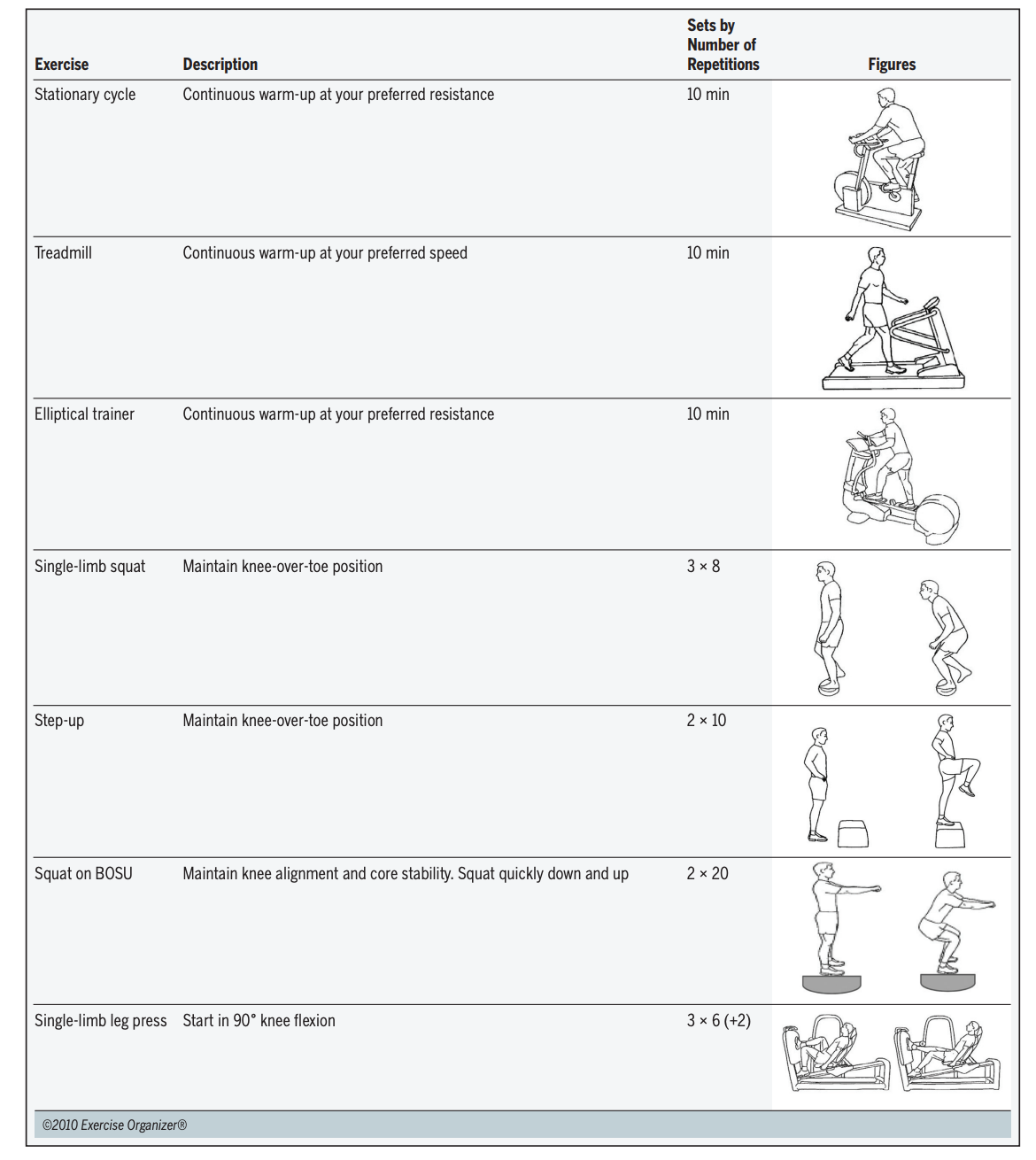
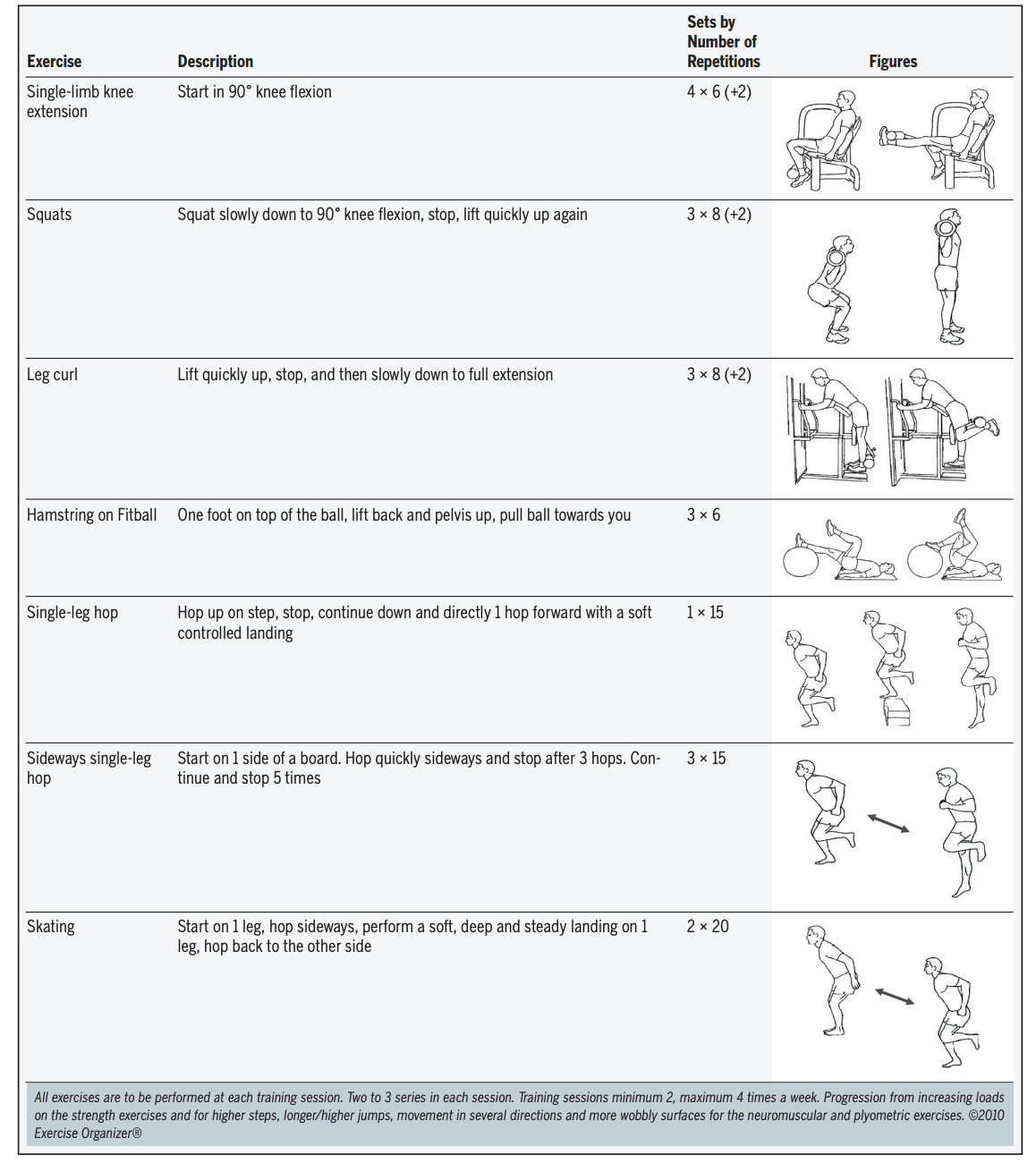
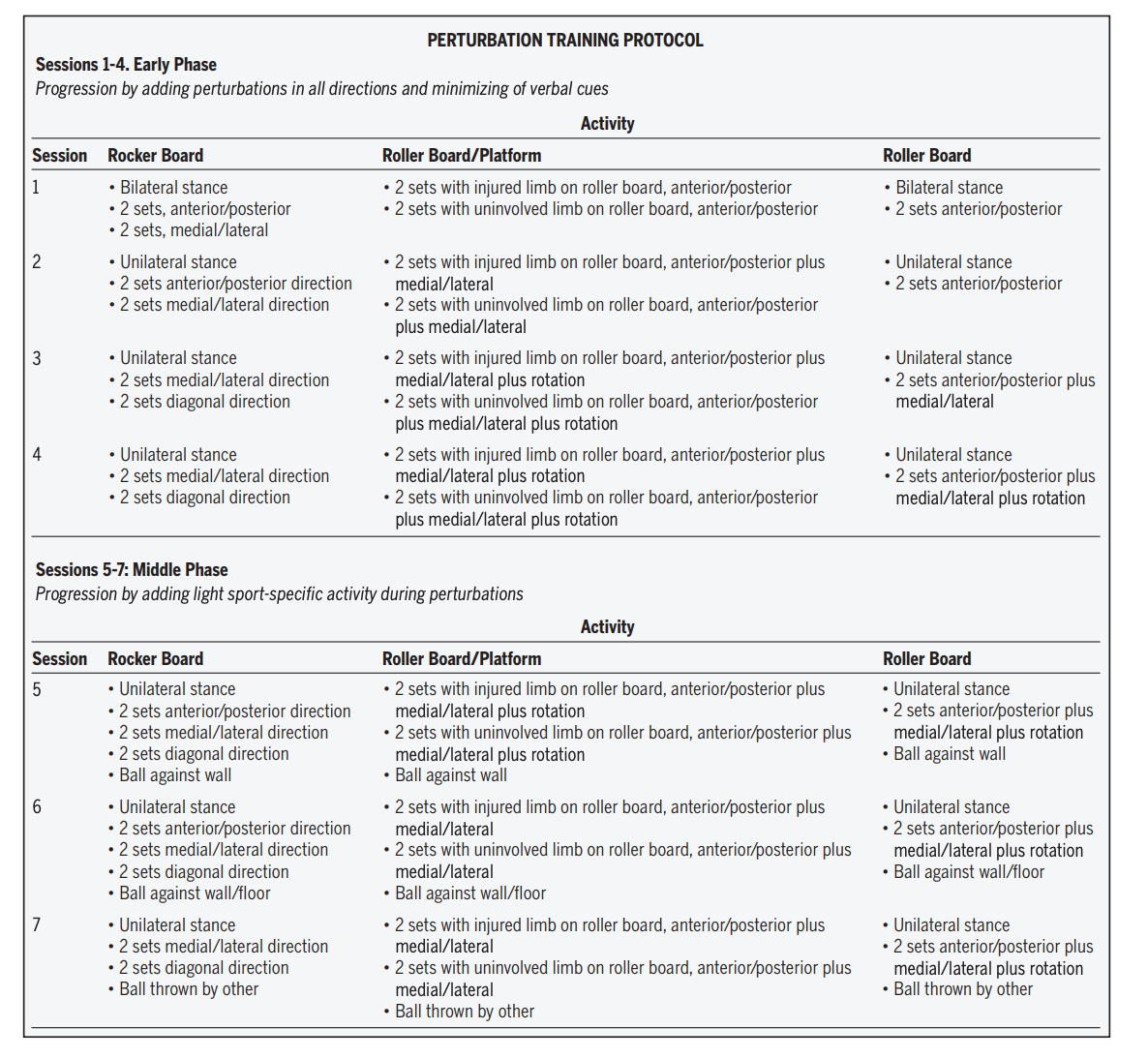
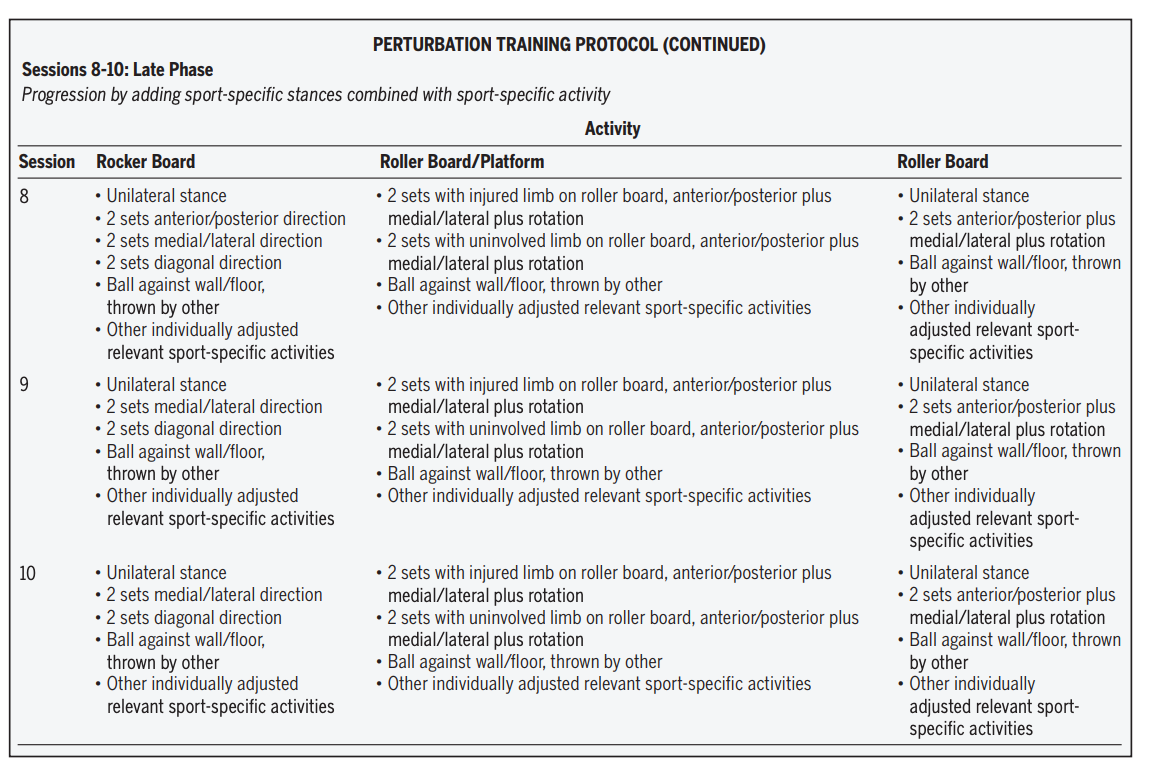
Future risk athletes:
he timing of noncon-tact ACL injury ranges between 17 to 50 milliseconds afterinitial ground contact,14 leaving no time for mechano-sensory feedback mechanisms to prevent injury. Thus,during fast movements like side cutting, substantial neuralpreactivation of the knee flexor muscles just before groundcontact seems essential
The main finding of this study is that currently noninju-red female athletes with reduced and elevated preacti-vity of their ST and VL muscles, respectively, during sidecutting are at increased risk of future noncontact ACLrupture
-> if higher quad activity and lower hamstring activity can be seen as a risk factor, then how does greater quad strength make sense? different / less stiff landing
In contrast, preactivity for the lateral ham-string (BFcl) was not different between subsequently inju-red and noninjured players, emphasizing the importance ofthe medial hamstring. -> counteracting valgus
In this regard, wehave recently shown selective upregulation of ST activitythrough targeted neuromuscular training.36 Although ahigh quadriceps activity also seems to predispose for futureACL rupture, high knee extensor activity is essential to
gain power and speed in explosive movements as the side-cutting maneuver. Thus, upregulation of ST activity shouldbe the essence of preventive neuromuscular training
The present findings could also be relevant knowledge inrespect to orthopaedic surgery because ruptured ACLs arecommonly reconstructed by a graft harvested from the STtendon11,15,17,19 without considering the biomechanical con-sequences caused by reduced function of this particularmuscle
Our data indicate that reduced preactivity of the ST incombination with elevated preactivity of the VL duringside cutting predisposes for future noncontact ACL injuryin female soccer and handball players.
(Zebis et al., 2009)
Neuromusc training for increased preactivation of hammies:
There is a synergistic relationship between the ACL and hamstring muscle group,15,17–19 which in humans exhibits a complex behavior.20 Although the latency of the ACL ligamentomuscular reflex arc (.100 ms) seems too long to provide a protective mechanism per se for the ACL in acute situations,20 afferent feedback from the ACL potentially plays an important role in the updating and formation of preprogrammed motor patterns for optimizing knee joint stabilization.21 These findings suggest that a change (re-programming) in movement pattern and neuromuscular activity by means of training might reduce the incidence of ACL injury among female athletes
The well-established effect of neuromuscular training in reducing the incidence of ACL injuries in female sports24,28,29 may thus be related to a remodeling of existing motor programs towards movement and activation patterns that reduce ACL strain.
The main aim of the present study was to investigate the effects of prophylactic neuromuscular training on neuromuscular function at the knee joint during sidecutting in female elite athletes at risk for ACL injury
Pre- to post-training neuromuscular activity in the time interval 50 ms before toe down of the m. semitendinosus increased significantly from 41 6 12% to 52 6 16% (P , 0.01)
The main finding in the present study was that neuromuscular training induced a change in the pattern of neuromuscular activation of the hamstring muscles during sidecutting. The selective increase in semitendinosus activity in the prelanding phase and the initial landing phase in parallel with the unchanged neuromuscular activity of the quadriceps muscles may represent an important adaptation in response to neuromuscular training. During rapid movements like sidecutting, which involve substantial eccentric quadriceps forces,38 it seems essential to have adequate neural preactivation of the hamstring muscles just before ground contact to protect the ACL
Neuromuscular preplanning allows feed-forward recruitment of the musculature that controls knee joint stability during landing and pivoting maneuvers.40 The female athletes in the present study displayed a muscle activation pattern
An increased ratio between m. semitendinosus and m. biceps femoris neuromuscular activity may help to prevent excessive external rotation of the tibia and lateral joint compression during instep and sidecutting maneuvers, thereby decreasing the risk of dynamic valgus. After neuromuscular training, semitendinosus EMG activity was selectively increased during sidecutting, which likely represents an important adaptation mechanism because it potentially decreases the risk of dynamic valgus. Jumping performance was additionally enhanced as a result of the neuromuscular training. -> plyos
2018 CPG on ACL injury prevention:
stongly recommends the inclusion of exercise based knee injury prevention programs (such as 11+, fifa 11, HarmoKnee, Knäkontroll).
programs should take up around 20 min per session, multiple times per week
multiple components, proximalcontrol exercises, and a combination of strength and plyometricexercises should be included
balanceshould not be the sole component of a program
encourage implementation of exercise-based ACL injury preven-tion programs in athletes 12 to 25 years of age and involved insports with a high risk of ACL injury
syst review on passing rts and injury reduction:
The current review sought to deter-mine the utility of RTS decisions basedon objective criteria
Most concerning, this reviewdetermined that 12% (95% CI: 3%, 26%)of those who failed RTS testing suffereda graft injury, compared to 5.9% (95%CI: 2%, 11%) of patients who passed. Al-though not statistically significant, theremay be a protective association betweenpassing RTS criteria and ACL graft rein-jury (RD, –7%; P = .140). It is plausiblethat additional research will demonstrateless risk of an ACL graft injury after pass-ing RTS criteria
Researchers have suggested that optimalcutoff scores (isokinetic strength and hoptests) should be 90% or greater to 100%on a limb symmetry index (LSI) for com-petitive athletes; however, no includedstudy used a passing LSI of greater than90%
Time from surgery to return to sportmay be a key moderator of second ACLinjury risk, based on evidence from 2 in-cluded studies.23,69 There is no consensuson the optimal timing of return to sport.Grindem et al23 determined that for everymonth return to sport was delayed (upto 9 months), the incidence of any kneereinjury was reduced by 51%. Returningto sport at 6 months was shown to be anindependent predictor of contralateralACL injury.69 Delayed return to sportwas shown to be protective of secondACL injury in a pediatric population.1
Two included stud-ies23,35 identified independent risk factorsfor an ACL graft injury (more symmetri-cal quadriceps strength and improvedhamstring-to-quadriceps strength ratio)
Time fromsurgery to return to sport is likely a sur-rogate measure of multiple variables,including increased time addressingstrength and kinematic deficits, recover-ing proprioceptive loss, additional tissuehealing, and overcoming any psychologi-cal or cortical impairments
Returning tosport prior to 9 months following ACLRcould be detrimental to the patient.
Twelve different RTS tests were re-ported in this review. The most commoncriterion (100%) was the single-leg hoptest.23,35,47,69 Although single-leg hop LSIscore was a key component in RTS test-ing, its ability to alter second ACL in-jury risk and predict future knee injuryhas not been established.8,9,16,21,26,76 Twoincluded studies found that no hop testwas predictive of a second ACL injury,even though passing LSI scores were in accordance with published recommen-dations.
Valgus loading27,28,56 and altered pos-tural stability54,56 during landing taskshave been shown to predict future injury.Adolescent athletes following ACLR methop test symmetry by hopping a shorterdistance on the contralateral limb anddemonstrated lower knee energy absorp-tion compared to controls.84 Assessingkinematic variables during hop testingmay be warranted for RTS testing basedon limitations with current comparisonmetrics (LSI).45 Validated clinical evalu-ations of jump-landing mechanics havebeen previously reported and may pro-vide valuable information when makingRTS decisions
this review demonstrated thatcurrent objective criteria-based RTSdecisions did not show an associa-tion with the risk of a second ACL inju-ry. This conclusion was based on a verylow quality of evidence due to observedheterogeneity and imprecision betweenthe included studies. This review cannotconfidently conclude that there is no as-sociation between passing objective RTScriteria and risk of a second ACL injury.Studies included in this review demon-strated clinically important findingsregarding RTS decisions that warrantattention.
Landing error scoring system:
Participants performed 3 trials of a standardized jumplanding task during each test session on a soccer field before practice (Figure 1).
The participant began the task standing on a 30-cm-high box placed at a distance of half the body height away from a landing area, which was marked by a line on the ground. Participants were instructed to jump forward so that both limbs left the box simultaneously, to land just past the line, and to jump for maximal height immediately after landing. They practiced until they were comfortable with the task and performed it correctly. Trials were excluded and repeated if the participants jumped vertically from the box or if they did not jump for maximal height upon landing
video was made in front and from the right side.
a 1-point differential in the total LESS score can be associated with moderate to large differences in certain biomechanical variables.14 A higher LESS score indicates a greater number of landing errors and consequently poorer jump-landing technique. The average LESS score from the 3 trials at each testing session was used for data analyses (test were performed at the beginning of each soccer season)
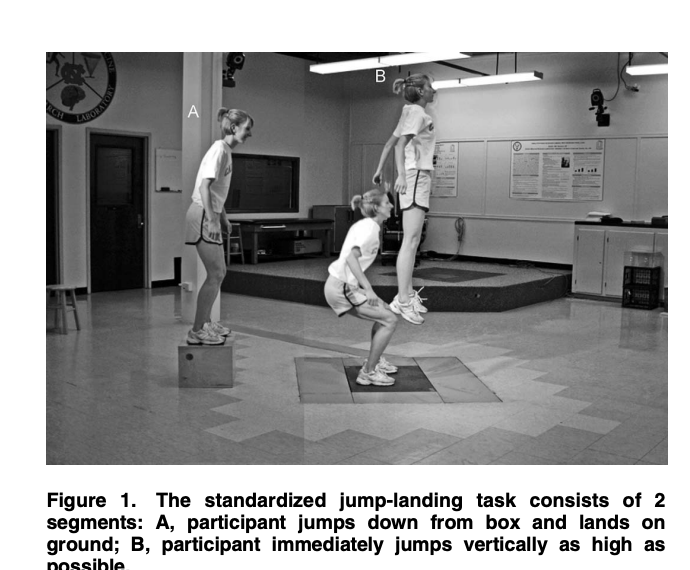
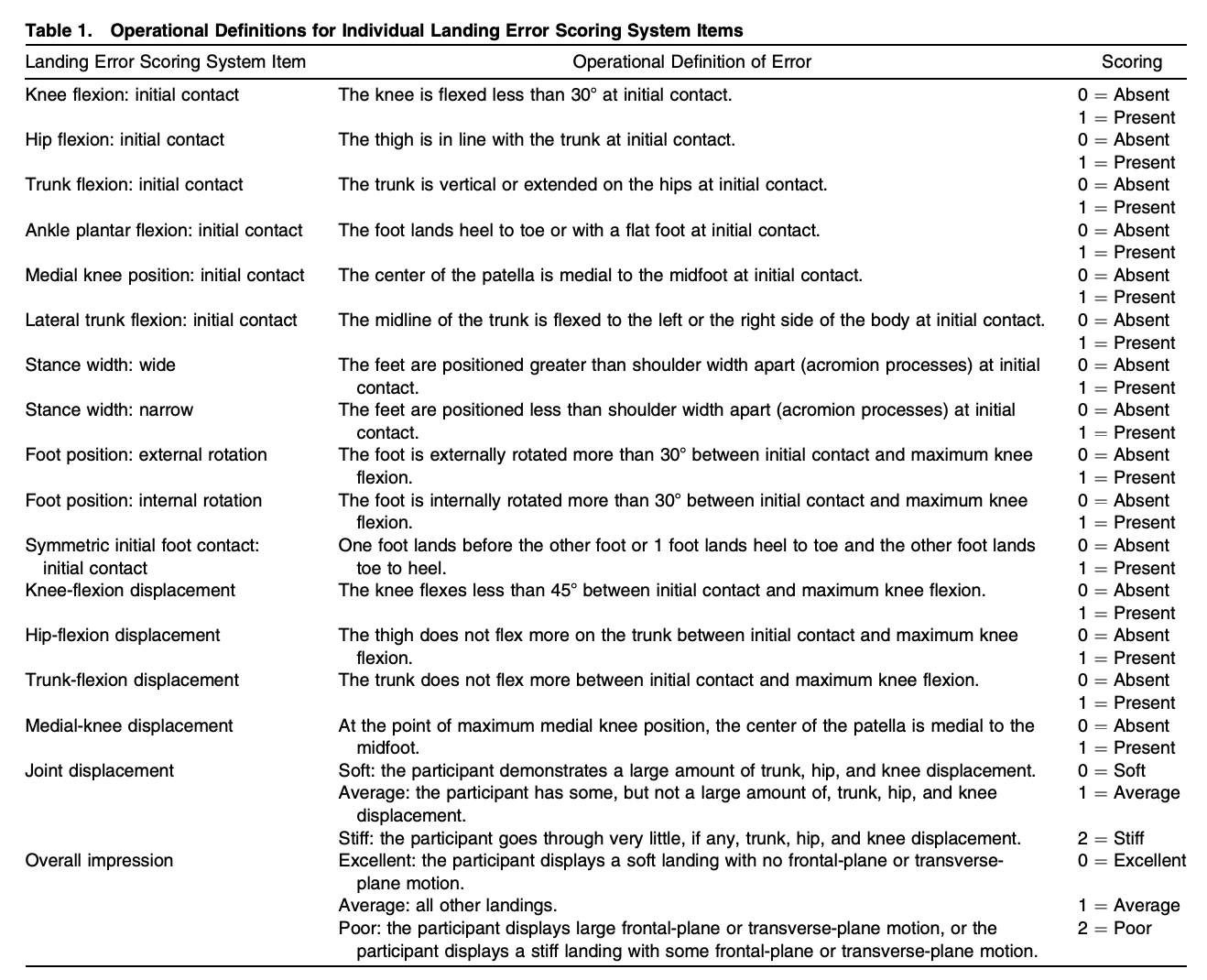
Our most important finding was that elitelevel youth soccer athletes with LESS scores of 5 or more were at greater risk (1.2% risk difference) of sustaining noncontact or indirect-contact ACL injuries than their counterparts with LESS scores below 5
Most researchers have shown that ACL injury-prevention programs pose no risk to participants. In relation to our results, these programs have also been shown to specifically reduce LESS scores below the cutpoint threshold that we detected for injury-risk susceptibility.17,18 However, these programs require large investments of athlete time, and most successful programs involve professional supervision, which results in substantial logistical constraints and monetary cost. The LESS can be performed quickly with minimal expense and minimal technical expertise.
The LESS score is quantified as the sum of 17 possible individual movement errors during a jump-landing task
. Ideally, one would want to use movement screening programs that identify individuals at risk for ACL injury as young as possible to allow time for preventive training to correct high-risk movement patterns before the peak ages for ACL injury risk (age range, 15 to 18 years). Whereas a high LESS score may lack precision in identifying which athlete will sustain an ACL injury, the LESS score may be effective in separating athletes into highrisk and low-risk subgroups. These data should be interpreted with caution due to the small number of ACL injury cases in this analysis. However, given the devastating consequences of ACL injury, the paucity of other ACL screening tests, the favorable feasibility profile of the LESS, and the costs associated with large-scale ACL injuryprevention efforts, the screening value of the LESS needs further investigation in youth-sport populations
rts contimuum:
Recently, an international consensus has recognised a newly defined RTS process, which acknowledges a continuum of three elements, emphasising a graded, criterion-based progression, which is applicable for any sport and aligned with RTS goals.7 These include return to participation, such as modified training, but not been able to return to competitive sport; RTS, which is characterised as returning back to the same competitive sport, but not necessarily returning back to previous levels of performance; and return to performance (RTPerf), which described the resumption of sport to a previous level at the same or higher level of performance.
Key aspects of the model include the RTS progressions of (1) on-field rehabilitation, (2) return to training, (3) return to competitive match play, and (4) RTPerf. The length of each stage will reflect the type of injury and specific context of that injury. Importantly, RTPerf should be confirmed as the ability to perform at the same or higher levels of performance during competitive sport, thus can only be confirmed after an athlete has actually ‘returned to competition’.
the more you go to the recovery of the performance, the more places and the skills you must have which assume the characteristics of the real sports environment. As such, the process requires close collaboration and communication between the rehabilitation team (specialising in the rehabilitation and RTS process) and the performance team (specialising in RTPerf) who should know and share profoundly their skills and roles
The tests that make up the protocol should investigate some aspects:
► Clinical (pain, swelling, range of motion).
► Functional (maximum and explosive strength, both specific to the joint and global measures, muscular endurance strength, body composition).
► Biomechanical (movement analysis testing).
► Psychological (fear of reinjury, psychological attitudes).
► Sport specific (ability to support volumes and work intensities in training, sport-specific physiological screening).
(Buckthorpe, Frizziero, et al., 2019)
RFD:
if improving an array of strength characteristics is the goal, including a combination of both high-intensity and high-velocity exercises may be most beneficial
Significant (p < 0.05) differences were observed between groups for changes in peak FRC, FRC output at 30–200 ms, and RFD at 50–90 ms. Significant (p < 0.05) improvements in peak FRC and FRC output at 30–200 ms were observed for INT but not for VOL. For changes in RFD, a significant change for INT was observed at 50 ms (p = 0.040) only, although a trend was observed at 90 ms (p = 0.052). VOL did not experience any significant changes in any of the RFD measures
INT training program required the participants to perform 3–5 repetitions with 90 % of their 1RM, with a 3-min rest period between sets
-> high intensity training, low volume, long rest is more effective for RFD training, which likely presents a important variable after ACLR.
high-intensity resistance training appears to be beneficial in enhancing the RFD during the early contraction phase
programming in the present investigation utilized a higher resistance (~90 % of 1RM) and terminated each set following five repetitions (=not until failure).
Tissues to systems:
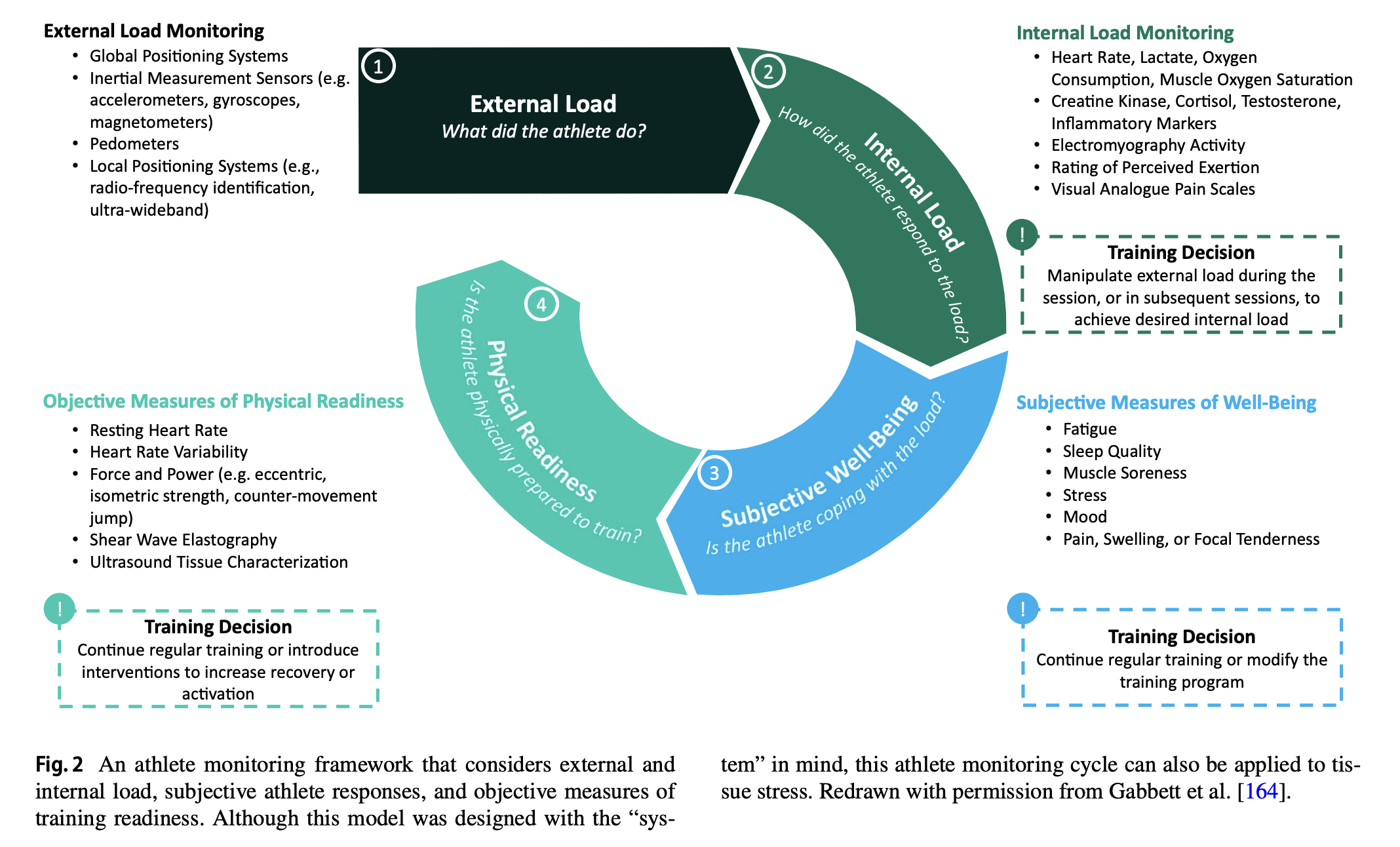
Throughout this article, we have highlighted the importance of considering the tissue response when determining if an appropriate dose of training load has been applied. In this respect, monitoring either external or internal load in isolation will be inadequate to determine training adaptations. Indeed, the athlete monitoring framework described in Fig. 2 emphasizes the importance of using at least two sources of monitoring information to contextualize load–response data and inform subsequent training prescription. When presented with an injury, rehabilitation professionals are encouraged to frst consider typical tissue recovery timeframes before initiating training programs. Consideration of the local tissue capacity required to perform sporting skills is necessary to ensure appropriate local tissue loading is incorporated into the training schedule. Importantly, systemic loading is also recommended during rehabilitation to maintain global capacity and prevent detraining of noninjured tissues. Solid clinical reasoning should always underpin the training process for both injured and healthy athletes, but the typical tissue and system load–response recommendations presented in Fig. 1 can be used as a starting point to guide training prescriptions.

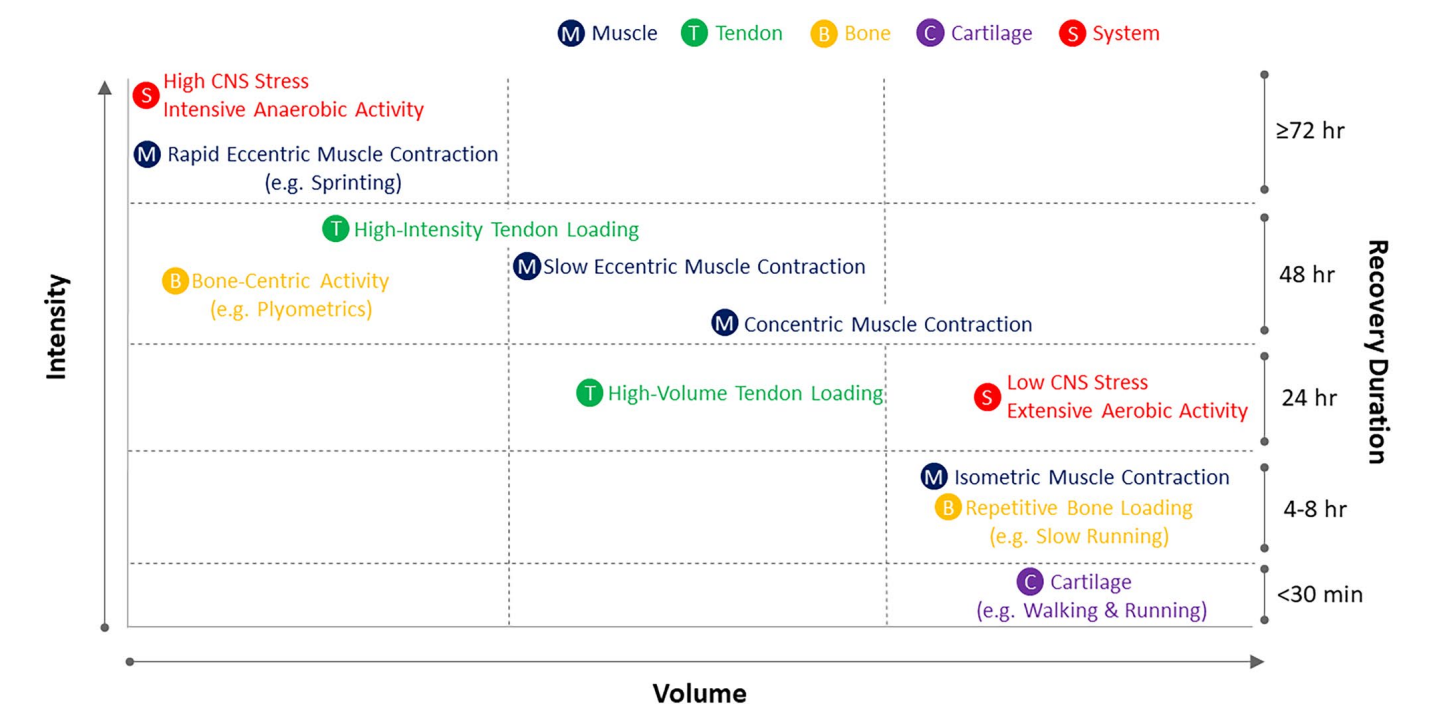
loading progression:
thereis often a mismatch between pain, functionand structure. 6 Therefore, loads that arewithin pain tolerance may not be sufficientfor improvements in local tissue-specificload capacity and function. Importantly,restoring local tissue capacity in injuredathletes is not enough to return athletesto play and perform safely. Sport-specificloading (eg, sprinting) results in greatermuscle activation 7 and training- inducedarchitectural changes8 than targeted localtissue loading (eg, hamstring eccentricstrength training). Clearly, maintenanceor restoration of sport- specific capacity isrequired to bridge the gap between reha-bilitation and peak performance (figure 1,online supplemental table 1
1. Progressive loading using patient-reported feedback is best practice.Accurately quantifying local tissueloads in the injured athlete is difficult.The inclusion of a patient- reportedoutcome (such as a session- RPE or avisual analogue pain scale), in combi-nation with external loads are neededto address local tissue loads and pro-gress exercises safely and efficiently.
2. Effective programmes employ localtissue loading to maintain local tissuecapacity. Scheduling localtissue conditioning within the train-ing cycle maximises the likelihood ofhealthy athletes remaining injury-free.
3. Local tissue and sport-specific loadingare needed for an injured athlete to re-turn to sport safely. without regular doses of load designedto improve sport- specific capacity,athletes are at risk of being underpre-pared for the demands of competitionon return to sport. Within the con-straints of biological healing, exposureto sport-specific loading allows safere-integration into training and com -petition, while minimising the risk ofre-injury.
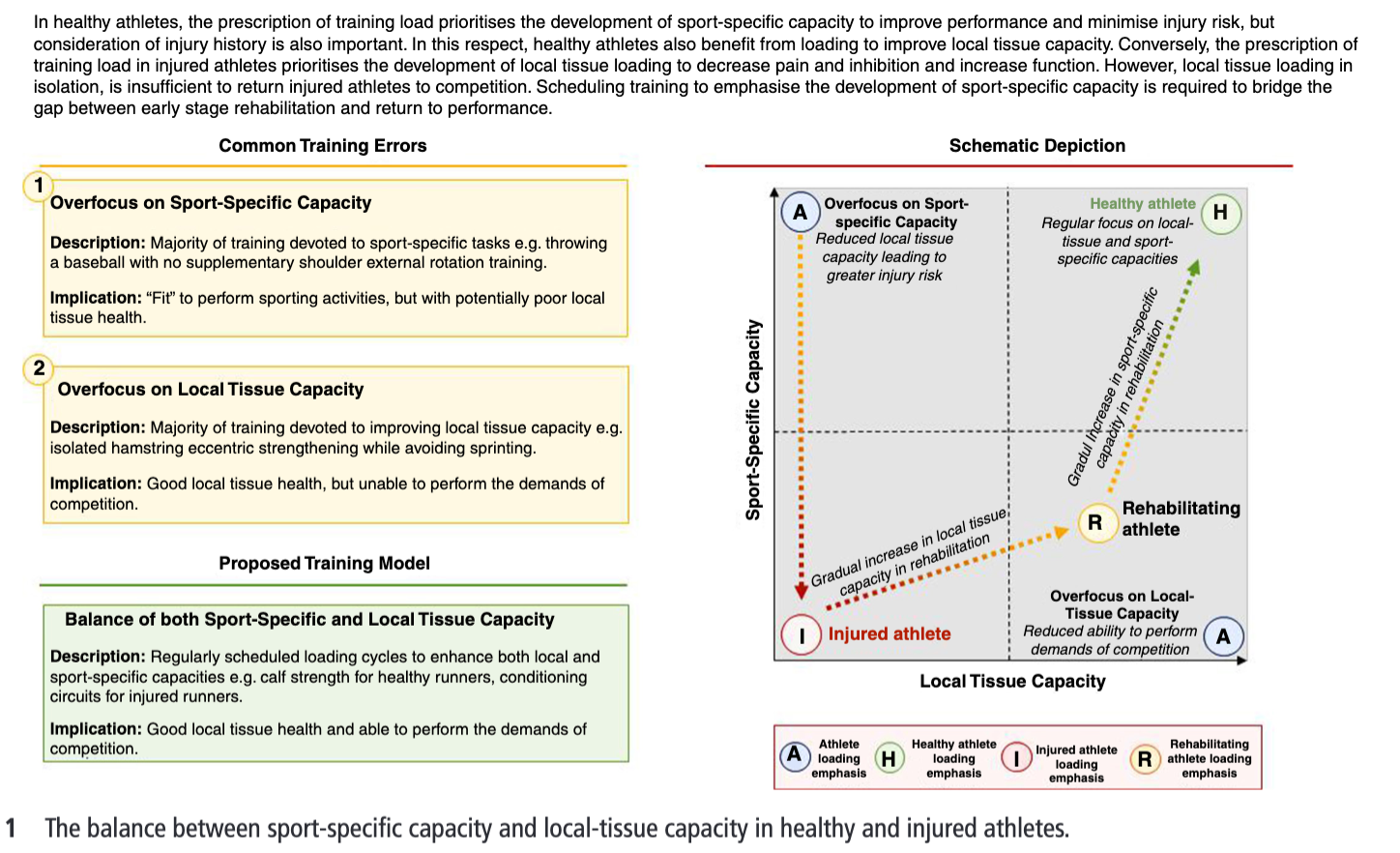
Knee frontal plane motion:
Be-cause the ROM measurement used in thepresent study has been previously shownto inform about passive hip stiffness,5our results suggest that individuals withadequate hip stiffness may have betterdynamic knee alignment in the frontalplane, despite the presence of reducedhip abductor torque
These results demonstratethat the potential of hip abductor isomet-ric torque to determine the occurrence ofincreased FPKPA depends on availablehip IR ROM.
The influence of reduced ROM ofthe hip in IR on the occurrence of highFPKPA during single-leg squatting wasdemonstrated by 7 individuals with hipabductor isometric torque greater than1.03 Nm/kg but with reduced passive hipIR ROM (less than 21°; mean angle inthis subgroup, 17°). A lack of appropriaterange of hip IR to allow for absorptionof possible trunk and pelvis rotationsresulting from squatting can cause thebody’s center of gravity to move laterallyrelative to the knee joint.23 This projec-tion of the body’s center of gravity rela-tive to the knee can lead to an increasein FPKPA. Therefore, this classificationdemonstrated that low hip isometrictorque associated with high or exces-sively low passive ROM of the hip in IRis related to the occurrence of increasedFPKPA during functional activities
-> so too much is bad and too little as well? very hard to measure and assess correctly, therefore conflicting
Why does knee extensor strength reduce injury risk? should that not put more strain on the acl, the stronger the quad is? we suggest that its due to changing an athletes movement options and that they are then more likely to utilise deeper knee flexion during their high impact movements as these positions require more strength, but are putting less strain on the acl.
When looking at any rehabilitation protocol, the first question that needs to be asked is "what is the goal?". What do we want to achieve by putting our athletes under a rigorous rehab program? When recovering from an ACL rupture, there are several things that we want to have an athlete recover from:
- Regain full extension within the first 2 weeks
- Regain leg strength similar to the uninjured side
- Regain coordination, movement technique and confidence in the leg, as it was or better than before the injury
The way we regain those above listed qualities is mainly through a combination of strength training and neuromuscular training (=balance training, perturbation training...). Adding neuromuscular training to strength training has been shown to optimise self-reported outcome measures in patients (Van Melick et al., 2016), but they should not be performed exclusively, thereby neglecting strengthening and ROM (Kruse et al., 2012).
Training program:
The following training program represents a fusion of training protocols from different research papers and recommendations (Kotsifaki et al., 2023; Bieler et al., 2014; Laughlin et al., 2011; Risberg et al., 2007; Adams et al., 2012; Van Melick et al., 2016; Filbay & Grindem, 2019):
Implementing core stability training might to improve functional outcomes such as improvements in gait (Kotsifaki et al., 2023).
A combination of OKC and CKC leads to better quadriceps strength gains (Kotsifaki et al., 2023).
To improve not only subjective knee function but also replicate demands of sports, the later phases will incorporate plyometric exercises.
Exercise intensity should be aimed quite high, as regaining quadriceps strength is an important factor after ACLR and evidence suggests higher intensities help patients regain knee extension power more quickly during rehab (Bieler et al., 2014). A progression could look like this (Risberg et al., 2007):
Weeks 2-4: 4 sets of 20-30 reps
Weeks 5-8: 3 sets of 15-20 reps
Weeks 9-15: 3 sets of 12-15 reps
Weeks 16-24: 3 sets of 6-8 reps
A quote from a 2014 paper beautifully describes the purpose of the rehab process: "The aim of the ACL-reconstruction surgery is to create a mechanically stable knee and the aim of the rehabilitation is to create a functionally stable knee"(Bieler et al., 2014), that's how simple it is.
In the following the training program will be split into goals, for which exercises will be listed that can aid in achieving the purposed goal after ACLR:
Goal 1: Regaining full knee extension and reduce swelling
The first goal of any ACL rehab protocol is to regain full knee extension. This full knee extension is not aimed at any degree or number, but should match knee extension of the uninjured leg. If the other leg has also been injured, then restoring knee extension to 0 degrees is the goal.
- Keep the leg elevated throughout the day and perform aktive ankle plantarflexion and dorsiflexion (for swelling)
- Isometric quadriceps exercises
- When sitting put the Heel on another chair in front of you so that the knee is floating in the air and pulled down into extension by gravity (small external loads can be added on top of the knee to increase effectivity)
- Extending the knee in standing against the pull of a resistance band that is wrapped around the knee and anchored in front of the patient (to target terminal knee extension)
- During walking with crutches, focus on achieving an initial contact (IC) with an extended knee
Early Postoperative Phase:
In the following we will use the proposed milestones of the study of Adams and colleagues from 2012 (Adams et al., 2012), with updated introduction of new exercises from the Aspetar CPG (Kotsifaki et al., 2023):
Week 1:
Goals:
- Knee ROM from 0 to 90 degrees
- Active quadriceps contractions with superior patellar glide
Achieved in practice by (=Treatment):
Full weight-bearing from day 1 with focus on correct gait;
Active and passive ROM exercises for the knee from day 1 (0 to 90 degrees);
Isometric quadriceps exercises (quadriceps pumps);
Riding a bicycle for ROM;
Supine wall slides for the knee;
NMES;
Patellar mobilisation;
Straight leg raises
Week 2:
Goals:
- Knee flexion >110°
- Walking without crutches
- Stair climbing (foot-over-foot)
- Walking with full knee extension
- Straight leg raise without a knee extension lag
- Knee Outcome Survey activities of daily living (KOS-ADL) greater than 65%
Achieved in practice by:
Closed kinetic chain exercises such as body-weight squats (instead of isometrics);
Continue with ROM exercises;
Work of restoring normal gain function;
Pain free range step-ups;
Low-intensity scar mobilisation if needed (and skin is healed)
Prone Hangs -> if knee extension deficits persist by week 2;
Patellar mobilisation in flexion (if flexion is limited)
Wall squat with uninvolved knee at 90° and the operated one at 60°
Standing heel raises
Single leg stance
Step-ups and Lunges with the uninvolved leg
Week 3-5:
Goals:
- Knee flexion ROM within 10° of uninvolved side
- Quadriceps strength >60% of uninvolved side
Achieved in practice by:
At Week 3: Start leg pressing with half squats (to 45 degrees) for people with hamstring graft and start hamstring strengthening
At Week 4: Perform open kinetic chain exercises (such as leg extensions) in a restricted ROM of 90– 45°
At Week 5: Perform open kinetic chain exercises in a restricted ROM of 90-20°
Progress bike and StairMaster duration to at least 10 minutes
Perform balance and proprioceptive exercises
Knee joint mobilisations (with rotations) if ROM is still limited
Standing heel raises
Single leg stance with eyes closed or on balance mat
Wobble board with 2 legs
Step ups with both legs
Balance reach with leg or arm
Hip abduction / adduction training
Week 6-8:
Goals:
- Quadriceps strength >80% of uninvolved side
- Normal gait pattern
- Full Knee ROM
- Minimal knee effusion
Achieved by:
At Week 6: Perform open kinetic chain exercises with full ROM
Progress intensity and duration of other exercises
Backwards and sidewards walking on a treadmill
Wobble board double and single-legged
Single leg stance on a trampoline
Step ups and step downs
Lunges with weights
Single-leg stance while throwing balls
Hamstring exercises
Week 9-12:
Goals:
- Maintain or gain quadriceps strength (>80%)
- KOS-Sports questionnaire >70%
Achieved by:
Perform sports-specific activities
Agility exercises
Hop-Testing
Squatting exercises on a wobble board
Squatting with weights
Lunges with weights
Step ups with weigths
Jumps on trampoline (bilateral)
Single leg heel raises
Leg press
According to Adams and colleagues 2012, as 12 weeks postoperative people should attain:
- 90% or more on quadriceps index
- 90% or more on all hop tests
- 90% or more on KOS-ADL
- 90% or more on global rating score of knee function
Running will be allowed after hitting the above listed criteria for "Return to Running". But patients should be exposed to running gradually via running progressions. The following table presents a running progression as adapted form Adams (Adams et al., 2012) and with "soreness guidelines" that assist in progressing safely from one level to the next:
Running Progression:
| Level | Treadmill Workout |
|---|
| Level 1 | Alternate 0.16 km walk / 0.16 km jog, repeat 10 times (Total 3.2 km) |
| Level 2 | Alternate 0.16 km walk / 0.32 km jog, total 3.2 km |
| Level 3 | Alternate 0.16 km walk / 0.48 km jog, total 3.2 km |
| Level 4 | Alternate 0.16 km walk / 0.64 km jog, total 3.2 km |
| Level 5 | Continuous jog for 3.2 km |
| Level 6 | Increase distance to 4 km |
| Level 7 | Increase distance to 4.8 km |
| Level 8 | Alternate between running and jogging every 0.4 km |
Progress Guidelines:
- Move to the next level once you can complete 3.2 km without increased pain or swelling.
- Limit sessions to a maximum of 4 times per week, with at least one rest day between sessions.
- Avoid progressing more than 2 levels within any 7-day period.
Soreness Guidelines:
| Condition | Recommended Action |
|---|
| Soreness starts during warm-up and persists | Take 2 days off, reduce workout intensity by one level |
| Soreness starts during warm-up but then subsides | Continue at the same level that caused the soreness |
| Soreness subsides during warm-up but returns mid-session | Take 2 days off, reduce workout intensity by one level |
| Soreness the next day (not typical muscle soreness) | Take 1 day off, avoid progressing to the next level |
| No soreness | Progress 1 level per week or follow healthcare advice |
Usage Guidelines:
- Adjust workout levels based on soreness response to avoid overtraining.
- Consult with a healthcare provider if soreness persists or worsens.
Buckthrope and colleagues created a task-based criteria list for different activited in the rehab process of ACLRs (Buckthorpe et al., 2020).
One of them is the progression towards a single-legged squat. Which should be done only after hitting 100% bodyweight at the double-legged leg press. While the single-leg squat should be progressively implemented by starting with split squats, step ups and walking lunges.
With bilateral landing exercises, a patient should be leg-pressing their body weight around 8-10 times single-legged or 2 times bodyweight on a bilateral leg-press. As bilateral landings can reach 1.5-2 times bodyweight. Exercises would include submaximal jumps with focus on smooth landing.
For single leg landings, horizontal decelerations and single-leg plyometrics, the patient should have a quadriceps index (quadriceps strength) of 80% compared to the uninvolved side. The patient should also be able to move 1.5 times bodyweight on the single-leg press. Initially, single leg landings should be initiated from low heights and on soft surfaces (such as mats), and then be progressed accordingly.
The main points are summarised below:
Bilateral Landing
- Action: Control landing from a low-intensity jump using both legs.
- Strength Needed:
- 100% body weight (BW) for single-leg press
- 150% BW for double-leg press/squat
- Knee Motion Requirement: Flexion greater than 130°
Bilateral Plyometrics
- Action: Perform a two-legged drop jump from a 30 cm height.
- Strength Needed:
- 125% BW for single-leg press or 200% BW for double-leg press
- Knee Motion Requirement: Full range
80% limb symmetry in knee extension
Unilateral Jumping, Landing & Plyometrics
- Action: Decelerate on one leg after forward or lateral running; perform a single-leg drop jump.
- Strength Needed:
- 150% BW for single-leg press
- Knee Motion Requirement: Full range
80% limb symmetry in isokinetic knee extension
When bilateral or unilateral landings or jumps are initiated after ACLR, landing technique should be analysed and corrected if needed. As cueing patients to land softly (which automatically increases hip flexion and knee flexion) can reduce peak ACL forces on ground contact (Laughlin et al., 2011). This is primarily due to the increased posterior shear forces generated from the hamstrings (which pull the tibia backwards) which is likely due to the increased knee flexion, which gives the hamstrings a more perpendicular line of force generation on the tibia).
The observed ACL strain decrease in this study was 11% (from 496 to 440) from a stiff to soft landing, which doesn't look like much, but could potentially decrease forces on the ACL enough during high velocity cutting or deceleration to keep the ACL below the rupture threshold.
Motor Learning:
After ACL injuries, many patients are left with motor deficiencies. Meaning that they have biomechanical movement alterations such as increased knee valugs, altered hip rotation, decreased sagittal plane motion and more.
These changes in motor control (= controlled movement) can will lead to changes in loading patterns and might therefore increase risk of future knee injury (second ACL, either ipsi- or contralateral). This is why motor control exercise have their place in ACL rehab, in order to learn athletes how to move again with their injured leg in the way they used to.
A 2019 paper on this topic (Gokeler et al., 2019) proposed that there are 4 core principles of motor learning. Their clinical implications will be discussed in the following:
- External focus of attention.
- Implicit learning.
- Differential learning.
- Self-controlled learning and contextual interference.
External focus of attention:
Attentional focus is the term that describes where the athlete lays their focus on. There are two main categories of focus: internal vs external focus of attention. Most people are used to instructing or correcting patients movement patterns only though internal cues. These include wording such as "flex your knee more during landing", while external cues would include wording such as "try to land like a feather". As you see these two phrases have the same aim: increase knee involvement during landing. But cueing a patient on their exact body part makes movement a conscious effort, while external cues where they just focus on landing silently will lead to a more automatic movement response. Gokeler and colleagues described it well in their paper by emphasising that a "focus on the movement effect promotes the utilization of unconscious or automatic processes, whereas an internal focus on one’s own movements results in a more conscious type of control that constrains the motor system and disrupts automatic control processes".
Although the differences in cueing for external vs internal focus can be subtle, it is often the small things that show matter greatly in the end.
Exemplary external focus cues:
- For glute activation during running: "Step forward and imagine pulling the ground towards you"
- For initial contact knee extension: "imaging kicking a ball before landing"
Implicit learning:
Similar to keeping an external focus of attention comes implicit learning. Under implicit learning we understand the reduction of information during complex movement tasks so that there is once again a low conscious awareness of what the people are learning.
Examples:
- For smooth landings: "Land like a feather"
- For counter movement jump: "Imagine the floor is lava and you don't want to burn your feet"
Differential learning
Differential learning aims to put the athlete in a different learning environment than the classic 3x10 repetition scheme. There are two main categories to elicit change in the learning experience:
Change in environment: train in water, on sand, on uneven grounds, barefoot, on a trampoline...
Change in the exercise set up: perform the exercise in a fatigues state, perform the exercises way faster or slower than usual, closed eyes
Self-controlled learning and contextual interference.
This point focuses less on how we do what we do and more on the organisation of what we do. Usually the trainer or physiotherapist is the one who decides which exercises are performed at which time in which duration. So for example the athlete could be given the possibility of choosing exercises out of a pool of different exercises and deciding in which order to train them. They could also be given the opportunity of choosing different rep and set schemes for the training sessions. The amount of contextual interference, which describes the interference of learning of practicing one task in the face of another task, like the above described variation of exercise order. But these things should be implemented carefully and gradually, with more interference given to higher level athletes.
Main takeaway: Implementing the right exercises for the right problem at the right time is what makes rehab challenging but exciting at the same time. It is important to be aware of possible "rehab goals" that are time-dependent. So that the rehab process is focused towards a specific outcome, which will assist in creating a red-thread throughout the rehab process.
Return to Sports and Open Questions
Q & A
Return to Sports (RTS)
RTS is a big deal after ACL. Thorough rehab is indicated for every athletes with the goal of RTS, as the literature shows that in general no more than 55% of non-elite athletes return to competitive sports (Ardern et al., 2014), while 83% of elite athletes return to pre-injury levels of sports following ACLR (Lai et al., 2018). Showing a big gap of return to competition, although sports demands are typically higher for the elite athlete. While of course, factors such as superior athletic skill and greater financial opportunity are a factor, in our opinion, this demonstrates the wide discrepancies of rehab quality that exists and likely highlights the importance of sticking to evidence-based therapy.
In and on itself, return to sports should be thought of as a continuum. An ongoing process, which one appraoches gradually. Such a continuum has been suggested by Dingenen and Gokeler in their 2017 paper focusing on RTS optimization. They explain that after an athlete ruptures their ACL, they undergo preoperative rehab. Then they get surgery (in case of ACLR) and initiate a criterion-based postoperative rehabilitation protocol. Gradually they return to sports-specific exercises (with gradually increasing workout intensity and session duration) and undergo a return to sport testing battery. If they are successful, there will be a shared decision-making, involving different stakeholders, until complete return to sports and competition is achieved.
RTS criteria that clinicians can use have been proposed in that same study (Dingenen & Gokeler, 2017). We will list some of the more common amongst them:
- Waiting for at least 9 months
- >90% knee extensor strength compared to the uninvolved side for non-pivoting and >100% for pivoting sports
- Multidirecional hop assessment (>90% of uninvolved side)
- Movement quality assessment during single-leg movements
- ACL-Return to Sport after Injury (ACL-RSI)
- Full ROM, no pain or swelling
While passing the objective criteria is essential, we also suggest to include the acute / chronic workload ratio into the RTS decision making process (more on that here).
Why are we testing our athletes in a recovered and not fatigued state? Even though most injuries happen at a time of heightened fatigue?
As "testing athletes in a fatigued state may enhance the ability to detect clinically relevant deficits after ACLR"(Dingenen & Gokeler, 2017) , we suggest trying a test battery in a fatigued and not completely fresh state.
Way more important that it might be perceived by most therapists are a patients self-perceived symptoms and function as well as psychological readiness measured at 6 months post-operatively, which are strongly associated with RTS at 12 months after ACLR (Webster & Feller, 2020). The association for these factors was stronger than other physical performance or muscle strength tests. So make sure to assess them! Use the IKDC (International Knee Documentation Committee; for symptoms and function) and ACL-RSI (for psychological readiness) questionnaires.
- How can sports-specific exercises be progressed?
How to Progress Exercises During Rehabilitation:
Exercise progression during rehab is more art than science. Fortunately, some useful models guide therapists in progressing exercises safely. One such model, presented by Glasgow and Blanchard in a 2014 paper, outlines a 4-stage framework for exercise progression and regression (Blanchard & Glasgow, 2014).
To illustrate, we’ll use the example of a basketball player returning from an ACL injury who has already passed the “return to running” criteria. We’ll focus on a sports-specific running progression.
Stage 1: Linear Running Progression
In this initial stage, the athlete will focus on progressing their running by increasing speed, duration, and frequency, among other factors. Here, the emphasis is on internal focus, with both the athlete and therapist concentrating on refining running technique.
Stage 2: Adding an External Focus
Next, the athlete will start running while holding a basketball. This introduces an external stimulus, requiring the athlete to pay attention to the ball, which brings the exercise closer to sport-specific training. This stage increases exercise demands with minimal added risk.
Stage 3: Diagonal and Lateral Running
In stage 3, we introduce diagonal and lateral running. To keep this transition safe, we regress by removing the basketball from stage 2. By taking away the external focus, the athlete can better concentrate on movement quality as they progress to more complex running patterns.
Stage 4: Combining Stages 2 and 3
Now we combine elements of stages 2 and 3, having the athlete perform diagonal and lateral runs while holding a basketball. This stage maximizes sports-specific demands, integrating multiple skills.
In the end, we can add other stimuli such as adding a throw close to the basket after dribbling there with diagonal + lateran running drills.
Summary
This progression/regression model is straightforward to apply and shows how a temporary regression can promote safe progression in the long term.
Frequently Asked Questions:
- Are open-kinetic chain exercises safe?
Exercises can be put into different categories, such as single- or multi joint, slow or explosive ... open and closed chain is one such categorisation. While the usefulness of differentiating between open- and closed chain exercises is another topic (we recommend this article form Erik Meira for further discussion) the recent clinical practice guidelines recommend including open-kinetic chain exercises into the rehab protocol after the 4-week time-mark, with no real reason why you should not implement them even earlier into a protocol. It's just that most studies began implementing them at 4-weeks and showed no adverse outcomes at all.
In fact, if you are really scared of ACL strain during open chain exercises (which you shouldn't be, check out this paper for more about that), just perform them from 90° to 60°, as that range has been shown to put zero strain on the ACL (Beynnon et al., 1995).
- Can I perform the main bulk of rehab at home?
It needs to be added, that supervised exercise does not significantly outperform unsupervised exercise rehabilitation. Although the patient probably needs high levels of intrinsic motivation and discipline to keep pushing through the process. It is therefore not for everyone. But it's a viable option for some. Especially rehab cost is a problem, a home-exercise program should be advised with regular check-ins to reduce chances of adverse events.
This might also be for those that do not want to play any major sports and are not willing to perform long lasting rehab.
Van Melick and colleagues concluded in their 2016 review that comparing a 19-week with a 32-week rehab protocol led to no differences in knee ligament laxity, ROM and self reported knee function. Which makes home-based 19-week rehab likely a recommendable option for those that just want to get it done.
- Do we need to check for movement technique?
In a 2018 paper that looked at compensatory movements after ACLR and found that after 3 and 5 months post surgery, patients still showed compensatory movement strategies that led them to avoid using their quads (knee extensors) during bilateral squatting (Sigward et al., 2018). They did so by relying on higher hip extension force output while reducing the overall vertical ground reaction forces on the operated side. This means patients shift their weight towards the unaffected limb. These differences are sadly very hard to detect clinically, as they are influenced by a side to side difference of knee flexion of mere 3 degrees.
For us, this implies that we need to target the quadriceps open chain exercises, performed unilateral, to make sure, that the patient has no other way to perform the exercise apart from activating their quadriceps (such as with the leg extension machine).
- How can I measure my quadriceps index?
If there is no electromechanical dynamometer in your facility (which would be the best option) we suggest performing a 1-RM on the leg extension machine and compare side-to-side strength. As this has been recommended in the past (Noehren & Snyder-Mackler, 2020).
Knee extension machine 1-RM testing from 90° to 45° and handheld dynamometry with fixation via gait belt at 85° to 90° revealed the greatest accuracy for quadriceps strength estimation when compared with isokinetic dynamometers, closely followed by 1-RM knee extensions from 90° to 0°
we advocate for frequent assessments of quadriceps strength utilizing isokinetic dynamometers or handheld dynamometry with fixation if able, or via 1-RM knee extension strength testing in ranges of 90° to 45° or 90° to 0°. -> simply measure it some way, to have numbers to focus on. if 1-rm testing is too scary, use 5 rm
https://pmc.ncbi.nlm.nih.gov/articles/PMC9460090/pdf/10.1177_19417381211056873.pdf
- What about primary injury prevention?
Looking at injury prevention programs, a recent meta-analysis found that a combination of plyometrics, strengthening, and agility exercises are needed to create an efficacious ACL injury prevention programme (Huang et al., 2020). Coaches and therapists have enormous flexibility in designing these programs, as long as exercises from all 3 of these categories are included. Another important seems to be providing athletes with feedback based on their movement technique. This should be done by experienced coaching staff.
In summary, chose exercises from the above 3 categories + technique coaching in some way (visual, verbal, video, by teammates...) and you should be good to go.
- Can we predict ACL injury?
Currently, it seems that there exists a "provocative position" when an athlete lands on the ground that seems to increase injury risk. This position includes increased levels of hip flexion and ankle dorsiflexion compared to other "safe" landing movements. As the authors from a 2016 paper put it "it appears that the maneuver being performed at the time of injury has more influence on the likelihood of NC-ACLI than inherent fixed (nonmalleable) risk factors" (Carlson et al., 2016), with NC referring to non-contact injuries.
This also explains why preventative training should be applied broadly, because targeting one specific movement pattern seems to be fruitless.
If something should be targeted, then it is likely this "provocative position" by targeting movement technique in general. As the authors of a 2022 paper on ACL Mechanism suggested that "preventive strategies are based on reversing the faulty, straight leg landing position by teaching athletes to land like an accordion on the toes, with the knees flexed, and the chest over the knees" (Boden & Sheehan, 2022).
- Can I maintain cardio after ACLR?
Yes, single-leg cycling may be beneficial to maintain cardiac fitness in the early stages.
- How much should I walk in the beginning?
Although full weight-bearing as tolerated is allowed immediately post-operatively, we recommend limiting walking in the first 2 weeks for important tasks (bathroom, meals...) as this usually helps a lot with reducing swelling.
- Why do you recommend vertical jumps and not horizontal ones?
Evidence shows that horizontal jumping is less optimal for assessing knee function than vertical jumping. And that horizontal hops normalize (in terms of limb symmetry) way quicker. Whereas in a vertical jump, when patients try to use intralimb compensation patterns to offload the knee and overload the hip, it is less effective and deficits are seen even after they successfully completed a horizontal hopping test battery https://bjsm.bmj.com/content/bjsports/56/9/490.full.pdf. We recommend using force-plates or even mobile phone apps to measure jump height.
-> study also indicated soleus work, as it was reduced during landing -> calf work is impsrtant for absorption
- Do i need to wear a brace?
It is very natural and often seen that a functional brace is recommended after ACL surgery, but this has been repeatedly not recommended by most clinical practice guidelines (Andrade et al., 2020). As brace free rehab means earlier full range mobilisations and exercise initiation which could accelerate the whole rehab process. Currently, no evidence has demonstrated efficacy of the brace, be it a knee immobilisation brace of functional bracing (Kruse et al., 2012).
But still as this decision is often made by the surgeon in charge, that decision should be respected as such.
- What can I do if my quadriceps shows strong signs of inhibition?
In 2022 a small research group looked at all the evidence on how we can fight against muscle inhibition (most of them focusing on the quadriceps). In the following we will present the main points they made (Norte et al., 2022):
Joint cooling - apply cryotherapy for 20-30 min
High-frequency TENS - >20min prior to exercise
Eccentric cross exercise - eccentrically train the unaffected limb
NMES - can be applied multiple times a day for the first weeks
Biofeedback - EMG biofeedback of the involved muscle
Blood flow restriction - low-load blood flow restriction training
...
although the quadriceps is praised a lot for it's importance after ACLR and (don't get me wrong) it does so deservingly, but there are also other important muscles that assist in keeping an athlete fit and maybe aid in reducing ACL strain. There needs to be a focus on strengthening hamstrings (as some evidence indicates their importance to increase posterior tibial translation, releasing the ACL) and the soleus (or calf muscles in general), as they are the first instance that gets in contract with the ground and might assist (again, as some evidence indicates) again in reducing ACL or general knee strain by absorbing more force.
Hamstring weakness has also been associated with heightened re-injury risk after RTS in people after ACLR. Making a point for retraining these muscles. https://bjsm.bmj.com/content/bjsports/50/15/946.full.pdf
...
agility tests, such as the agility t-test (<11s) has been recommended to be part of a RTS testing battery. https://bjsm.bmj.com/content/bjsports/50/15/946.full.pdf
...
making rts cirteria harder or stricter is nor necessarily the problem, as a lot of individuals simply don't meet the current ones. Therefore focusing on optimising med-stage rehabilitation is the best thing we can do.
Conclusion example:
" The success of an ACLR is predicated on pre- and postoperative rehabilitation. Evidence-informed rehabilitation guidelines are essential to optimize outcomes and address the high incidence of retear rates among athletes after ACLR. The following recommendations are made to optimize postoperative outcomes: initiate preoperative rehabilitation immediately to reestablish a so-called quiet knee while utilizing preoperative milestones as guidelines. Inform patients of the postoperative rehabilitation process and timelines to establish realistic goals and expectations. A combination of both biologic healing timelines and successful completion of criterion-based milestones are critical to inform RTS decision making and to reduce the incidence of retear. Isolated quadriceps strengthening, including OKC methods, is safe to initiate immediately postoperation and is a key predictor of successful postoperative outcomes. Quantification of quadriceps strength should be periodically assessed using reliable methods such as with isokinetic dynamometer, handheld dynamometer with fixation, or 1-RM quadriceps strength testing on a knee extension machine in the range of 90° to 45° or 90° to 0°. Extrapolating strength testing via hop testing and manual muscle testing or leg press strength testing is discouraged because of the potential to overestimate quadriceps strength. Increased awareness should be placed on monitoring the psychological impact of recovery after ACLR. Utilizing a reliable self-reported outcome measure such as the ACL-RSI may help identify athletes struggling with psychological variables, allowing for early detection and appropriate referral. Addressing postoperative impairments immediately, providing appropriate patient education, and utilizing objective milestones to guide rehabilitation may help indirectly reduce risk of psychological variables. Sufficient physical preparedness, a gradual reintegration into sport participation, and the continuation of a secondary prevention program can help reduce risk of retear after ACLR. However, young women are at a heightened risk of reinjury and further research is required to address this disparity. Determining appropriate phase progressions should be based on objective criteria (strength, swelling, and soreness), and specific modifications are warranted based on graft type and concomitant procedures. The minimum RTS criteria include at least 9 months postoperation, ≥90% quad strength symmetry, ≥90% on all hop testing, ≥90% on the KOS-ADLS, and ≥80% on ACL-RSI. Return to competition should be stepwise, ensuring the athlete has achieved preinjury conditioning levels and performs a maintenance secondary prevention program at least 2 times per week during one’s athletic career"https://pmc.ncbi.nlm.nih.gov/articles/PMC9460090/pdf/10.1177_19417381211056873.pdf
References:
Adams, D., Logerstedt, D., Hunter-Giordano, A., Axe, M. J., & Snyder-Mackler, L. (2012). Current Concepts for Anterior Cruciate Ligament Reconstruction: A Criterion–Based Rehabilitation Progression. The Journal of Orthopaedic and Sports Physical Therapy, 42(7), 601. https://doi.org/10.2519/jospt.2012.3871
Andrade, R., Pereira, R., Van Cingel, R., Staal, J. B., & Espregueira-Mendes, J. (2020). How should clinicians rehabilitate patients after ACL reconstruction? A systematic review of clinical practice guidelines (CPGs) with a focus on quality appraisal (AGREE II). British Journal of Sports Medicine, 54(9), 512–519. https://doi.org/10.1136/bjsports-2018-100310
Ardern, C. L., Glasgow, P., Schneiders, A., Witvrouw, E., Clarsen, B., Cools, A., Gojanovic, B., Griffin, S., Khan, K. M., Moksnes, H., Mutch, S. A., Phillips, N., Reurink, G., Sadler, R., Grävare Silbernagel, K., Thorborg, K., Wangensteen, A., Wilk, K. E., & Bizzini, M. (2016). 2016 Consensus statement on return to sport from the First World Congress in Sports Physical Therapy, Bern. British Journal of Sports Medicine, 50(14), 853–864. https://doi.org/10.1136/bjsports-2016-096278
Ardern, C. L., Taylor, N. F., Feller, J. A., & Webster, K. E. (2014). Fifty-five per cent return to competitive sport following anterior cruciate ligament reconstruction surgery: An updated systematic review and meta-analysis including aspects of physical functioning and contextual factors. British Journal of Sports Medicine, 48(21), 1543–1552. https://doi.org/10.1136/bjsports-2013-093398
Bieler, T., Sobol, N. A., Andersen, L. L., Kiel, P., Løfholm, P., Aagaard, P., Magnusson, S. P., Krogsgaard, M. R., & Beyer, N. (2014). The effects of high-intensity versus low-intensity resistance training on leg extensor power and recovery of knee function after ACL-reconstruction. BioMed Research International, 2014, 278512. https://doi.org/10.1155/2014/278512
Blanchard, S., & Glasgow, P. (2014). A theoretical model to describe progressions and regressions for exercise rehabilitation. Physical Therapy in Sport: Official Journal of the Association of Chartered Physiotherapists in Sports Medicine, 15(3), 131–135. https://doi.org/10.1016/j.ptsp.2014.05.001
Boden, B. P., & Sheehan, F. T. (2022). Mechanism of Non-Contact ACL Injury. Journal of Orthopaedic Research : Official Publication of the Orthopaedic Research Society, 40(3), 531. https://doi.org/10.1002/jor.25257
Buckthorpe, M., Tamisari, A., & Villa, F. D. (2020). A TEN TASK-BASED PROGRESSION IN REHABILITATION AFTER ACL RECONSTRUCTION: FROM POST-SURGERY TO RETURN TO PLAY – A CLINICAL COMMENTARY. International Journal of Sports Physical Therapy, 15(4), 611–623. https://doi.org/10.26603/ijspt20200611
Carlson, V. R., Sheehan, F. T., & Boden, B. P. (2016). Video Analysis of Anterior Cruciate Ligament (ACL) Injuries: A Systematic Review. JBJS Reviews, 4(11). https://doi.org/10.2106/JBJS.RVW.15.00116
Compensatory Strategies That Reduce Knee Extensor Demand During a Bilateral Squat Change From 3 to 5 Months Following Anterior Cruciate Ligament Reconstruction. (n.d.). https://doi.org/10.2519/jospt.2018.7977
Current concepts for anterior cruciate ligament reconstruction: A criterion-based rehabilitation progression—PubMed. (n.d.). Retrieved October 25, 2024, from https://pubmed.ncbi.nlm.nih.gov/22402434/
Dingenen, B., & Gokeler, A. (2017). Optimization of the Return-to-Sport Paradigm After Anterior Cruciate Ligament Reconstruction: A Critical Step Back to Move Forward. Sports Medicine, 47. https://doi.org/10.1007/s40279-017-0674-6
Filbay, S. R., & Grindem, H. (2019). Evidence-based recommendations for the management of anterior cruciate ligament (ACL) rupture. Best Practice & Research Clinical Rheumatology, 33(1), 33–47. https://doi.org/10.1016/j.berh.2019.01.018
Gokeler, A., Neuhaus, D., Benjaminse, A., Grooms, D. R., & Baumeister, J. (2019). Principles of Motor Learning to Support Neuroplasticity After ACL Injury: Implications for Optimizing Performance and Reducing Risk of Second ACL Injury. Sports Medicine (Auckland, N.z.), 49(6), 853. https://doi.org/10.1007/s40279-019-01058-0
Grindem, H., Snyder-Mackler, L., Moksnes, H., Engebretsen, L., & Risberg, M. A. (2016). Simple decision rules can reduce reinjury risk by 84% after ACL reconstruction: The Delaware-Oslo ACL cohort study. British Journal of Sports Medicine, 50(13), 804–808. https://doi.org/10.1136/bjsports-2016-096031
Huang, Y.-L., Jung, J., Mulligan, C. M. S., Oh, J., & Norcross, M. F. (2020). A Majority of Anterior Cruciate Ligament Injuries Can Be Prevented by Injury Prevention Programs: A Systematic Review of Randomized Controlled Trials and Cluster-Randomized Controlled Trials With Meta-analysis. The American Journal of Sports Medicine, 48(6), 1505–1515. https://doi.org/10.1177/0363546519870175
Hughes, L., Rosenblatt, B., Haddad, F., Gissane, C., McCarthy, D., Clarke, T., Ferris, G., Dawes, J., Paton, B., & Patterson, S. D. (2019). Comparing the Effectiveness of Blood Flow Restriction and Traditional Heavy Load Resistance Training in the Post-Surgery Rehabilitation of Anterior Cruciate Ligament Reconstruction Patients: A UK National Health Service Randomised Controlled Trial. Sports Medicine (Auckland, N.Z.), 49(11), 1787–1805. https://doi.org/10.1007/s40279-019-01137-2
Isberg, J., Faxén, E., Brandsson, S., Eriksson, B. I., Kärrholm, J., & Karlsson, J. (2006). Early active extension after anterior cruciate ligament reconstruction does not result in increased laxity of the knee. Knee Surgery, Sports Traumatology, Arthroscopy, 14(11), 1108–1115. https://doi.org/10.1007/s00167-006-0138-2
Kotsifaki, R., Korakakis, V., King, E., Barbosa, O., Maree, D., Pantouveris, M., Bjerregaard, A., Luomajoki, J., Wilhelmsen, J., & Whiteley, R. (2023). Aspetar clinical practice guideline on rehabilitation after anterior cruciate ligament reconstruction. British Journal of Sports Medicine, 57(9), 500–514. https://doi.org/10.1136/bjsports-2022-106158
Kruse, L. M., Gray, B., & Wright, R. W. (2012). Rehabilitation After Anterior Cruciate Ligament Reconstruction: A Systematic Review. Journal of Bone and Joint Surgery, 94(19), 1737–1748. https://doi.org/10.2106/JBJS.K.01246
Lai, C. C. H., Ardern, C. L., Feller, J. A., & Webster, K. E. (2018). Eighty-three per cent of elite athletes return to preinjury sport after anterior cruciate ligament reconstruction: A systematic review with meta-analysis of return to sport rates, graft rupture rates and performance outcomes. British Journal of Sports Medicine, 52(2), 128–138. https://doi.org/10.1136/bjsports-2016-096836
Laughlin, W. A., Weinhandl, J. T., Kernozek, T. W., Cobb, S. C., Keenan, K. G., & O’Connor, K. M. (2011). The effects of single-leg landing technique on ACL loading. Journal of Biomechanics, 44(10), 1845–1851. https://doi.org/10.1016/j.jbiomech.2011.04.010
Norte, G., Rush, J., & Sherman, D. (2022). Arthrogenic Muscle Inhibition: Best Evidence, Mechanisms, and Theory for Treating the Unseen in Clinical Rehabilitation. Journal of Sport Rehabilitation, 31(6), 717–735. https://doi.org/10.1123/jsr.2021-0139
Risberg, M. A., Holm, I., Myklebust, G., & Engebretsen, L. (2007). Neuromuscular training versus strength training during first 6 months after anterior cruciate ligament reconstruction: A randomized clinical trial. Physical Therapy, 87(6), 737–750. https://doi.org/10.2522/ptj.20060041
Sell, T. C., Zerega, R., King, V., Reiter, C. R., Wrona, H., Bullock, G. S., Mills, N., Räisänen, A., Ledbetter, L., Collins, G. S., Kvist, J., Filbay, S. R., & Losciale, J. M. (2024). Anterior Cruciate Ligament Return to Sport after Injury Scale (ACL-RSI) Scores over Time After Anterior Cruciate Ligament Reconstruction: A Systematic Review with Meta-analysis. Sports Medicine - Open, 10, 49. https://doi.org/10.1186/s40798-024-00712-w
Sigward, S. M., Chan, M.-S. M., Lin, P. E., Almansouri, S. Y., & Pratt, K. A. (2018). Compensatory Strategies That Reduce Knee Extensor Demand During a Bilateral Squat Change From 3 to 5 Months Following Anterior Cruciate Ligament Reconstruction. The Journal of Orthopaedic and Sports Physical Therapy, 48(9), 713–718. https://doi.org/10.2519/jospt.2018.7977
Van Melick, N., Van Cingel, R. E. H., Brooijmans, F., Neeter, C., Van Tienen, T., Hullegie, W., & Nijhuis-van Der Sanden, M. W. G. (2016). Evidence-based clinical practice update: Practice guidelines for anterior cruciate ligament rehabilitation based on a systematic review and multidisciplinary consensus. British Journal of Sports Medicine, 50(24), 1506–1515. https://doi.org/10.1136/bjsports-2015-095898
Wright, R. W., Haas, A. K., Anderson, J., Calabrese, G., Cavanaugh, J., Hewett, T. E., Lorring, D., McKenzie, C., Preston, E., Williams, G., the MOON Group, Amendola, A., Andrish, J. T., Brophy, R. H., Cox, C. L., Dunn, W. R., Flanigan, D. C., Hettrich, C. M., Huston, L. J., … Wolf, B. R. (2015). Anterior Cruciate Ligament Reconstruction Rehabilitation: MOON Guidelines. Sports Health: A Multidisciplinary Approach, 7(3), 239–243. https://doi.org/10.1177/1941738113517855